• TalkBass has been independent since 1998. Add your voice.
    Create a free account to reply to discussions, view embedded media, and browse with fewer display ads.
    Join freeLog in
    Want zero display ads or expanded classifieds tools? Compare plans.

Question about chain using Meyer Soundlab CP-10 and Eden WT800C head ?

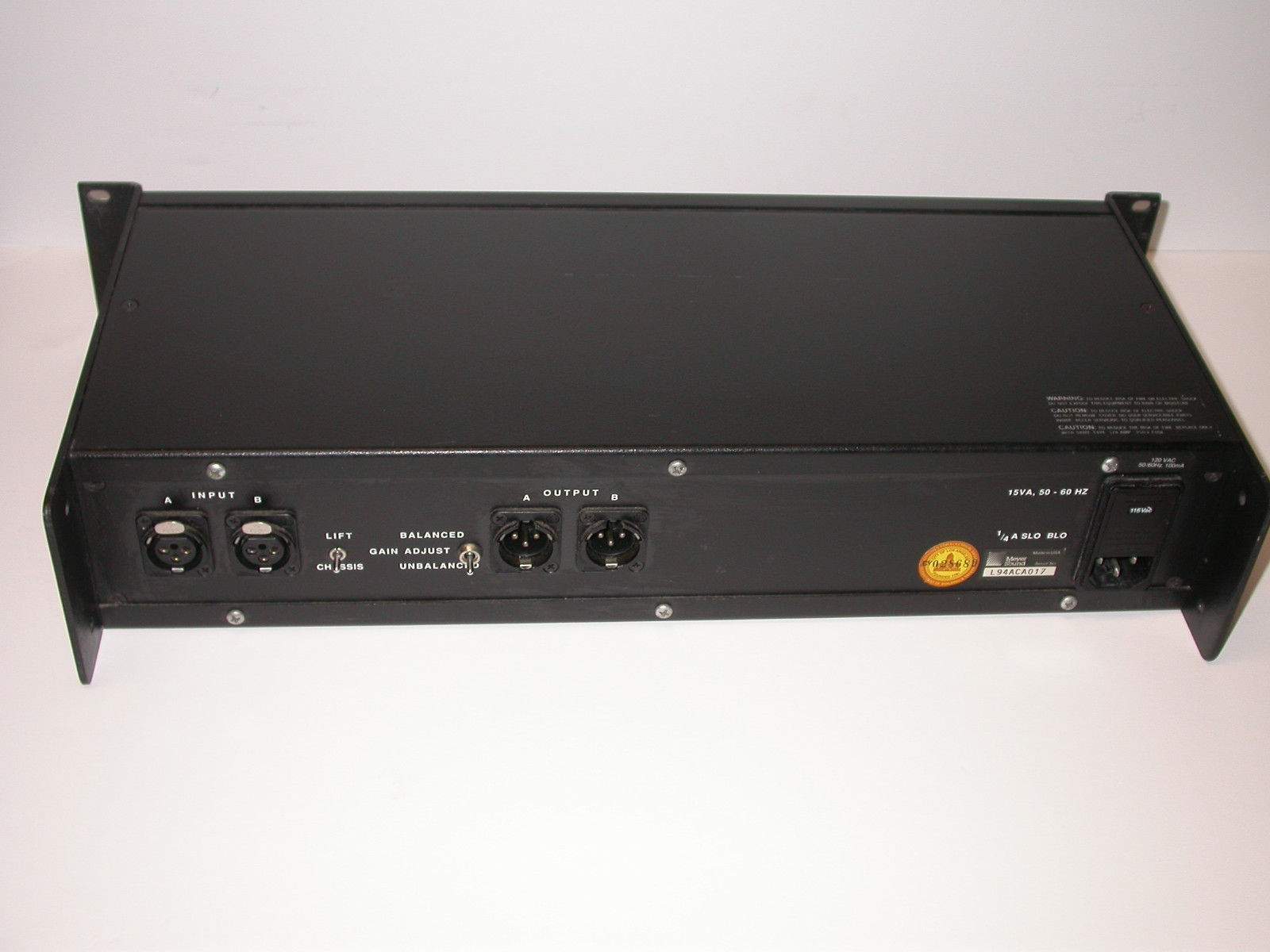
I just purchased a Meyer Sound Lab CP-10 equalizer. Now the question is how do I set this up. What cables to use etc. One person suggested the bass to the CP-10 then to the Eden Head....
"all you need is a cable that is 1/4 in balanced to XLR M. If u use a DI the XLR out would mic level. unless you have a DI that has line level XLR out. Signal needs to be line level all the way to the amp"
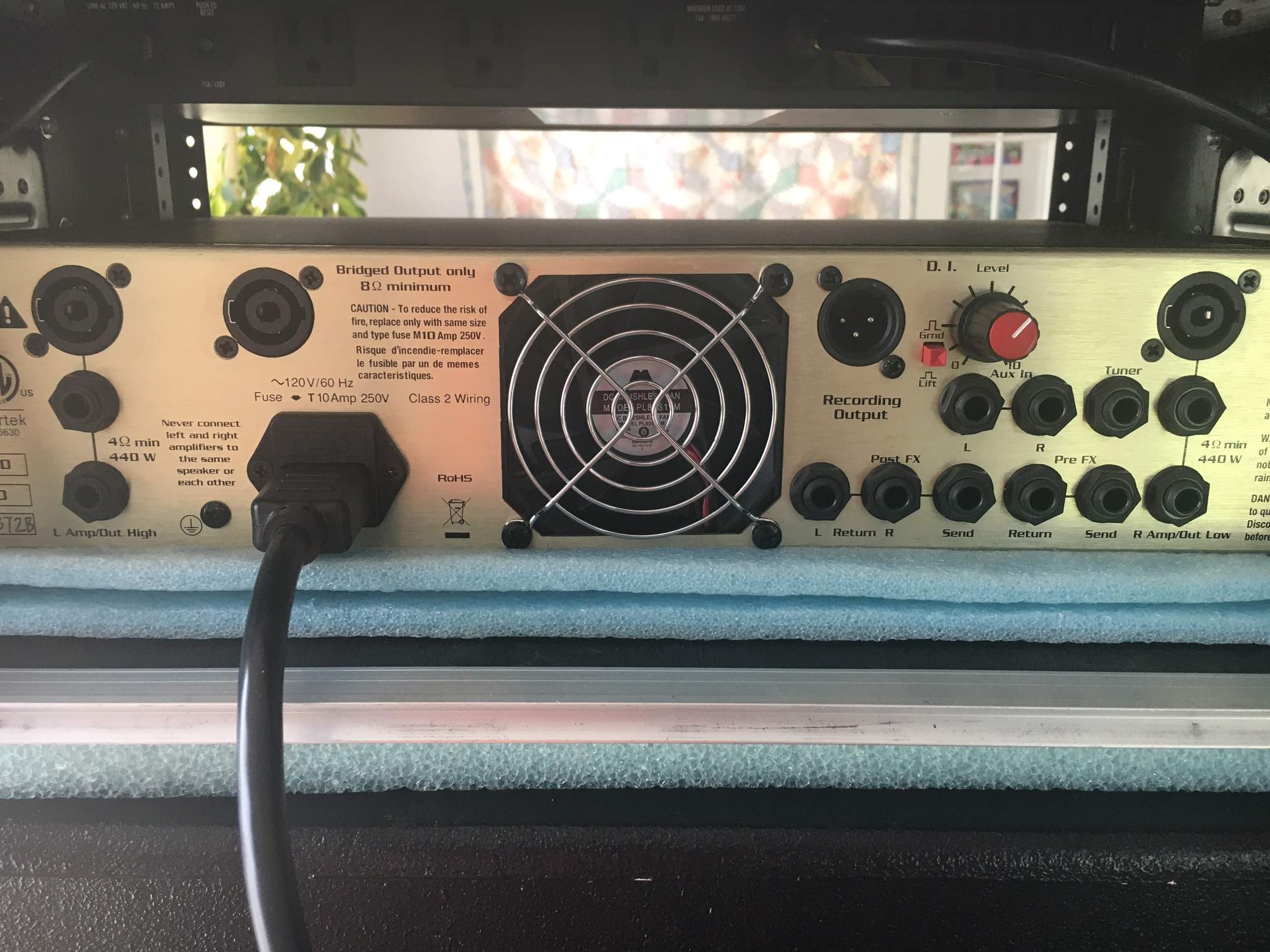
Another person suggested Eden to the CP-10 using post FX..... "send from the FX(post)1/4 to male xlr input and then run female xlr too 1/4...output on Cp-10 to return on Eden"
Regardless of what and how...balanced...unbalanced...my head is kind of spinning at this point. Apreciate any clarity. Thanks for looking.
cleardot.gif

Meyersoundlab.jpg


eden.JPG
 
Last edited:
I am quite familiar with these units and had a few. It will work provided you have a serial (series) effects loop, and that it is true line level.

There were 2 versions, one with output transformers (and maybe input transformers) IIRC. YOu will need adapters wired in a specific way to insure proper termination. If yours has the isolation transformers, the XLR to 1/4" wiring is: pin 2 goes to tip, pin 1 and 3 connect together and go to the sleeve. Do not use a 1/4" TRS connector because most float within the amp and this will unterminate (float the return) of the transformer.

If you have the transformerless version, there are several ways but usually the cable INTO the eq is wired with tip to pin 2 and sleeve to pins 1 & 3, the cable OUT of the eq is wired with a 1/4" TRS connector because pin 3 doesn't matter if it's terminated to ground or floating.
 
I am quite familiar with these units and had a few. It will work provided you have a serial (series) effects loop, and that it is true line level.

There were 2 versions, one with output transformers (and maybe input transformers) IIRC. YOu will need adapters wired in a specific way to insure proper termination. If yours has the isolation transformers, the XLR to 1/4" wiring is: pin 2 goes to tip, pin 1 and 3 connect together and go to the sleeve. Do not use a 1/4" TRS connector because most float within the amp and this will unterminate (float the return) of the transformer.

If you have the transformerless version, there are several ways but usually the cable INTO the eq is wired with tip to pin 2 and sleeve to pins 1 & 3, the cable OUT of the eq is wired with a 1/4" TRS connector because pin 3 doesn't matter if it's terminated to ground or floating.

CP-10 is arriving tomorrow. Is there a way to determine which unit it is? With or without transformer? Do you agree with Bass>Eq> amp? I guess once I determine which model I have....I will be asking you a little more about the cables and adapters. I really appreciate your help. Feeling like I have gotten over my head here.......
 
CP-10 is arriving tomorrow. Is there a way to determine which unit it is? With or without transformer? Do you agree with Bass>Eq> amp? I guess once I determine which model I have....I will be asking you a little more about the cables and adapters. I really appreciate your help. Feeling like I have gotten over my head here.......
No, this isn't going to work very well. The problems are that the input impedance is way too low (tone penalty) and the operating level is too high (noise penalty).

The only way this is going to work (well) is in a line level loop. It's a PA piece first and foremost.

I don't remember the visual difference between the two units, I will look for the service manual when I get to shop tomorrow.
 
No, this isn't going to work very well. The problems are that the input impedance is way too low (tone penalty) and the operating level is too high (noise penalty).
The only way this is going to work (well) is in a line level loop. It's a PA piece first and foremost.
I don't remember the visual difference between the two units, I will look for the service manual when I get to shop tomorrow.

Thank you so much.
Line level loop is referring to the Fx loop then? If thats the case would you recommend post or pre?
 
What is the problem with using it in the pre-EQ effects send/return loop?

From the manual:

Mono Pre-EQ Effects Send/Return – These standard 1/4-inch jacks allow
you to send and receive your signal to and from external devices. This
effects loop is positioned post (behind) the compressor and before the
Enhance control and the tone section. This loop is at line level; do not use
instrument level effects in this loop as they tend to be overloaded by the
higher signal level which can cause distortion.


It seems like a no brainer to put it there.
 
No transformer option installed (generally the 4 caps that currently have the zero ohm jumpers installed are part of that option)

Your amp happens to be one of the few that have both a pre eq AND post eq loop. In practice, it's not going to matter which loop you put it in. The primary reason for having a pre-eq loop is for overdrive effects where you may wish to eq the overdriven signal. Since you are inserting an eq, that sort of signal routing logic just doesn't apply. So, it really isn't a "no-brainer" where to put it.

Also, since your amp's eq has 3 sweep mids, the additional parametric eq is of (potentially) questionable additional value given the additional space and weight required.

Now for your particular amp, there is an alternate signal routing that I would suggest, which truly bypasses the amp's internal eq (disclaimer: for others reading this who curious about alternative routings, my comments apply to this amp only and should pay heed to the fact that alternative routings must be carefully considered for possible destructive positive feedback consequences)

Send to the outboard eq using the pre-eq send, and return from the outboard eq using the post eq return. This bypasses the amp's internal eq section (Low/High and 3 band sweep mids)

I would first focus on the single loop to be sure you have the interface correct, then try the eq bypass method.
 
No transformer option installed (generally the 4 caps that currently have the zero ohm jumpers installed are part of that option)

Also, since your amp's eq has 3 sweep mids, the additional parametric eq is of (potentially) questionable additional value given the additional space and weight required.

Now for your particular amp, there is an alternate signal routing that I would suggest, which truly bypasses the amp's internal eq (disclaimer: for others reading this who curious about alternative routings, my comments apply to this amp only and should pay heed to the fact that alternative routings must be carefully considered for possible destructive positive feedback consequences)

Send to the outboard eq using the pre-eq send, and return from the outboard eq using the post eq return. This bypasses the amp's internal eq section (Low/High and 3 band sweep mids)

I would first focus on the single loop to be sure you have the interface correct, then try the eq bypass method.

Great info...
maybe questionable value aye? I guess I will give it a good trial and try to determine that.
Your quote
"If you have the transformerless version, there are several ways but usually the cable INTO the eq is wired with tip to pin 2 and sleeve to pins 1 & 3, the cable OUT of the eq is wired with a 1/4" TRS connector because pin 3 doesn't matter if it's terminated to ground or floating."

Could I use these to send and return form the Eden?
Pro Co BPBQXM-2 Excellines Balanced Patch Cable - 2'

Pro Co BPBQXF-2 Excellines Balanced Patch Cable - 2'
 
For the output cable that should be fine, but without knowing exactly how the jacks are wired, the input cable to the EQ may need the ring tied to the sleeve (either through the jack if the ring is grounded, or by choosing a cable where the ring and sleeve (pins 3 and 1) are connected within the cable if the ring is floating. My docs. don't show how your amp's jacks are wired.
 
  • Like
Reactions: Bassman8416