I'm new to bass playing, but a buddy wanted me to record something. I have a Sound Devices Mixpre3 ii that I use for video recording and a RE20 mic that I use for podcasting. I just setup the microphone in front of my amp and recorded. The sound was muddier than I anticipated. I could definitely play around more with mic setup, but I was wondering how to properly DI to the recorder. Do I put a DI between amp and Mixpre? Any recommendations on how to do that would help. I have a Fender P bass and Rumble 25 amp for context. Thanks!

Enjoy the benefits of a premium membership!
Upgrade Account
-
TalkBass has been independent since 1998. Add your voice.
Create a free account to reply to discussions, view embedded media, and browse with fewer display ads.
Join free Log in
Want zero display ads or expanded classifieds tools? Compare plans.
You are using an out of date browser. It may not display this or other websites correctly.
You should upgrade or use an alternative browser.
You should upgrade or use an alternative browser.
Recommendation for recording setup
- Thread starter letchhausen
- Start date
More options
Who Replied?
Have you tried direct recording instead of recording with a mic? That device does not appear to have an instrument input but if you have a device with an XLR output you can run it into your Mixpre3.I'm new to bass playing, but a buddy wanted me to record something. I have a Sound Devices Mixpre3 ii that I use for video recording and a RE20 mic that I use for podcasting. I just setup the microphone in front of my amp and recorded. The sound was muddier than I anticipated. I could definitely play around more with mic setup, but I was wondering how to properly DI to the recorder. Do I put a DI between amp and Mixpre? Any recommendations on how to do that would help. I have a Fender P bass and Rumble 25 amp for context. Thanks!
Something like this with an XLR out:
I think you can run the "output" over to your amp so you can monitor while you play.
Edit: I see you are asking exactly this - how to record direct. Something like the above pedal will work.
So, bass into the preamp and then direct out to MixPre and output to amp? Which is splitting the signal so I can listen and direct record at the same time?
Thanks! Just making sure I understand the parts.
It's a little pricey but perhaps I can find one used.
Thanks! Just making sure I understand the parts.
It's a little pricey but perhaps I can find one used.
So, bass into the preamp and then direct out to MixPre and output to amp? Which is splitting the signal so I can listen and direct record at the same time?
Thanks, just making sure I understand the parts.
Yup, that's the idea. There are probably dozens of devices that will do this for you with a range of features. Depends on you priorities and the features you want.
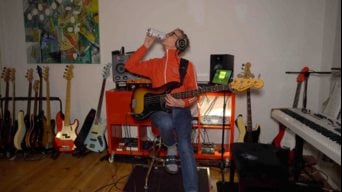
That is correct. A DI box changes instrument level to mic level. I own the MixPre3, too. Mostly for video recording, but it is a high quality interface, too.
But the RE20 should sound more than o.k., too. Look at some videos for guitar or bass micing and make sure that you position the mic correctly.
Make sure that you buy the correct DI box for your bass, as a rule of thumb: active DI boxes for passive basses and vice versa.
Most bass amps have a build-in DI at the back.
But the RE20 should sound more than o.k., too. Look at some videos for guitar or bass micing and make sure that you position the mic correctly.
Make sure that you buy the correct DI box for your bass, as a rule of thumb: active DI boxes for passive basses and vice versa.
Most bass amps have a build-in DI at the back.
Would something like the Radial Pro48 work? Passive bass to active DI to recorder. Though I guess I lose the controls of the MXR.
And I'm not giving up on using a mic. In this case I think the muddy sound worked out. Just thinking of alternatives depending on what I want to do. Or perhaps do both. To be honest, I've just been learning/practicing. Then I was asked to record (which is premature in my case) but turned out that it was fun to record. Gave me ideas and upped the excitement.
And I'm not giving up on using a mic. In this case I think the muddy sound worked out. Just thinking of alternatives depending on what I want to do. Or perhaps do both. To be honest, I've just been learning/practicing. Then I was asked to record (which is premature in my case) but turned out that it was fun to record. Gave me ideas and upped the excitement.

Behringer has a inexpensive DI pedal, it's not the greatest effect but the DI works pretty well. You can probably find them used for deal.
Behringer | Product | BDI21
Behringer | Product | BDI21
Would something like the Radial Pro48 work? Passive bass to active DI to recorder. Though I guess I lose the controls of the MXR.
And I'm not giving up on using a mic. In this case I think the muddy sound worked out. Just thinking of alternatives depending on what I want to do. Or perhaps do both. To be honest, I've just been learning/practicing. Then I was asked to record (which is premature in my case) but turned out that it was fun to record. Gave me ideas and upped the excitement.
I think the Radial Pro48 will work. I have one of those and had used it for exactly this purpose. One thing it is missing is any gain control. I found my particular recording interface was noisy at higher gain so I needed to add gain before the interface. The Radial could not do it. But if your recording device has a clean gain control you will probably be in good shape.


The Radial DI should work for what you want. I tend to record with the EV RE20 and get great results - however - you need to adjust the eq of your amp to get the desired tone. If I record my Ric with both pickups on it tends to get lost in the mix if I don't boost the mids before I record. Usually I record the Ric with the bridge pickup soloed, and adjust the mic input for volume. I have also taken the DI out from the amp.
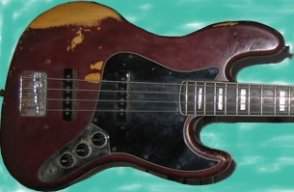
The RE20 should make a really nice recording. Mic placement is an art and where a lot of studio guys make their mark. Also, changing the EQ on your amp to get a better recording is legit, as is further processing (EQ, compression, HPF) of the recorded track to try and clean it up.

+1 to the DI recommendations you’ve already received. I always get the best results by capturing both the DI and amp signals, then blending them to suit the song. You can capture the direct sound from the DI to one of the mic inputs on your interface, then run from the DI’s “thru” or “amp” output into your amp, and from the RE20 (killer bass amp mic, btw!) into another input on your interface.
As other have noted, mic placement is super important in getting a good amp tone, as is placement of the amp in the room. Assuming you aren’t in a well treated, acoustically perfect space, you’ll want to make sure the amp is not in a position where you get a room mode that could greatly accentuate a certain frequency and lead to a boomy sound. You may need to experiment by moving the amp around, walking around while playing through it, and listening for any unnaturally boomy frequencies.
Another common pitfall when combining direct + amp sounds is phase alignment. I wouldn’t worry about phase while positioning the mic, as phase relationships can be adjusted manually after the fact in any audio editing software or DAW. Once you’ve captured the amp and DI signals on separate tracks, visually inspect the waveforms to ensure the peaks and valleys between the tracks roughly match up. If they don’t, drag one track backwards or forwards until they do. Try playing the tracks back simultaneously when they are phase aligned, and then when they aren’t - you should hear a significant difference! It’s possible that you could prefer a slightly misaligned phase relationship, which would mask some frequencies and leave others intact, if that suits the song better than a more technically “correct” phase relationship.
As other have noted, mic placement is super important in getting a good amp tone, as is placement of the amp in the room. Assuming you aren’t in a well treated, acoustically perfect space, you’ll want to make sure the amp is not in a position where you get a room mode that could greatly accentuate a certain frequency and lead to a boomy sound. You may need to experiment by moving the amp around, walking around while playing through it, and listening for any unnaturally boomy frequencies.
Another common pitfall when combining direct + amp sounds is phase alignment. I wouldn’t worry about phase while positioning the mic, as phase relationships can be adjusted manually after the fact in any audio editing software or DAW. Once you’ve captured the amp and DI signals on separate tracks, visually inspect the waveforms to ensure the peaks and valleys between the tracks roughly match up. If they don’t, drag one track backwards or forwards until they do. Try playing the tracks back simultaneously when they are phase aligned, and then when they aren’t - you should hear a significant difference! It’s possible that you could prefer a slightly misaligned phase relationship, which would mask some frequencies and leave others intact, if that suits the song better than a more technically “correct” phase relationship.
Last edited:
Thanks for the recommendations! I've been looking at various DI's, was checking out Darkglass B7K as it does a lot of things. A day later and I'm obviously acclimating to paying for something more expensive as I see more features.
This turned the lightbulb on, I was to not working with the controls on the amp. I basically just left it set to what I use while practicing. When I recorded, I just set the volume levels on the Mixpre. D'oh! Thanks to those of you that pointed that out. @wellshuxley Thanks for bringing up phase. I think you're right, I might dig the misaligned phase!
I've been looking at some mic videos and am going to experiment more with setting the mic up and recording samples to get a better sense of what I can get out of miking the setup. I'm recording in my living room which is completely lined with bookshelves so a very dampened space. I'll move the amp in a couple directions. In this case I wasn't in the room while recording. I have tinnitus so I can't wear headphones. I bought a long cord and was playing in the bathroom while listening to my friend's track. As a result I didn't hear what I was playing until I was listening to the playback. I used Audacity to merge my bass track to my friend's guitar track.
I'm still going to get a DI, but this has all opened up a new aspect to the learning bass experience. I hadn't thought of recording before. It would probably be useful to record myself practicing as well. Exciting stuff!
I tend to record with the EV RE20 and get great results - however - you need to adjust the eq of your amp to get the desired tone.
This turned the lightbulb on, I was to not working with the controls on the amp. I basically just left it set to what I use while practicing. When I recorded, I just set the volume levels on the Mixpre. D'oh! Thanks to those of you that pointed that out. @wellshuxley Thanks for bringing up phase. I think you're right, I might dig the misaligned phase!
I've been looking at some mic videos and am going to experiment more with setting the mic up and recording samples to get a better sense of what I can get out of miking the setup. I'm recording in my living room which is completely lined with bookshelves so a very dampened space. I'll move the amp in a couple directions. In this case I wasn't in the room while recording. I have tinnitus so I can't wear headphones. I bought a long cord and was playing in the bathroom while listening to my friend's track. As a result I didn't hear what I was playing until I was listening to the playback. I used Audacity to merge my bass track to my friend's guitar track.
I'm still going to get a DI, but this has all opened up a new aspect to the learning bass experience. I hadn't thought of recording before. It would probably be useful to record myself practicing as well. Exciting stuff!
Last edited:
If the amp has a direct out you should be able to plug that directly into your MixPre. I do it with my Quilter amp and Zoom F8.
The Rumble 25 doesn't have that option. Things I didn't think of when buying....
@letchhausen Sorry to hear about the tinnitus.
Do yourself a favour and keep that bottom of the barrel Fender combo OUT of the recording. A good DI or mini mixer will give a much cleaner and purer signal to work with. You can still use the combo for personal monitoring. If you want a bit of "grit" or "air" to the bass track, it can be added afterwards.
Good luck!
Do yourself a favour and keep that bottom of the barrel Fender combo OUT of the recording. A good DI or mini mixer will give a much cleaner and purer signal to work with. You can still use the combo for personal monitoring. If you want a bit of "grit" or "air" to the bass track, it can be added afterwards.
Good luck!
The Radial DI boxes are usually great. A "real" DI Box doesn't have gain and doesn't have to be expensive. IMO those "cheap" pedal-preamps like the MXR don't improve your sound. Exception: you get exactly the sound you want with such a pedal. Then go for it. All you need for the MixPre is a DI.
Point taken. I was interested in Darkglass DI, but not because it will "improve" my sound, that's for sure. I made some wind recordings while shooting video in West Texas in March. A buddy in Austin played some improv guitar noise with/over the wind sounds and sent me the file and I added bass. I'll be editing the video to that soundtrack.
I'm confused, do bass preamps like the Darkglass B7k send out those overdrive adjustments through the DI or just a clean signal?
The Darkglass like the SansAmp sends the wet signal through the DI-out and a dry signal through the non-balanced TRS parallel output.I'm confused, do bass preamps like the Darkglass B7k send out those overdrive adjustments through the DI or just a clean signal?
Thank you! I would use the balanced output to my recorder. Just wanted to validate that it would worth it to get something where I could send some kickass noise to the Mixpre.
Latest posts
-

-
-
 NAD - Thrift Store Score – Genz Benz Shuttle 3.0 w/ 10" Docking Cab
- Latest: Kilroy Was Here
-

