• TalkBass has been independent since 1998. Add your voice.
    Create a free account to reply to discussions, view embedded media, and browse with fewer display ads.
    Join freeLog in
    Want zero display ads or expanded classifieds tools? Compare plans.

Double Bass Retiring “Thumping”

Let’s retire the term “thumping” as a description of bluegrass bass playing. I think it sets up the expectation that bass playing in bluegrass need only aspire to a be an amorphous indistinct “thump” on the 1 and 3, devoid of tonal definition and any sort of nuance. There’s so much more that can and should be part of bluegrass bass playing, without making it overly busy and destroying the delicate balance achieved between the other instruments. Placement of the note, length of the note, tonal nuances, tasteful syncopated accents, judicious use of leading tones to connect the chords; are all ways to support the other instruments and deepen the groove that go beyond mere “thumping.” Jazz players never use this term to describe what they do; nor do classical players; why should bluegrassers? I recognize that the term is used affectionately, but if all we need to do is thump, we might as well go to hardware store and buy a washtub, broomstick, and an eyebolt and make our own instrument instead of spending thousands on a vintage Kay or American Standard.

Just my $.02, but I’m sticking to it!
 
I think your right to feel sort of blah towards this term. While not always, a lot of the time when I’ve heard people referred to as “thumpers” it wasn’t meant in the particularly complimentary way. Generally it describes a player who doesn’t have a lot going on harmonically but can be a warm body to play mostly in-tune root fives. We should all strive for more, IMHO!
 
  • Like
Reactions: Don Hergert
Having jazz aspirations too, I very quickly grew weary of the overwhelming concept of the DB player being basically a simple minded drummer in bluegrass...

Just before Covid, someone asked me to play this kind of DB-drum, and I told him I don't play 1-4-5 for anyone, and then I offered him my bass if he wanted to play that way (and he refused). All the other bassists within hearing distance applauded my statement. It's well past time for the DB to come out of the bluegrass closet.
 
There’s so much more that can and should be part of bluegrass bass playing, without making it overly busy and destroying the delicate balance achieved between the other instruments. Placement of the note, length of the note, tonal nuances, tasteful syncopated accents, judicious use of leading tones to connect the chords; are all ways to support the other instruments and deepen the groove that go beyond mere “thumping.”

"Because strait is the gate, and narrow is the way.....and few there be that find it."

Byron House finds it.

 
Boy - I don't get the objection to the term. Around here, I've repeatedly described myself as a BG thumper. IMO, it is a valid shorthand way to distinguish myself from the jazz and classical players. Just about any BG bassist need not know how to use a bow. You rarely - if ever - have to go above 3d position. And you don't need to know all them crazy augmented and diminished chords! ;)

Sure, there can be good and bad thumpers - and sure, you want to aspire to being a good one. But IME, in BG, less is generally more. Reminds me of when I played rock bass guitar - you could always tell the bassists who were ex-guitarists. And I don't mean that in a good way! :D

And - of course - there is a world of difference betw playing bass in a professional BG situation - as opposed to the majority of situations I have encountered in 10+ years of pretty heavy jamming/semi-pro bands in as many situations as I could.

And nowadays, you can distinguish the Kowert type of conservatory players from most of traditional BG.

Finally, in the first few months of COVID, my usual pretty high level BG jams disappeared. So I was playing a lot of classical w/ my wife, and w/ my 3-piece string band. In my band, we play w/ different instrumentation, and not strict BG - so I explore doing a lot more than I do in just BG. After a few months, I again got the chance to play BG w/ some of my old buddies. I was ASTOUNDED at how challenging it was to drive a steady beat for hour on end.

To me a good BG thumper is someone who maintains/drives the beat, largely creating the format w/in which the others can show off. All you have to do is hear the praise of the pickers, to know how much you are appreciated. Or miss a week, and hear them tell you what a trainwreck it was w/o you.

So I'm happy to refer to myself as a BG thumper. If forced to qualify, I'd add that I'm a damned good thumper! ;)
 
I can understand both points of view; there's certainly more Wynton Marsalis types in bluegrass than jazz (ironically) and there's nothing wrong with that. That being said, I personally prefer hearing players like Kowert, Meyer, and Dave Holland (played on Hartford's Morning Bugle) than just someone playing roots and fifths all night. Even the bassists for JD Crowe, the Dillards, Ralph Stanley, and countless others did more than just play root/5th. They constantly worked to outline the harmony with runs and chord tones as the songs called for it.
 
Last edited:
  • Like
Reactions: BobKay
Let’s retire the term “thumping” as a description of bluegrass bass playing. I think it sets up the expectation that bass playing in bluegrass need only aspire to a be an amorphous indistinct “thump” on the 1 and 3, devoid of tonal definition and any sort of nuance. There’s so much more that can and should be part of bluegrass bass playing, without making it overly busy and destroying the delicate balance achieved between the other instruments. Placement of the note, length of the note, tonal nuances, tasteful syncopated accents, judicious use of leading tones to connect the chords; are all ways to support the other instruments and deepen the groove that go beyond mere “thumping.” Jazz players never use this term to describe what they do; nor do classical players; why should bluegrassers? I recognize that the term is used affectionately, but if all we need to do is thump, we might as well go to hardware store and buy a washtub, broomstick, and an eyebolt and make our own instrument instead of spending thousands on a vintage Kay or American Standard.

Just my $.02, but I’m sticking to it!
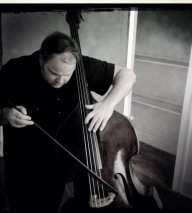
:bored:

I have heard both jazz and orchestral players use the term thump, thumpy, thumping etc.

If you don't like these terms you shouldn't use them, but IHMO it's really not your place to regulate how anyone else thinks, plays, or communicates.

I would say this post falls loosely in the same category as identity politics and label it as tribal BS. There is no reason why everyone in the world should be expected to think and talk exactly like you. So IMHO :thumbsdown:.

I am far more supportive of the concept of vive la difference.
 
"Traditional" or "old-time" Bluegrass is almost always in 2/4 or 3/4 time. People here seem to keep saying "1 and 3," but it's really just 1/ONE in 2/4 time. There is little justification for playing the upbeat in a 2/4 bass line except as a leading tone to an important chord change.

If we examine the early days of Bluegrass - 1945 to 1950 - we see two basic branches: The Bluegrass Boys (Bill Monroe), and The Stanley Brothers and their Clinch Mountain Boys.

The first branch's bass lines were typically playing on ONE, whether in 2/4 or 3/4 time. The second branch's bass lines were busier, with some walking lines, especially in waltzes.

So that gives us a clue that Bluegrass bass lines don't necessarily have to confine themselves to the downbeat - if the Stanley Brothers did it, then it must be okay. But the rule that never changes is that we should SERVE THE SONG. If you want to refactor a 2/4 song into straight 4/4, that's fine - as long as it's a decision by the whole band, and not the bass player tryin' to be adventurous.

Furthermore, consider the difference that muting, or the lack of it, makes. Some bassists often - unconsciously - use a "mute stroke" on the upbeat in 2/4 time as a way to keep time; or, otherwise, unconsciously stop our notes from ringing. Sometimes this is good, but often it's thumpy and counterproductive to the forward motion of the music. We should choose whether to use it. Awareness of "how I am serving the song" keeps me from being just a thumper.
 
Well, I think if you were going to be strictly historically accurate, it'd be cut time, 2/2, and yes you'd be playing on 1 and 2, the two half notes per bar in cut time. These old tunes are largely based on old march time (except the ones in three, of course). But most of the music world these days would think of two-beat as on 1 and 3 of 4/4 and four-beat as 1-2-3-4- of 4/4. I mean, if I play the first chorus in two-beat feel and then I start walking on the second chorus, did the music change from 2/4 to 4/4? Again, if you think of it as old time march notation it would be common or cut time, 2/2 for that first chorus, and 4/4 for the next one, and the notation would be exactly the same, two half notes per bar. In the jazz world, my other world, the drummer would just start playing in four, or the leader would hold up four fingers to indicate "play in four!"

This is all, however, academic, and not really related to the job of driving a band from the bass seat. From that perspective, I find that a more traditional bluegrass feel wants you to play two-beat. Whether to mute down to quarter notes or let them ring out a full half note is highly dependent on the tune and the band. If I have a good mandolin chop on 2 and 4 then I don't need to mute the notes, but if the beat is kind of hinky and there are a bunch of folkie guitar players randomly strumming and no mandolin or banjo chop, then I'll often mute, very clearly, to show by the beginning of my note where 1 and 3 are and by the end where 2 and 4 are (using 4-beat terminology, sorry). if the level of the players is really high then I'll be choosing how long to make the notes - a really slow tune I'll tend to let them ring; a funky middle tempo I may mute to get out of the way of the chopper, a fast one I'll probably let them ring. But it just depends on the situation.

Anyway, rather than "2/4" or "4/4" I prefer to use the terms "two-beat" or "four-beat" because those are clearer to me. Maybe not to everyone. But the standard 32 bar form is 32 bars whether it's in two or four. It doesn't become 64 bars when you play it in two.
 
I think there`s definently a art to thumping, and it`s nothing to be ashamed of. I`ve seen jazz-oriented guys who can`t play 1 - 5 ( and / or trichord based stuff ) too well, just because they overlook it as some sort of lesser music. About them jazz guys, Red Mitchell said " Simple ain`t easy, it`s the hardest thing to do ". I belive that to be true.
 
Last edited:
I think there`s definently a art to thumping, and it`s nothing to be ashamed of. I`ve seen jazz-oriented guys who can`t play 1 - 5 ( and / or trichord based stuff ) too well, just because they overlook it as some sort of lesser music. About them jazz guys, Red Mitchell said " Simple ain`t easy, it`s the hardest thing to do ". I belive that to be true.

I led a country band for a couple of years in the late 90s. I never really had much of an interest in country music, so I had a bit to learn about how to play country bass. I wouldn't necessarily say it was hard, but there are definitely lots of little nuances that go into playing an authentic country bass line.

My organization was made up of three independent ensembles at the time: 1 concert band, 2. a pop/rock band, and 3. my country band. Twice a year all three everyone came together to put on a special show down town. For one of our December extravaganzas I decided it would be cool to learn some fiddle parts for our 20 minute show piece. The main fiddle feature was George Straight's Christmas Time in Texas.

I asked the rock band bassist to cover the bass part in my band as well. He is/was arguably a way better bassist than I, but he had never studied how to play country music. I doubt anyone in the audience noticed or cared, but he did a lot of little things that were obviously out of character in a subtle way. It's not something that could be corrected with a quick conversation, so I let it go.
 

Latest posts