
• TalkBass has been independent since 1998. Add your voice.
    Create a free account to reply to discussions, view embedded media, and browse with fewer display ads.
    Join freeLog in
    Want zero display ads or expanded classifieds tools? Compare plans.

Retubing my SVT II (non pro)

I'm planning on giving my SVT II a checkup sometime in the near future. It's currently tubed with National 12AX7's/12AU7's and Svetlana 6550C's. I'd like to replace the preamp tubes at the very least, and possibly put in a set of =C= 6550's. From what I've read, the current tubes are nothing to write home about and National was just a rebrand company so I really have no idea what I've got for preamp tubes.

Do I need any of the preamp tubes to be balanced or matched?

I'm fairly handy in electronics but I've never biased an amp like this before. I'd take it to a tech, but if it's something I can do at home I'd rather save my money. Any pointers?

Being that it's from 1989 I'm thinking that I (or the tech) should be checking out the caps and other stuff in there to see if they need to be replaced? Pointers there? I'd love to learn this stuff.
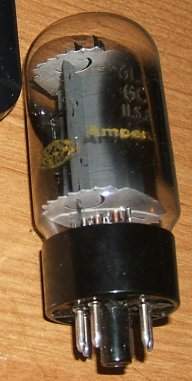
 
First, don't believe all the Internet hype about "tubes are nothing to write home about". This stuff originated largely from tube salesmen, who want to sell tubes. Nothing wrong with Svetlana 6550's or for that matter, the rebranded Nationals of whatever origin.

True Winged C's are out of production. You will pay a small fortune for true Winged C's. Again. don't believe all the Internet hype (yes they were good tubes, though).

No need to match or do anything special on the preamp tubes. Some folks like to match the two halves of the phase inverter tube but IMO that's not really necessary. But I would question the need to even replace anything, unless you have money in your pocket waiting to be disposed of. How many hours are on the power tubes?
 
You have been doing your homework which is good.

It is a good idea to start with the small signal tubes and only replace what you need to. You do not need balanced sections for the pre-amp tubes with your amp.

If the power tubes need to be replaced do them next. Winged C tubes are no longer in production but they are still available. Cost wise, they are about the same as buying NOS GE 6550A's which are much better. The GE's are harder to find.

Biasing the amp is easy but requires a good voltmeter and a 4 ohm, 350W or better dummy load. The procedure is on the schematics. Setting the balance requires that you apply a 40Hz signal to the input and adjust the level to 25V across the dummy load. Then set the balance as per the instructions using a voltmeter. You can get a 40Hz signal tone off the internet.

When buying power tubes, you want to deal with a good reseller. This is very important. You want them selected and matched for your amp. I recommend TC Tubes - specializing in vintage vacuum tubes. The stock at tctubes is limited to Sovtek at present. Not a bad tube, especially if properly matched, but if you are looking for a different brand, there are other good places to deal with.

BTW, the schematics for your amp are available on Loud's web site, there are five revisions and service notes. If you wanted to bring it up to date, you would have to inspect the amp to see which changed should be applied. The service site url is Invalid Link Removed You will have to register online to gain access, not a big deal. It is in the discontinued products section.

Changing the electrolytic caps in the amp is more difficult. The caps can retain their charge even when the amp is unplugged. They need to be drained before you can safely work on the amp. An easy thing to do with a simple tool that you can build but it you need to do this. I have some info in the TB portaflex wiki Technical - Amplifier - TalkBass Wiki If you are going to change the electrolytic caps in the amp (these are the ones that are polarized, look for a [-] on them, they are mostly in the power supply) you should change them all, not just some of them. This is best handled by a good tech but I can guide you through the process if you feel comfortable taking this on.
 
Why do I want to replace the tubes? I dunno...

I've been noticing some strange activity from certain notes when playing this amp. Some notes are nice and full while others sound very thin. I use the same cab and bass with other amps and they all sound fine, and I haven't noticed this with the other SVTs that I've owned. I guess I'm attributing this to tubes but I guess it could be out of spec caps or something else.

How old are the current tubes? No clue. I don't think they're original so they've probably been replaced at least once in its lifetime. I've only owned this particular amp for the last year or so.
 
Unless they go bad (worn out, short or blanking because vacuum is gone), there is no need to change tubes.
Tubes are meant to work at least 10,000 hours. How many amps do you know that have been used this much?
30 year old caps however are worth checking and replacing.
 
  • Like
Reactions: Jwood
So based on reading that wiki and all of the other research/stuff I've read they basically recommend to swap the tubes when there are changes in sound/tone. Like I described above something just isn't right with it tonewise. Replacing the preamp tubes is much cheaper. Does it make sense to swap them out to see if I gain anything or just leave everything as is? I'm pretty sure I have all or at least most of the preamp tubes here at home (JJ's).

I'm really not sure just how much tonal changes you gain from tube swaps. Reading about it on the interwebz people seem to be totally convinced they are getting major changes yet I'm not so sure.
 
You shouldnt have any trouble swapping out your preamp tubes. Just take the basic precautions- unplug the amp, put on your helmet, etc. JJ 83's are a good present day tube at like $10-15/ea. Tung Sol RI is also a popular V1 position tube.
 
So based on reading that wiki and all of the other research/stuff I've read they basically recommend to swap the tubes when there are changes in sound/tone. Like I described above something just isn't right with it tonewise. Replacing the preamp tubes is much cheaper. Does it make sense to swap them out to see if I gain anything or just leave everything as is? I'm pretty sure I have all or at least most of the preamp tubes here at home (JJ's).

I'm really not sure just how much tonal changes you gain from tube swaps. Reading about it on the interwebz people seem to be totally convinced they are getting major changes yet I'm not so sure.

If your amp is healthy, tube swapping makes subtle differences. If your tubes are worn out, it can make a dramatic difference. Changing tubes is an easy thing to try, especially if you have the tube on hand.

A tech would clean ALL the jacks ( and shunts which are switches built into the jacks) and tube sockets with Deoxit. A build up of oxidation, which occurs over time, affects the quality of the signal path. Use Deoxit D5 for cleaning pots. Regular maintenance helps keep problems like this from affecting the amp.
 
Last edited:
Cool! Thanks! I saw those but didn't know if they were any good.
So a pair of those, a Fluke 179, and a 40hz signal will allow me to bias it.
Drain the caps and clean the jacks, shunts, and tube sockets with Deoxit...

How do I check the caps? I know how to recognize if they are leaking but that's about it.
 
Here are those resistors connected in a fancy way. Input is a speakon, a ¼", or banana plugs. The switch selects 4 or 8 ohms. The last image is basically the same but with better Arcol 8 ohm resistors and an added BNC connector to connect test equipment.

inside
dummy load inside close.JPG

top
dummyload top.jpg

better resistors
arcol dummy load.JPG
 
How do I check the caps? I know how to recognize if they are leaking but that's about it.

Measure the power supply voltages and compare them to the reference voltages on the schematic is a start. Check the capacitance with a meter. An ESR meter can help you determine if the internal resistance of an electrolytic cap is too high.


But start with a cleaning with deoxit and swap out the small tubes first and see.
 
I use a pair of them myself and they have held up very well. WARNING: Even though you will not be close to their wattage rating, they can get VERY hot. Burns come easy on dummy loads so do not just lay them on a table and pick them up with bare hands.

beans gave info on caps, I will add that a cap the measures much over the rating is usually in question. Using a scope to measure ripple at working voltage is also a clue, but old caps can short with little warning or die slowly.
 
  • Like
Reactions: beans-on-toast
Well, changing the preamp tubes was a huge success.

It had (4) National 12AX7's. Three were made in Yugoslavia and the fourth was made in China. I swapped those with JJ's.
It had one US made GE 12AU7 and one Russian Ruby 12AU7. I left both of those.

I brought it (and a backup) to my gig last night. My tone was exactly what I expect an SVT to sound like. I had a had grin on my face all night.
I still plan on bringing it in to a tech to go through it, but I'm MUCH happier with it right now.
 
  • Like
Reactions: B-string