Enjoy the benefits of a premium membership!
Upgrade Account
-
TalkBass has been independent since 1998. Add your voice.
Create a free account to reply to discussions, view embedded media, and browse with fewer display ads.
Join free Log in
Want zero display ads or expanded classifieds tools? Compare plans.
You are using an out of date browser. It may not display this or other websites correctly.
You should upgrade or use an alternative browser.
You should upgrade or use an alternative browser.
reverse p pickups in p/j basses
- Thread starter GnRDuff1
- Start date
More options
Who Replied?AdamR said:Jazz special doesnt
Which I also find odd. The addition of active electronics drove fender to go against its own tradition? I scratch my head wondering who said "let's make two basses in similar spirit but reverse it for some and not both"

I read an interview with Mark Hoppus about reverse P positioning. He basically said that the forward DG pickup gives the smaller strings more meat, and the farther back EA pickup gives the larger strings get more snap. His logic makes sense to me.


Which I also find odd. The addition of active electronics drove fender to go against its own tradition? I scratch my head wondering who said "let's make two basses in similar spirit but reverse it for some and not both"
The active Jazz Special had an extra fret on the neck (compared to the passive Jazz Special).
I don't know if the extra fret was related to the P pickup reversal, or if it was strictly for other reasons.
I think there was P pickup reversal on some older active Yamaha BBs as well, but I think the number of frets was the same.

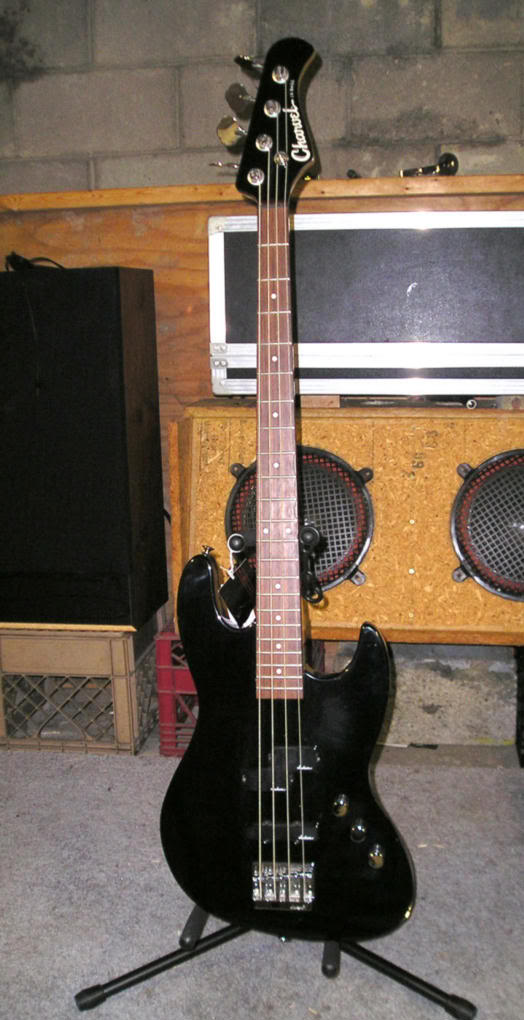
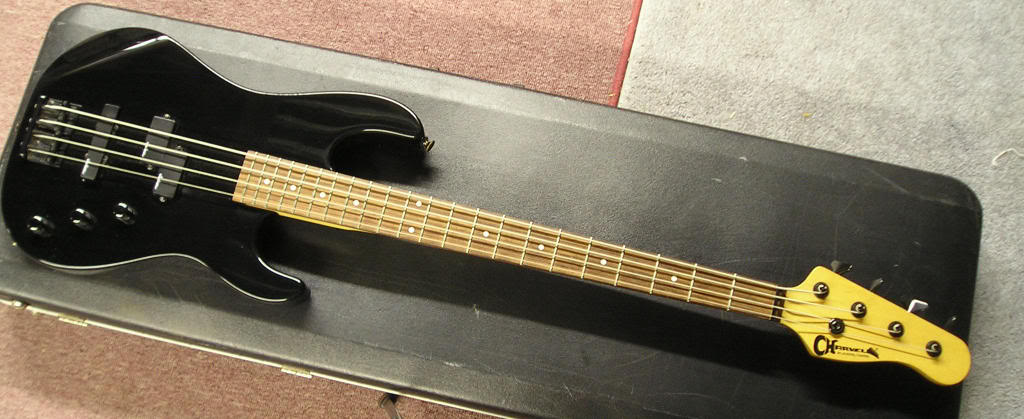
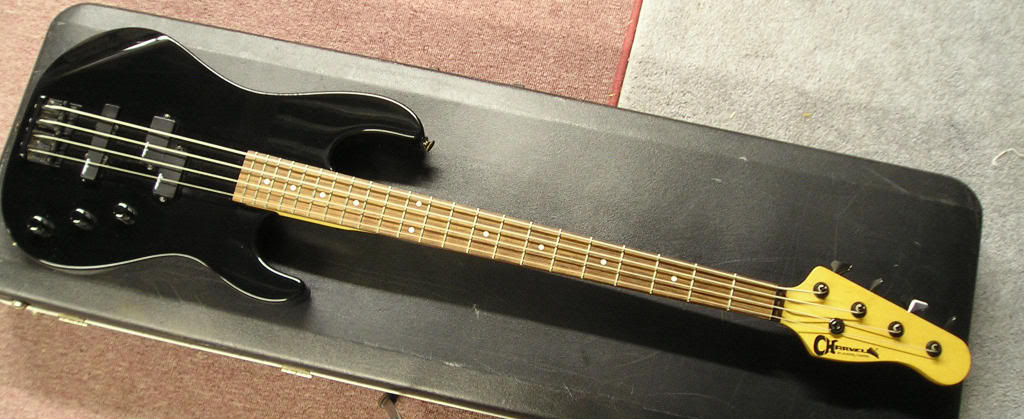
everyone gets it wrong.... that's a Charvel Eliminator5. They only made 100 of them and they never offered them in the catalog. I think it's ugly and a pretty good Yamaha/Collen ripoff, but it's a Jackson and rare,. so I keep it around
Jackson did make 1986 units with a normal-p.
Well excuuuse me!

(very nice bass even if you think it's ugly. And if you ever want to get rid of it, drop me a line first...)
Ian, for all I know it could be 10 made because I never saw another one except in someone elses picture on another board a few years ago, and like Kramer there are no real records of how many were made.
sorry for the thread derail.
I had a rev-p/j Jazz at one time
.
sorry for the thread derail.
I had a rev-p/j Jazz at one time
.

I found a nice old Yamaha BB300 with a reverse P and added a second reverse P at the Bridge - my Lee Sklar tribute bass. It's nice!
As an engineer, it makes more sense to me to be reversed. However, I must say that Leo did a LOT of research. The P sound is not an accident.
As an engineer, it makes more sense to me to be reversed. However, I must say that Leo did a LOT of research. The P sound is not an accident.

Ian, for all I know it could be 10 made because I never saw another one except in someone elses picture on another board a few years ago, and like Kramer there are no real records of how many were made.
sorry for the thread derail.
I had a rev-p/j Jazz at one time
.
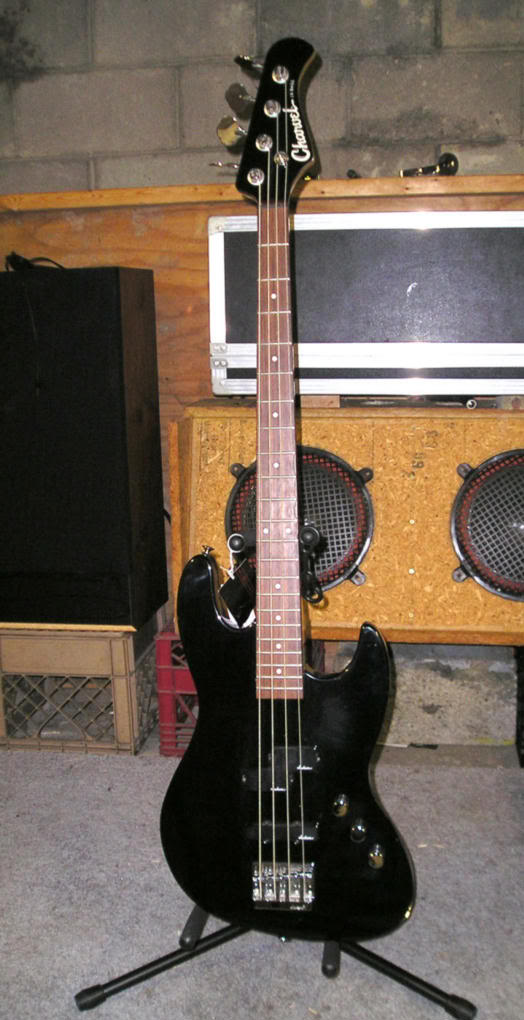
Love those Charvel JX's...been hunting one too, there have been a couple on Ebay but the price hasnt been right....jazz body, jazz neck, reverse P/J...outside of a Spector, its the perfect bass
I never really liked the JX -- kinda funny looking with no pickguard.
The CHS P-Bass had smoother lines
.
sorry this is turning into a ami-shows-all-his-rev-p-jacksons couple of posts
The CHS P-Bass had smoother lines
.
sorry this is turning into a ami-shows-all-his-rev-p-jacksons couple of posts
I never really liked the JX -- kinda funny looking with no pickguard.
The CHS P-Bass had smoother lines
.
sorry this is turning into a ami-shows-all-his-rev-p-jacksons couple of posts
Yeah, but I already have one of those

The CHS P-Bass had smoother lines
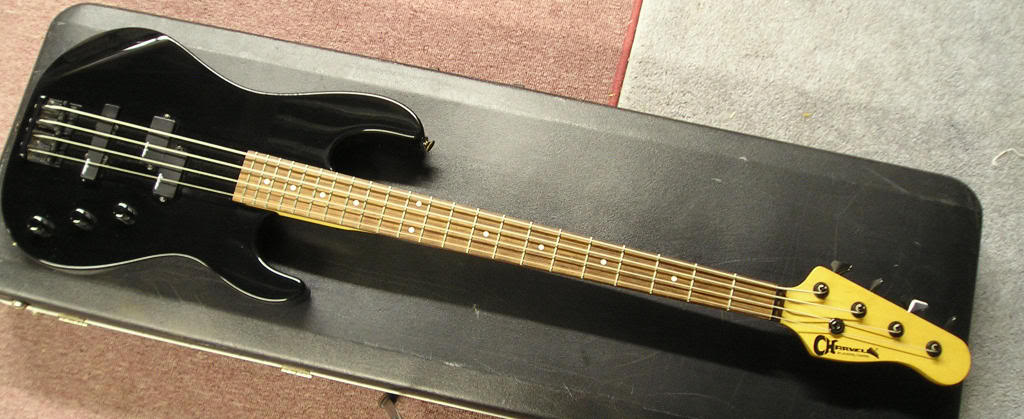
That is a wonderful "almost-but-not-quite" Fender-esque headstock that if I was ever having a Warmoth Jazz-type Bass built for me I'd try and duplicate. And at the risk of me derailing with another Phil Collen reference (yes that website pic was over the top, but if I can manage to have a body like that when I'm 53 you're damn straight I'd show it off
) his modern day signature looked about 10X better with the Charvel/Jackson "Non-Fender" headstock than it does now with the typical Strat headstock... :scowl:vs...

Ric5
Inactive
- Jan 29, 2008
- 29,772
- 30,452
- Disclosures
- I like 5, 8, 10, and 12 string basses
I play a reverse p/j yamaha bb1200. On other basses I used to buy a string set with a slightly heavier D and G, because I always found them to thin sounding compared to E and A. With the reverse p that's not nescessary. Also the reason a reverse position might be better in a P/J is the bass-p is in the original p-position and the treble p is closer to the neck, where it's almost in a neck j-position. At least that's how they're postioned in most p/j's. I think thats makes the overall result still very close to Leo's laws.
Some single reversed p's are reversed around the same mid-point, or the bass-p is closer to the bridge. That would probably be more of a change in sound towards a traditional P.
Some single reversed p's are reversed around the same mid-point, or the bass-p is closer to the bridge. That would probably be more of a change in sound towards a traditional P.
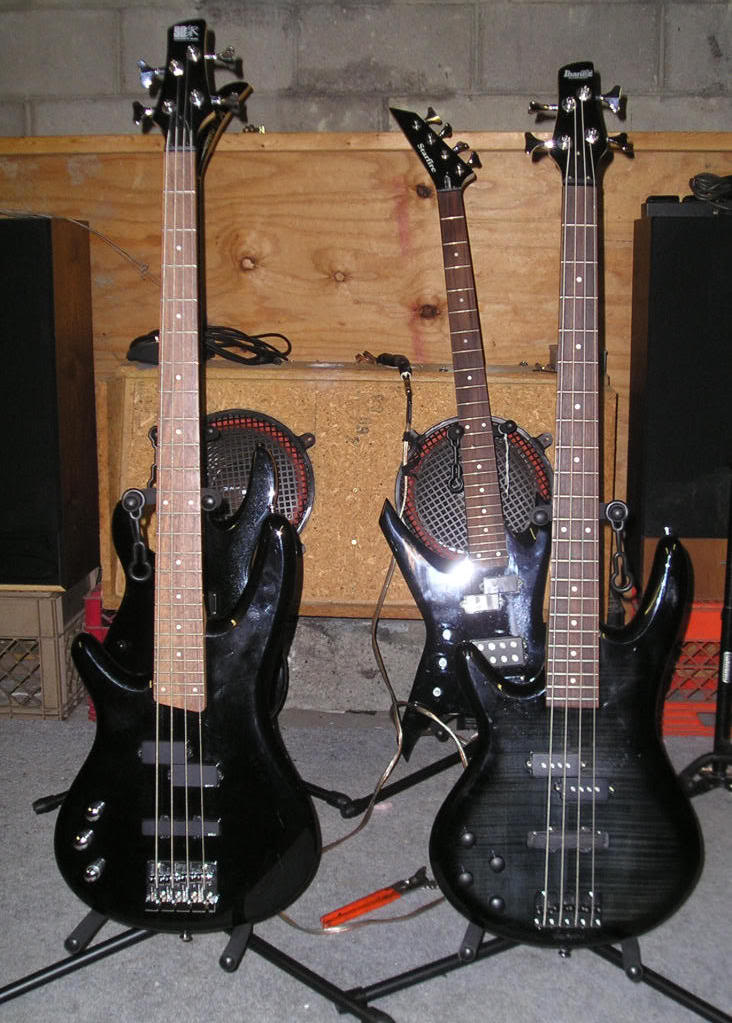
I just realized that although I have these 2 strung up inverted, these Ibanez units have rev-p
.
pretend the strings are on normal and the EA is on the bridge side of the P.
Which also means any non-rev-p on a lefty with inverted strings becomes a rev-p tone maker
.
pretend the strings are on normal and the EA is on the bridge side of the P.
Which also means any non-rev-p on a lefty with inverted strings becomes a rev-p tone maker
The active Jazz Special had an extra fret on the neck (compared to the passive Jazz Special).
I don't know if the extra fret was related to the P pickup reversal, or if it was strictly for other reasons.
I think there was P pickup reversal on some older active Yamaha BBs as well, but I think the number of frets was the same.
I used to want a Yamaha BB3000, but after realizing that the BB2000 had the reverse P config, I did some changes to my GAS list.

Historically, I believe you can trace the reverse-p pickup back to the mid 1970's and the L.A. session scene. Some of the session folks, like Lee Sklar, started experimenting with p-bass pickup placement - basses with dual P pickups, etc. Those guys were playing on lots of gold records....
Fender did it in the sixties, 'though it's not the usual P-pickup:
Invalid Link Removed
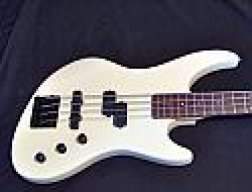
Nothing like resurrecting a one-year-old thread
My Guild Pilot has a reverse P and I love it. Like others have said before me, it seems to make more sense (to my ear - YMMV) that the E and A should have a little more punch than what they have in the traditional P placement. With the reverse p'up placement they do.
My Guild Pilot has a reverse P and I love it. Like others have said before me, it seems to make more sense (to my ear - YMMV) that the E and A should have a little more punch than what they have in the traditional P placement. With the reverse p'up placement they do.

You mean one month old? Check again sir.Nothing like resurrecting a one-year-old thread
My Guild Pilot has a reverse P and I love it. Like others have said before me, it seems to make more sense (to my ear - YMMV) that the E and A should have a little more punch than what they have in the traditional P placement. With the reverse p'up placement they do.
I'd like to hear a regular P vs a reverse P side by side some day.
You mean one month old? Check again sir.
All work and no play makes Joe lose his attention to detail. My bad.
I'd like to hear a regular P vs a reverse P side by side some day.
Where's Dan Atkinson when you need him?
Ric5
Inactive
- Jan 29, 2008
- 29,772
- 30,452
- Disclosures
- I like 5, 8, 10, and 12 string basses
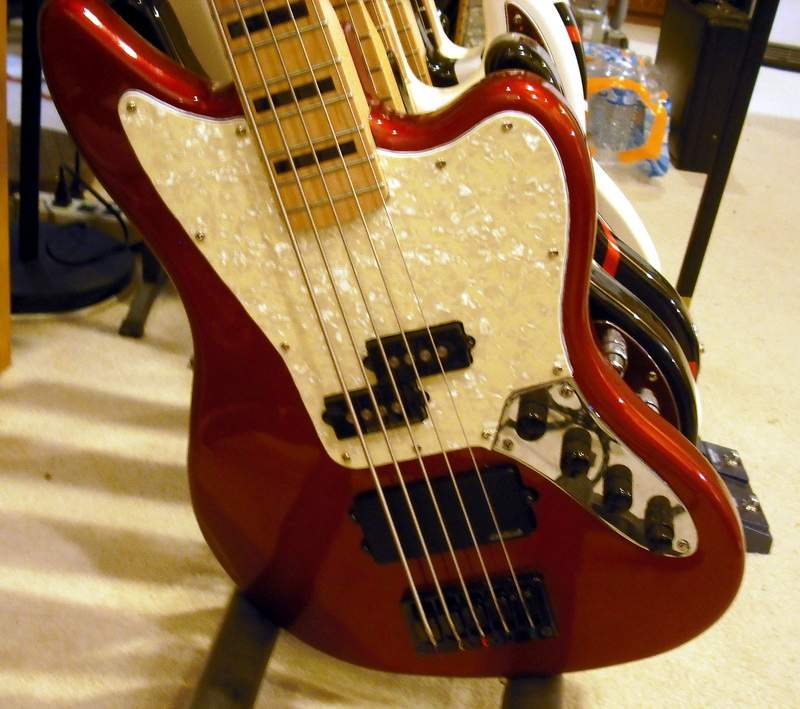
I reworked one of my jag basses and put the p pickup in correctly