If you get a new one:
- The tailpiece is extremely unlikely to fold up, like the old, black powder-coated ones did every once in a while (powder-coat/high heat, and zinc alloy don't mix well). The vast majority of the old chrome ones are fine. RIC has supposedly improved the new ones a tad (and doesn't powder coat them any more), so you might not get any tail lift at all. I have a 43-year old 4001 (7 months younger than Jeff's), and a 15-year old 4003; the tail lift on them is identical, and minimal...
- The set up on a Rick is a little
different, and at worst, more
involved than most other basses; two truss rods instead of one, and yes, the bridge can be fiddly to get it the way it needs to be; but no, setting up a Rick isn't hard. Try setting up the bridge on a Gibson Thunderbird - or an
Alembic - sometime; not exactly eezy-peezy, either. But, once it's set, that's the way a Rick bridge will stay, until you change it. I got both of mine used (no new lefties at the time), about 9 years ago now, and the set up on them has never had to be touched since I did it originally. I think the reason people are scared of setting up a Rick, is all the horror stories left over from the old 4001s, with the Dreaded Hairpin Truss Rods. They aren't
hard to adjust (pretty easy, actually), but the procedure is very different from other basses (including 4003s), and doing it wrong (and lots of people did) would result in, at best, popping the fretboard off; at worst, popping the fretboard off
and breaking the neck, too. Still, if you like to fiddle around with your bass all the time, IMO a Rick is probably not for you...
-Stability? Depends on where you live, I guess. Here in the desert, mine have never had to be messed with. Someplace with big seasonal changes? No worse than any other bass, I imagine. But, given the nature of wood, I imagine that it's as easy to get a fussy Rick as anything else...
And as for Dave Reaume and his sad story about
his Rick; I would have thought he'd have had the sense to check for burrs on that bridge saddle; he never mentioned what kind of strings he was using (cheap junk will break on
any bass); and you'll notice he's Canadian (big temp/humidity swings). So, he prefers Fenders - good for him; I like my Fender P-Bass, too. Difference of opinion is what makes horse racing...








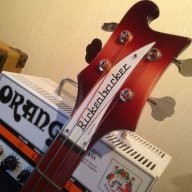


 Otherwise, they are pretty much maintenance free outside of an occasional (seasonal) minor adjustment of the truss rods. My older (March '73) 4001 (with the old style rods) never needs adjusting so long as I use the same tension strings on it.