• TalkBass has been independent since 1998. Add your voice.
    Create a free account to reply to discussions, view embedded media, and browse with fewer display ads.
    Join freeLog in
    Want zero display ads or expanded classifieds tools? Compare plans.

Right Hand Habit - Plucking over the neck

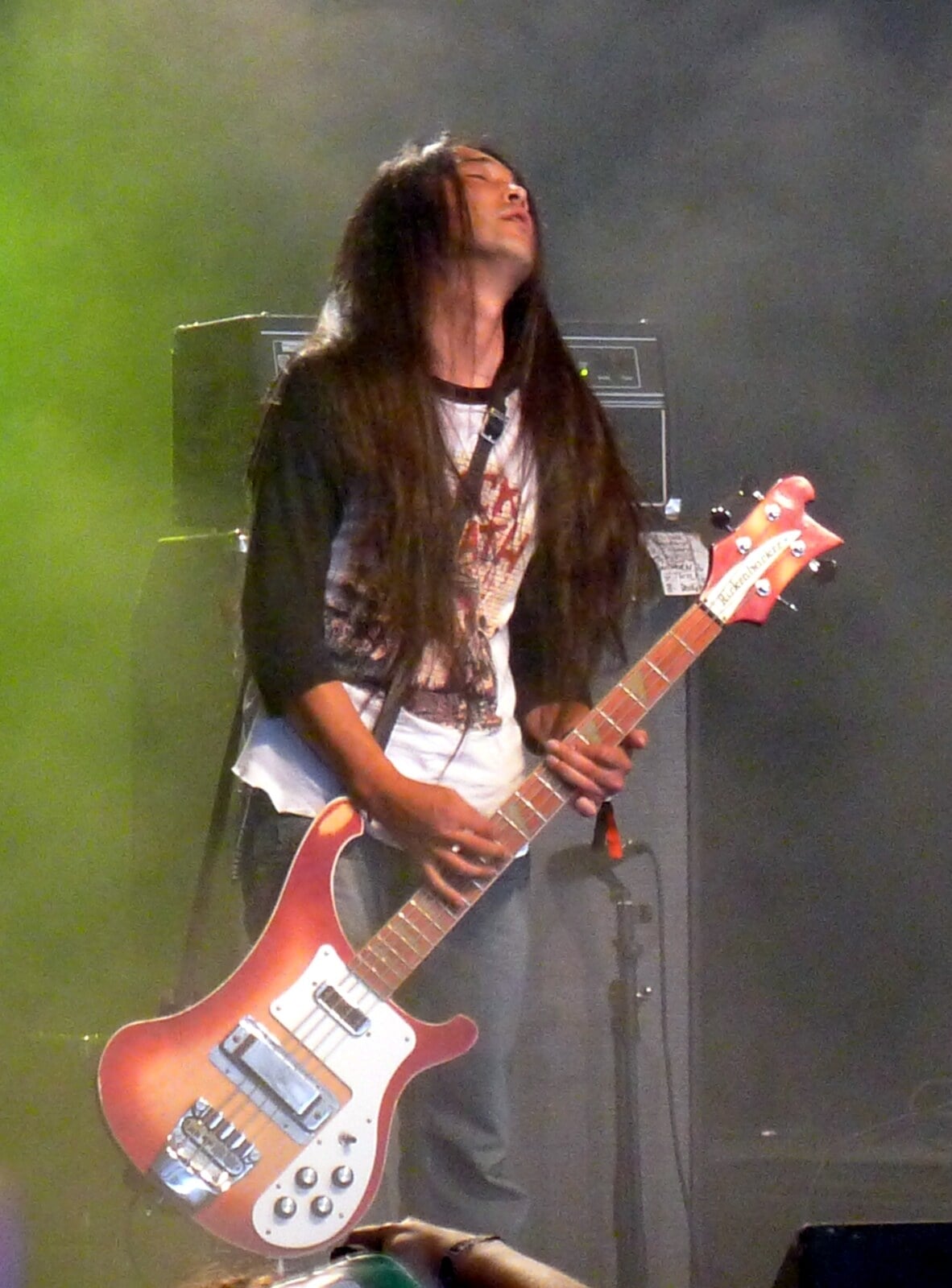
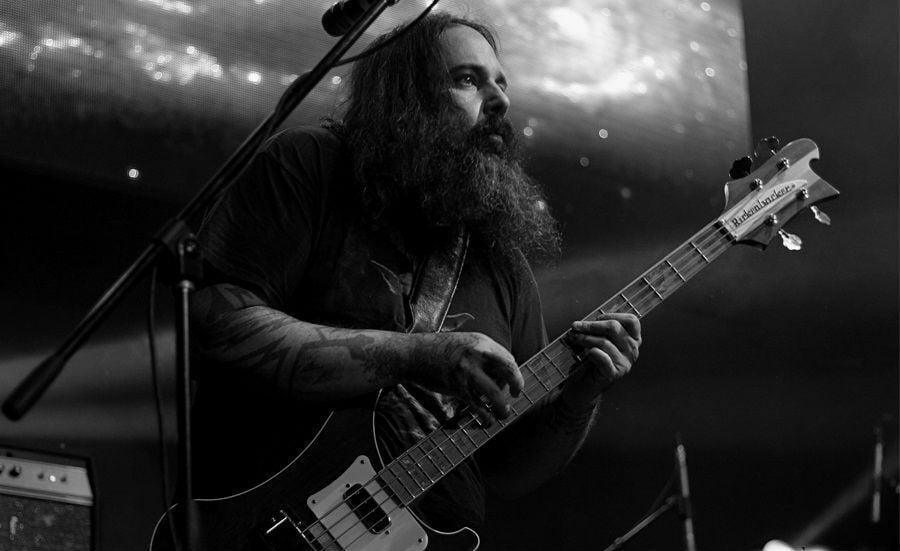
On a scale from Geezer Butler to Tatsu Mikami, are you an Al Cisneros?
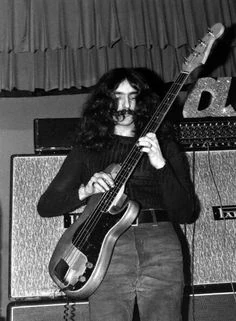
IMG_3988.webp
IMG_3990.jpeg
IMG_3989.jpeg
 
What's the problem? So you anchor on the neck and play over the fingerboard? So what? Anchor wherever you want, as long as it gives you the tone you want. I'm assuming you aren't plucking in the middle of the neck, which would not sound good at all.

You should practice anchoring at various points, and also not anchoring. I'm not an advocate of floating thumb but you should be able to play with your hand floating, it just depends on the situation. For example, if you are playing chords you may use your thumb plus one or two fingers to pluck, so obviously nothing is anchored.
 
Not sure why you think that’s a bad habit. The farther away from the bridge is a nicer, more flexible feel. I play different area on different basses but never close to the bridge. Always between the end of fretboard and middle of the bass. Also I prioritize comfort over everything so sometimes my position is based on what is most comfortable.
 
My bass technique was largely self-developed. Sub-consciously, I ended up over the neck, that's the just what sounded right to me in the music I developed on.
If it works, it works.

Now, when I started learning more, learning to play elsewhere was simple.
Play a song that relies on playing near the bridge. I just had to properly learn one song (actually just one lick), and that was it.
This also happened without an explicit awareness.

Nowadays I'm very aware of the tonal differences and I will move as I feel. Though, I still favour those, round smooth, over neck sounds.

I would recommend finding a song or lick, something very distinct, with a sound that comes from the bridge. Preferably something that's otherwise just clean bass, no effects.

It's really a matter of connecting what your hands are doing with what you hear.
Already been said:
IMHO, the importance of developing that close innate connection between the feel of the string under the fingers and the sounds being produced is huge, yet rarely if ever mentioned outside of classical strings - feeling the string through the bow. It's like conversations in a loud room and knowing what your voice sounds like even when you can't really hear yourself.
 
Embrace all possible plucking positions.

I love to deliberately choose where along the string I pluck, based on the sound I want / the material needs
I will even sweep the range of positions as I pluck, within one phrase, to get a cool EQ envelope change

spend some time with each song an experiment with which possible position sounds right for the song (or section)
Include that plucking choice with as much consideration as you would give the notes you pluck for the song at hand.
 
When I started learning to play the bass I tried to play in the “sweet spot” in regards to a specific bass guitar. Most of the time it didn’t work for me. It always felt awkward and strained. As JutMitch stated, I play where it’s comfortable for me.
 
Lots of good suggestions above, but here's a different take (which might or might not be helpful):

It sounds like your right hand "wants" to be near the end of the neck, as if this is the position that feels most natural or comfortable to you. This got me to thinking that maybe you could change this by tweaking something about the position in which you hold the bass -- e.g., by shortening or lengthening the strap, or raising or lowering the angle at which you hold the neck -- which might change where your plucking hand feels most natural/comfortable and thus reduce the degree to which your hand "wanders" to places you don't necessarily want it to be.
 
Huh? Did you watch the first video? Cisneros hitting the string with downward percussive motion is tapping, perhaps not classic "harmonics tapping" but it is tapping. I didn't watch the other video.

He’s known to play there to get the string slapping on the frets and the softer attack from picking that far from the bridge. It’s a common doom metal technique that originated from early Geezer (though more recent videos of his performances show he no longer plays as high on the fretboard as he did in older videos). Call it what you want, but it’s not considered tapping by those familiar with it.
 
  • Like
Reactions: BassicJazzy
He’s known to play there to get the string slapping on the frets and the softer attack from picking that far from the bridge. It’s a common doom metal technique that originated from early Geezer (though more recent videos of his performances show he no longer plays as high on the fretboard as he did in older videos). Call it what you want, but it’s not considered tapping by those familiar with it.
Ok, that sounds reasonable. I'm not a metal guy, though I appreciate good metal. I'm also not a tapper but I've been known to slap frets on occasion too.
 
  • Like
Reactions: monsterthompson
This looks about right.

As others have pointed out, feel free to embrace that technique, being mindful of how it sounds relative to other picking positions. I don’t know that I’ve seen a player who exclusively picks/plucks that high up (other than Tatsu with that extreme strap situation) but there’s a time and a place for it.

I find anchor points on a bass for my thumb can create picking position habits. Resting my thumb on the pickup cover or a ramp/bar can lock me into that position. I exclusively play seated these days and it has changed my right hand position/technique. I’m probably not a great instructor for how to change things, but I’ve switched between fingers and picks and basses over the years and noticed there are generally some sweet spots that work better than others, and that context is important.
 
This guy plays over the neck a lot. He's pretty good ;)

View attachment 7384802
He was the first player I thought of when I saw this thread.
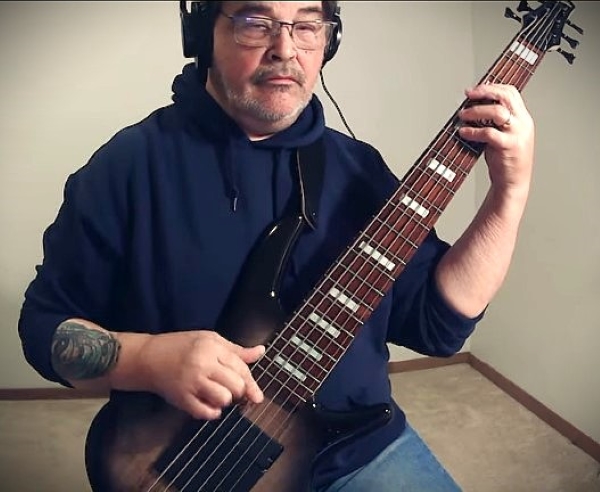
I tend to play over the neck mostly myself, especially if I'm only using my fingers.

6String-new2.jpg


Unless I'm playing with a pick, then it may be close to the pickups or more towards the bridge. I guess it really depends on what tone I'm after.

Mark-PJ-pick-playing.jpg
 
  • Like
Reactions: Queue
Al Cisneros with Om and Sleep and others plays his Rickenbacker over the end of the fingerboard and his setup and technique give him one of the thickest and heaviest sounds you will ever hear from any bass
Neck p'up on the Rick is a tone monster, one of the heaviest bass tones ever. I remember that on my '72 4001, it was powerful and deep, but clean, unlike the hum bucker on the Gibson. Back then I played LOUD. Figured if I couldn't play better, play louder. I used to run neck p'up through compressor to deepen it even more, increase the sustain, then put my bridge p'up through the effects, mostly phaser and distortion/OD. Playing the Rick over the neck like that is like double dipping the double fudge ice cream. Better nail down the Cab or it might start moving?

Now, in my bedroom, my plucking fingers barely touch the strings. Gotta keep it quiet, in apartment.
 
It certainly is one of the sounds we have in our pallet, plucking up there. Can be a great tone for sure for some music. As for it lacking definition, it really comes down to your phrasing, note lengths - the spaces between the notes are what gives the bass definition. Listen to reggae players, many pluck up there most of the time--how come their parts can sound so clear and defined when using a tone that is almost all low end, even in a live setting? It's all about the spaces between the notes, note length, and phrasing.
 
  • Like
Reactions: tonym and dlmarquez
You have a LOT of tone control simply by where you pluck the strings.

1) Begin playing a repeating pattern or riff over the end of the neck, where you are now.

2) While this is going on, DO NOT touch a single knob on the bass, amp, anywhere.

3) As you're repeating that figure, slowly slide your plucking hand steadily towards the bridge. You will notice that fat, bassy tone over the fingerboard end slowly becomes brighter to downright Tele-twangy right next to the bridge saddles. You will also feel the tension, the 'loose-ness' of the strings tighten up as you head towards the bridge.

Often, that's the only tone control I use once the amp and bass are dialed up where I want them. And this is completely free, doesn't require a new bass, a different amp, pedal or pedal board, it's present 100% of the time totally free. Change your touch, go to slap or use a pick instead of fingertips, even more voices available.


As far as breaking yourself of ONLY playing there, play in front of a full-width mirror, i.e., a mirror where you can see the whole bass, and watch your hands IN THE MIRROR, not looking down at them directly. A wide mirror is invaluable as far as watching what your hands are doing as if you were standing in front of yourself watching, and you can fix a lot of less than great habits from this viewpoint. A mirror is a huge help to break you of watching your hands as well, REALLY important if you ever need to watch charts. After a length of time, you will not have to look, your hands will feel their way along and they'll know where they are on the fingerboard or where A on the D-string is without looking, for instance.
 
Last edited: