• TalkBass has been independent since 1998. Add your voice.
    Create a free account to reply to discussions, view embedded media, and browse with fewer display ads.
    Join freeLog in
    Want zero display ads or expanded classifieds tools? Compare plans.

Rounds which sound like flats

About thunk/thump/punch/etc., I had a set of GHS PW M7200 (44-106) on my CV 50s for a short time. Maybe because it has a thick core, or because it's unusually stiff for some other reason, I noticed a thump from them, a little pulse right after the pluck, not the same as a flat but could certainly stand in. It was more punchy in this way than Roto 66 45-105, for example.
I don't mean a flat's thump (with dissonant components as I understand it) which I never liked. I mean a very brief percussive thing.

-At that time, I wrongly ascribed this to the fact that the SCPB pickup is a little farther forward than a J pickup, and/or because of the single-polepiece-per-string-transient thingy. No, I'm pretty sure it was those strings, as it disappeared with other strings while I wasn't noticing.
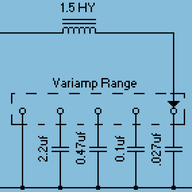
-At that time, I didn't yet know that its tone cap was so small, so partly for this reason the PWs were brighter than I wanted and I changed them. (It came with a .047uF. Advertised is .068 I think, and original Fender was .1uF I think.)

I praised Roto 66 earlier (partly because they are not NPS as I opined).
GHS PW (although not SS) are also not plated, so I could revisit them someday.

So, with a bigger capacitor it's possible that GHS PW could serve even better than Roto 66 with regard to this specific topic.
 
Last edited:
  • Like
Reactions: 4StringDave
GHS Balanced Nickel are stiff, and not plated (pure nickel outer).

Thanks for mentioning the Balanced Nickels. I don't know why I didn't think of them until now.

What do Fender 9050 Flats and GHS Balanced Nickels have in common? Green silk!

I've only tried the light set (40-101) of the BN, and while they're relatively firm in feel for a round core, I didn't find them "stiff" as such. In fact, I would say the 44-106 would actually be closer to the Fender 9050L (45-100) in terms of overall stiffness.

Pure nickel roundwound on a round core = deep, focused lows with warm, smooth mids without a zingy top end. Once they settle into their nicely broken-in state, that's where they stay for a long time.

Something that may be worth consideration by the OP...
 
Very true. My stainless steel round wounds can sound very warm & mellow if I need them to.

I love the feel & tone of flats, but if I could use only one string, it’d be SS rounds.
Y'know, Lee Sklar uses SS rounds, on his famous Frankenbass too on all that James Taylor stuff and similar(many would grab for flats for that music). To say his sound is warm and mellow would be an understatement. Of course he also has Lee Sklar's hands....
 
Y'know, Lee Sklar uses SS rounds, on his famous Frankenbass too on all that James Taylor stuff and similar(many would grab for flats for that music). To say his sound is warm and mellow would be an understatement. Of course he also has Lee Sklar's hands....

Lee Sklar has used GHS Super Steels 40-58-80-102 exclusively on his Frankenbass since it was built in 1974. The interesting thing to note is Sklar says he prefers their "well broken-in tone" and only changes them every six months or so even during his busiest times going in and out of recording sessions.
 
Lee Sklar has used GHS Super Steels 40-58-80-102 exclusively on his Frankenbass since it was built in 1974. The interesting thing to note is Sklar says he prefers their "well broken-in tone" and only changes them every six months or so even during his busiest times going in and out of recording sessions.
I've been way into flats since the early-mid 90's(I pride myself on being an "early adopter" in the second wave of flatwound popularity;)). Funny, I'm totally on a roundwound kick right now, and most of the music I'm playing is rootsy, folky, acoustic-y, country-esque type stuff. Maybe it was just boredom, I dunno--just decided to rock the Jazz with rounds instead of the P w flats for that music and it's been a good reminder that lots of different things can work just fine, and that most of your sound really is "in your hands".
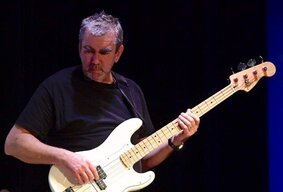
 
I’m using well broken in DR nickel Lo riders on a Fender jazz. I haven’t “switched” — but I’m not missing the flats that I’ve predominantly played on for the last 40 years.

I think that discussions about strings don’t work if you don’t talk about the musical context you’re using them in. For instance, the well broken-in, thumpy nickel Lo riders work great for reggae.

Likewise — sure, we all want to use strings that feel “right” but - why have a discussion only about how a string feels but not talk about what they sound like and in what musical context you’re using them?
 
  • Like
Reactions: pbass2
I think that discussions about strings don’t work if you don’t talk about the musical context you’re using them in. For instance, the well broken-in, thumpy nickel Lo riders work great for reggae.
I'm too am using them for reggae and dub, and also all manner of American roots music. It's funny, I did some dub tracks recently w my Jazz with old NLR's, and then put some Labella flats on it for a few tracks---I'm totally feeling the NLRs more for that material, on that particular bass at least.
 
  • Like
Reactions: Selim
I’m using well broken in DR nickel Lo riders on a Fender jazz. I haven’t “switched” — but I’m not missing the flats that I’ve predominantly played on for the last 40 years.

I think that discussions about strings don’t work if you don’t talk about the musical context you’re using them in. For instance, the well broken-in, thumpy nickel Lo riders work great for reggae.

Likewise — sure, we all want to use strings that feel “right” but - why have a discussion only about how a string feels but not talk about what they sound like and in what musical context you’re using them?

I play in three bands - a sixties band, a blues/rnb band and a country band (50s to 90s country mainly)