
• TalkBass has been independent since 1998. Add your voice.
    Create a free account to reply to discussions, view embedded media, and browse with fewer display ads.
    Join freeLog in
    Want zero display ads or expanded classifieds tools? Compare plans.

Double Bass Rubber Mute Practice: Hurts or Helps Arco?

Apr 16, 2009
2,564
2,990
When on-deck (baseball) batters swing two bats (or a weighted bat) in the on-deck circle before stepping up to the (baseball) plate, it's supposed to make swinging one bat feel easier, correct?

How does this logic apply to arco practice with a rubber mute?

Will making the string speak be easier or harder once I remove the mute?

In a post-pandemic world, it's become clear to me that I'll never ever be alone in my house again, so I find I'm more self-conscious about my arco practice than I used to be. (I'm primarily a jazz-pizz player). I find that playing with the rubber mute encourages me to practice a bit longer, and attempt more "bad sounding" things, like string crossings and syncopated articulations, etc...

So am I helping or hurting my non-muted arco technique when practicing with the rubber mute?
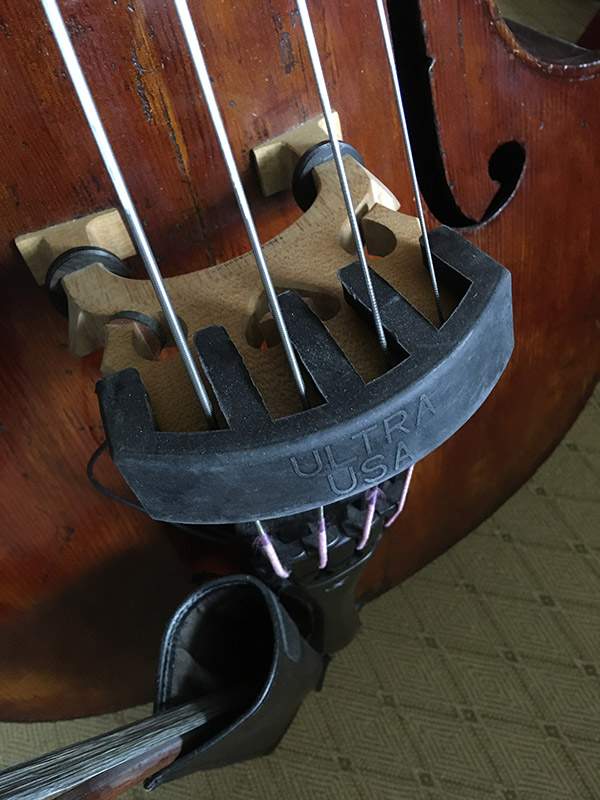
rubber_mute.jpg
 
Will making the string speak be easier or harder once I remove the mute?
View attachment 4925167
The answer is: try it and see.
I find playing with the practice mute to be easier than without. You have to find some time to practice without it or you tend to get a false sense of your sound and the basses response to your technique. A bit of muted playing when necessary isn't going to mess you up. I use the mute late at night all the time.
 
  • Like
Reactions: fu22ba55
In a post-pandemic world, it's become clear to me that I'll never ever be alone in my house again, so I find I'm more self-conscious about my arco practice than I used to be. (I'm primarily a jazz-pizz player). I find that playing with the rubber mute encourages me to practice a bit longer, and attempt more "bad sounding" things, like string crossings and syncopated articulations, etc...
View attachment 4925167

Are you actually bothering anyone other than yourself? Is it possible you're self-imposing unnecessary boundaries? What kind of feedback has your playing gotten from the people in your household?

For me, the ultra mute was once necessary to avoid neighbors complaining. Now that I have more privacy during practice, I use it once in a while while to give my ears a break from the volume of the bass, usually during left hand-focused practice. It's Easy Mode for the right hand because all of the usual variables (placement, speed, weight) seem to matter much less. If you practice only with the mute on, you will only be good with the mute on.
 
  • Like
Reactions: Jason Sypher
Are you actually bothering anyone other than yourself? Is it possible you're self-imposing unnecessary boundaries? What kind of feedback has your playing gotten from the people in your household?

It's not about bothering, as much as it's about how would you practice differently if you KNEW nobody else could hear you? Everyone in my house says "don't worry, it doesn't bother us, etc..." but I definitely notice a difference in my playing on the rare occasions I'm home alone. I take more risks and push the boundaries more. I feel more freedom to make mistakes, so I practice the stuff that sounds bad (in an effort to make it sound better).

It's definitely a psychological trick, but Heath even mentions it around 2:00 in the video above.

It's Easy Mode for the right hand because all of the usual variables (placement, speed, weight) seem to matter much less. If you practice only with the mute on, you will only be good with the mute on.

Understood, thanks.
 
Personally I would use it sparingly. The bass responds so differently with a mute that I rarely want to reach for it. The goal with arco is to immediately engage the top with the back, to get these vibrating and create a moving column of air/sound circulating in the bass. The muted bridge blocks that from happening. Practicing while being heard is a reality we must all deal with from time to time. Get comfortable with your playing and do your best to make your practice time efficient and effective. If you feel overly self conscious occasionally just practice slow long tones quietly. Work on dynamics instead of passagework. Focus on sound production and try to make every note beautiful. That shouldnt bother anyone. Along those lines, try to practice when you have a moment alone. When the weather becomes nice take your bass outside and practice under a tree.
 
I think the Jason Heath video makes perfect sense. Would trying a bit of practice with a towel or t-shirt stuffed behind the tailpiece also be worthwhile?? And of course, there are many other kinds of mutes out there, but I'm probably over-complicating things.
 
  • Like
Reactions: fu22ba55
It's not about bothering, as much as it's about how would you practice differently if you KNEW nobody else could hear you? Everyone in my house says "don't worry, it doesn't bother us, etc..." but I definitely notice a difference in my playing on the rare occasions I'm home alone. I take more risks and push the boundaries more. I feel more freedom to make mistakes, so I practice the stuff that sounds bad (in an effort to make it sound better).

It's definitely a psychological trick, but Heath even mentions it around 2:00 in the video above.

You can't let yourself worry about what other people think of your practicing. I might try another psychological trick. As part of your warmup, include stuff that you know sounds terrible. Whatever that might be. Once you get that out of the way, maybe you won't have to worry about other parts occasionally sounding bad.
 
  • Like
Reactions: fu22ba55

Latest posts