• TalkBass has been independent since 1998. Add your voice.
    Create a free account to reply to discussions, view embedded media, and browse with fewer display ads.
    Join freeLog in
    Want zero display ads or expanded classifieds tools? Compare plans.

Scuff Buffing

Stealth57

Supporting Member
Aug 28, 2020
11,500
67,523
NorCal
www.bigteardrop.com
Previous, you all suggested using Meguiar’s Ultimate Compound to take out the final scratches and restore the shine in a poly finish after wet sanding.

I have a scuff in the headstock of a 2015 Gibson Thunderbird and tried the compound but it didn’t touch the scuff. Any suggestions or do I need to be more aggressive with sanding?

Thanks in advance.
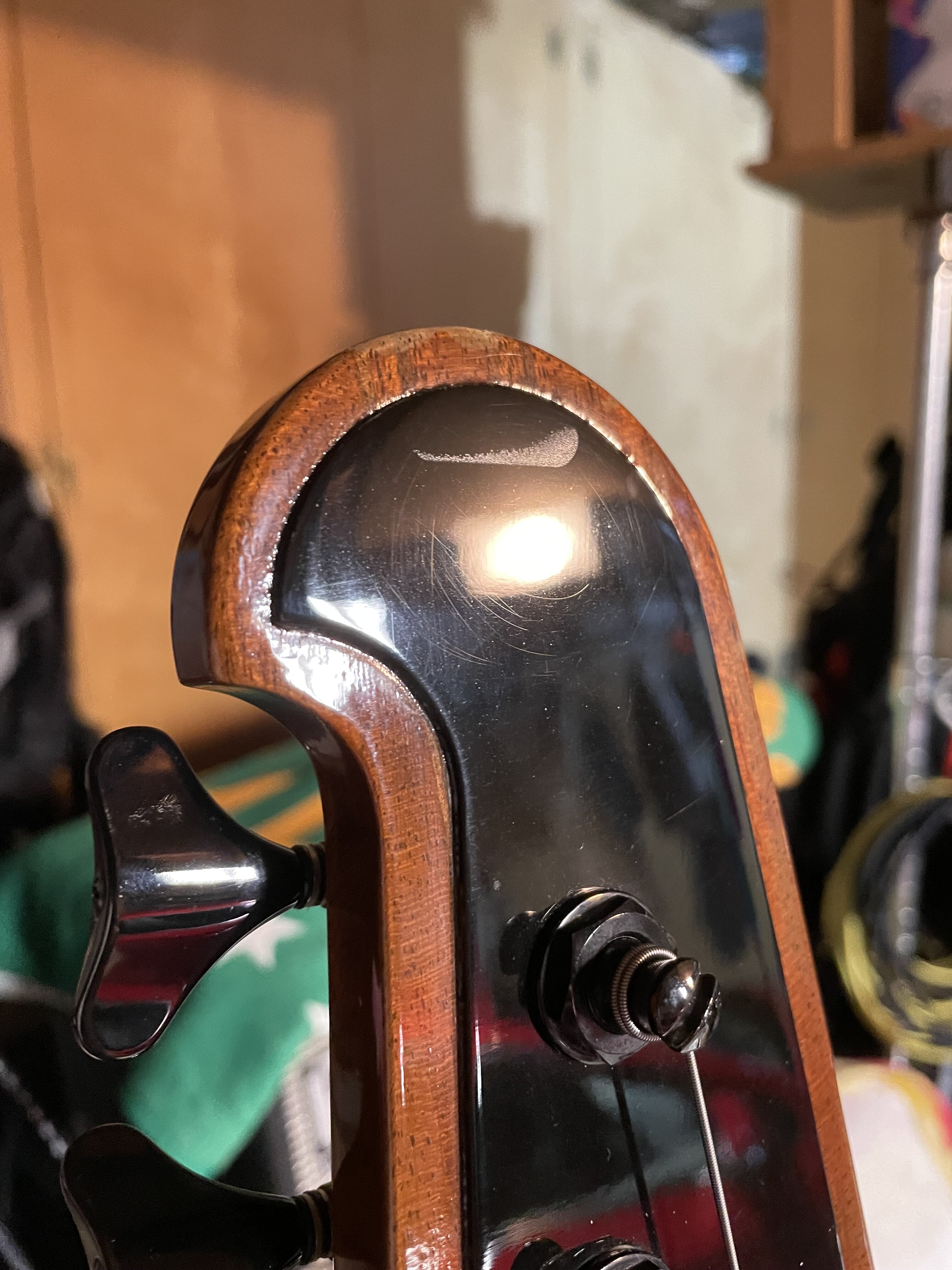
IMG_6032.jpeg
 
If it were my bass I would try Meguiar Show Car Glaze. If that didn't work then I'd go to their Fine Cut Cleaner. The idea being you work the scratches from the most abrasive compound to the least abrasive, bringing up the shine. Buff with a Clean 100% cotton cloth followed by a microfiber cloth to finish bringing up the shine.

There are a myriad of products that would work. That's just the approach I have used on quite a few basses to remove scratches. I'm sure there will be other useful suggestions.
 
  • Like
Reactions: Stealth57
If it were my bass I would try Meguiar Show Car Glaze. If that didn't work then I'd go to their Fine Cut Cleaner. The idea being you work the scratches from the most abrasive compound to the least abrasive, bringing up the shine. Buff with a Clean 100% cotton cloth followed by a microfiber cloth to finish bringing up the shine.

There are a myriad of products that would work. That's just the approach I have used on quite a few basses to remove scratches. I'm sure there will be other useful suggestions.
Many thanks
 
That scuff needs to be wet-sanded first, then buffed. The scratches and indentations are way too coarse to be taken out by buffing alone. If it were here in my shop, I would sand it with 1000 grit paper on a small hard rubber block, with drop or two of mineral oil as the lubricant. Then 2000 grit. Then I would buff it with a coarse buffing compound; my favorite is 3M's 05954 Super Duty Rubbing Compound. Finish it up by buffing with a fine buffing compound. Meguiar's Ultimate is a good choice.
 
I agree with the methods mentioned above... however when I was looking at the scuff zoomed in on my large screen I started wondering about the origin of the scuff. It has a remarkably perfect shape, and the texture below it is also different from most scuffs. If I'm playing 'clueless internet sleuth', I have to wonder if it isn't the remnants of a sticker that has been absorbed into the finish?
Screenshot 2023-08-14 084510.jpg
 
I agree with the methods mentioned above... however when I was looking at the scuff zoomed in on my large screen I started wondering about the origin of the scuff. It has a remarkably perfect shape, and the texture below it is also different from most scuffs. If I'm playing 'clueless internet sleuth', I have to wonder if it isn't the remnants of a sticker that has been absorbed into the finish?
View attachment 5157458
I bought this used from GC and did a video inspection prior to the purchase. That scuff wasn't there in the video. I assume it was done in shipping. The HS was covered with bubble wrap and the shipping box was pretty beat up.
 
I agree with the methods mentioned above... however when I was looking at the scuff zoomed in on my large screen I started wondering about the origin of the scuff. It has a remarkably perfect shape, and the texture below it is also different from most scuffs. If I'm playing 'clueless internet sleuth', I have to wonder if it isn't the remnants of a sticker that has been absorbed into the finish?
View attachment 5157458

yeah if that’s the scuff you’re talking about, it’s not a scuff, it looks to me like some sort of reaction with the finish. I’m guessing this is a nitro finished Gibson?

wet sand and buff would be the way to go.

What I would try first is hitting it with either a flash coat of nitro (4:1 thinner:nitro) or something like a blush out coat, just to reflow the finish in that area. You’d probably still need to wetsand and polish but you might get lucky. Either way you’d reduce how much sanding would be needed.
 
  • Like
Reactions: Stealth57
I'm guessing that the "scuff" is where some packing tape stuck onto the finish for a little while. Or, like Beej suggested, it might have been a sticker. It looks more like a patch of adhesive residue damage than an abrasive scuff. The rough whitish lumps may be mostly tape adhesive. A thin layer of sticky goo. It's hard to buff out sticky goo.

When you tried a bit of buffing before, you probably just stuck some white buffing compound to the adhesive, making it look worse.

Before you try wet sanding, wipe the area with a little bit of Windex on a soft cloth. A lot of that rough stuff may just come off, and the paint underneath may not be scratched much at all.
 
Last edited:
I'm guessing that the "scuff" is where some packing tape stuck onto the finish for a little while. Or, like Beej suggested, it might have been a sticker. It looks more like a patch of adhesive residue damage than an abrasive scuff. The rough whitish lumps may be mostly tape adhesive. A thin layer of sticky goo. It's hard to buff out sticky goo.

When you tried a bit of buffing before, you probably just stuck some white buffing compound to the adhesive, making it look worse.

Before you try wet sanding, wipe the area with a little bit of Windex on a soft cloth. A lot of that rough stuff may just come off, and the paint underneath may not be scratched much at all.

Tried a couple solvents ( Windex, etc.) and that didn’t touch the white mark. Running my nail over it feels a granular rough spot, though not deep.


Lighter fluid works wonders at removing sticker adhesive.
 
  • Like
Reactions: Stealth57