• TalkBass has been independent since 1998. Add your voice.
    Create a free account to reply to discussions, view embedded media, and browse with fewer display ads.
    Join freeLog in
    Want zero display ads or expanded classifieds tools? Compare plans.

SHELDON DINGWALL is building MY DREAM BASS

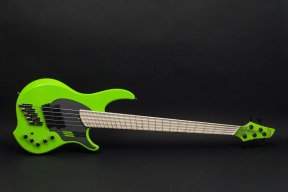
For those tracking this site here's how my Z2 came out...

Looks great, sounds brilliant, feels wonderful. I now know the difference between an excellent instrument and an exceptional one.

Cheers
Ross

Hey Ross, I didn't see your post or the replies it generated...I've been busy doing some home repairs!

It looks great and I'm sure it sounds great too. I love the bursted headstock, and I really like how the spalt came out along with the matching pickups (I think you made the right choice there!)

I'll be playing it's sister bass tonight for a rehearsal...I hope you like yours as much as I do mine!
 
I'm very curious about the dual density body and how it affects the tone ,if just nuances or is really noticeable .
At first i thought 2 different species woods were used for the body ,
but grains look very similar ,so dunno how they misured "density" if they used the same wood .

But truly ,it's athing i'm interesed as in the basses i have/had ,expecially 6ers
one thing that i would like is to get focused basses ,
and cutting "not piano-like" on the higher registers ,and never got that on the same bass ;
getting first thing with hardwoods and second one with mid oriented woods (off course could'nt have tried them all ,but got that feeling).
Expecially on slap technique , i dont dig at all that "piano-tone during" pops .

How do you feel with your intrument at that^ ,if you ever bother to check that "dual density"?
Perhaps a similar solution would help ?
 
I'm very curious about the dual density body and how it affects the tone ,if just nuances or is really noticeable .
At first i thought 2 different species woods were used for the body ,
but grains look very similar ,so dunno how they misured "density" if they used the same wood .

But truly ,it's athing i'm interesed as in the basses i have/had ,expecially 6ers
one thing that i would like is to get focused basses ,
and cutting "not piano-like" on the higher registers ,and never got that on the same bass ;
getting first thing with hardwoods and second one with mid oriented woods (off course could'nt have tried them all ,but got that feeling).
Expecially on slap technique , i dont dig at all that "piano-tone during" pops .

How do you feel with your intrument at that^ ,if you ever bother to check that "dual density"?
Perhaps a similar solution would help ?

In my case, there are two different density pieces of ash. Ash can be very heavy or very light while looking the same. In some of Sheldon's basses he uses different species of wood for the body parts.

Here's his statement from the website:
The use of high density Swamp Ash on the bass side increases sustain, clarity and punch of the B and E strings. Low density Swamp Ash on the treble side keeps the G and D strings nice and warm sounding.

The dual density concept used in the Lee Sklar and Prima Artist series was such a success it led us to trying it in a slightly different way on the Z-series bodies.
Swamp ash is a highly sought after, great sounding wood. The problem for luthiers is that it is also very inconsistent weight wise. Not only from board to board, but from one end of a board to the other! This is why you see such a variance in the weights of swamp ash basses.
Using our dual density concept we separate the dense, heavy blanks from the lightweight ones. The heavier blanks get used for bass sides only and light ones get used for the trebles. Not only does this provide the tonal benefits of the dual density system, but also all of our swamp ash basses are very consistent in weight and tone.


Seems to be true to me.The other thing to consider is the fact that the scale length is different than most other basses. The G string is a standard 34", but each other string is progressively longer, meaning that those strings stay even tensioned and the tone remains clear and solid all the way down to low B.