• TalkBass has been independent since 1998. Add your voice.
    Create a free account to reply to discussions, view embedded media, and browse with fewer display ads.
    Join freeLog in
    Want zero display ads or expanded classifieds tools? Compare plans.

Short-scale basses are no substitute for long-scale basses?

Can a short-scale bass substitute for a long-scale bass?

  • Yes

    Votes: 322 83.6%
  • No

    Votes: 63 16.4%

  • Total voters
    385
  • Poll closed .
Because I have a somewhat painful degenerative osteoarthritis at the base of my left thumb I've been playing bass mostly with short-scale basses. However, when comparing the "sound" of my rather ordinary Squier PJ long-scale bass against any of the other half dozen or so short-scale basses of various makes and models I've aquired and played it seems that it's becoming clear to me that any short-scale bass CANNOT substitute for the "sound" of a long-scale bass. What are your thoughts / insights / comments?
 
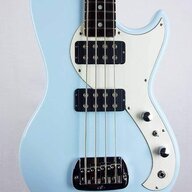
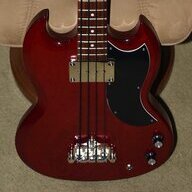
Fender Player series Mustang, Sterling Sting Ray, G&L Tribute Fallout, Squier Jaguar, Epiphone EB-0, Sire U5, Guild Starfire. All stringed with flatwounds.

All great instrments in their own right but just don't deliver what my Squier (also w/ flatwounds) delivers through the same amp (Orange Crush 50).

That's a good assortment. It's hard to recommend since we don't know what's missing to your ear.

I've got a Maruszczyk Jake with a P/MM pickup config with a coil split circuit on the MM. Extremely versatile and sounds as good as any of my long scale basses.

One thing for me is that all my short scales deliver a tone with more fundamental and less higher overtones than a long scale. I've switched from flatwounds to GHS Pressurewounds on the Muruszczyk and my Mustang and it really made them come alive.
 
A band I was in several years ago the BL had a nice fully equipped practice room, had a new at the time Squier Jaguar PJ he kept there so I wouldn't have to bring my own bass. Once setup properly I thought it played and sounded as good as any other long scale Fender-ish bass I'd ever handled. The Rumble 100 I played it through didn't hurt either.

Take the flats off and put some decent round wounds on yours, will likely fix your issue.
 
I’ve been playing long scale basses for almost 50 years now, I started out on short scale bases and retired them all, a Hagstrom I and a couple of EB3s, even a 70s Fender Mustang, because I didn’t like the sound. Later, I found out it wasn’t the basses at all, it was I didn’t know how to EQ properly.

I guess you could make a case there might be a slight difference, but nothing anyone else would know. Besides, your long scale bass isn’t going to make any sound at all, good or bad if you can’t play it.

I have a little bit of that arthritic condition in both thumbs and it’s no joke. So far it responds to deep tissue massage and stretching, but I fear there will be a day.
 
I play exclusively 34 inch 5 string basses at this point. Some guys consider those short scales.

Going a bit more on topic, it's all relative - we're talking only a bit over 10 percent difference in scale length between a 34 and most short scale basses. If you reposition the pickups to compensate (keep the same proportion of the string between each pickup and the bridge), the comb filtering is identical for the same tuning - at that point it's just a difference in how the string reacts, either being a bit bigger in diameter (to keep tension the same), or the same diameters, meaning you lose some tension.

I believe if you spent some time making sure you made scale length the only variable (positioning pickups as I suggest), and worked on strings to compensate tension, you'd find very little sonic difference due to the scale length difference.

A lot of the lore behind why short scales sound different came initially from comparing the Gibson short scales to the Fender standard long scale basses. Yes, they sound very different, but the pickup design of the Gibson mudbucker is radically different than anything Fender has ever made (something like 10x the inductance of a normal pickup), and its position right up against the neck is very different than any Fender bass pickup position. Undo those differences, and you'll find that things are much closer sonically.
 
I've always had a short scale in my stable since the early '70s. I started using short scalees more than long scales about 25 years ago and over the 15 or so years I've used short scales pretty much exclusively. Yes, in my experience short scales can substitute for long scales.

One of my favorite things about short scales I've used is that they are much better at controlling dead spots than the long scales I've used.
 
...
I believe if you spent some time making sure you made scale length the only variable (positioning pickups as I suggest), and worked on strings to compensate tension, you'd find very little sonic difference due to the scale length difference....
Well, the Fender Mustang short-scale, the Squier Janguar short-scale, The Sire U5 short-scale, and the Squier PJ long-scale have the same pickups configuration.... There's quite a noticeable difference. I'm guessing the Fender and the Squiers have exactly the same pickups.
 
Last edited: