

Yesterday I met up with Sienna George, a bassist trained at the Manhattan School of Music who also makes wooden mutes for double basses (and instruments in the violin family). In my 25 years as a double bassist I've always used a rubber mute, but a couple months back I saw a wooden mute for sale on Etsy and was intrigued because I've never felt the Tourte-style ones do all that much. Plus I like the historical authenticity of wooden mutes. After some research, I discovered Sienna's creations. I liked what I saw and heard so I reached out to her and we arranged to get together in person in NYC.
I invited the other bassists from my section to join us. I figured they might be interested in wooden mutes as well, plus I hoped it be instructive to hear the mutes on a range of instruments. Earlier in the week Sienna had sold some mutes to the NYPhil and London Phil, but there were still about 15 to explore.
Not surprisingly, wooden mutes do indeed have a very different sound from rubber mutes. And the timbral differences between the tonewoods and shapes of various mutes were also immediate. (While mutes do dampen an instrument's sound, they aren't so much for lowering volume--a player can do that with their right hand--as introducing a different timbre.) For example, the Oak mutes dampened more of the lower midrange and thus produced a muted tone with a brighter character while the Mahogany mutes dampened more of the upper midrange and treble register and thus produced a muted tone with a warmer character. This makes sense given the well-known qualities of these tonewoods. But instruments are complex systems and the only way to really know how a particular mute will sound is to try it yourself. Indeed, the most valuable part of the experience was hearing how the different mutes responded to each of our instruments. No mute sounded bad on any of our basses and sometimes comparing two mutes produced two different, but equally pleasing timbres. That said, there was always one mute which, after carefully comparison, seemed to work best with each instrument, but which mute this was varied from bass to bass. (Thank goodness for that--it would have been unfortunate if we had all wanted the same mute!) In regard to my bass, for example, everyone agreed that a symmetrical Poplar mute sounded best because of how it fit with the timbre of my bass and because of the resonances it augmented.
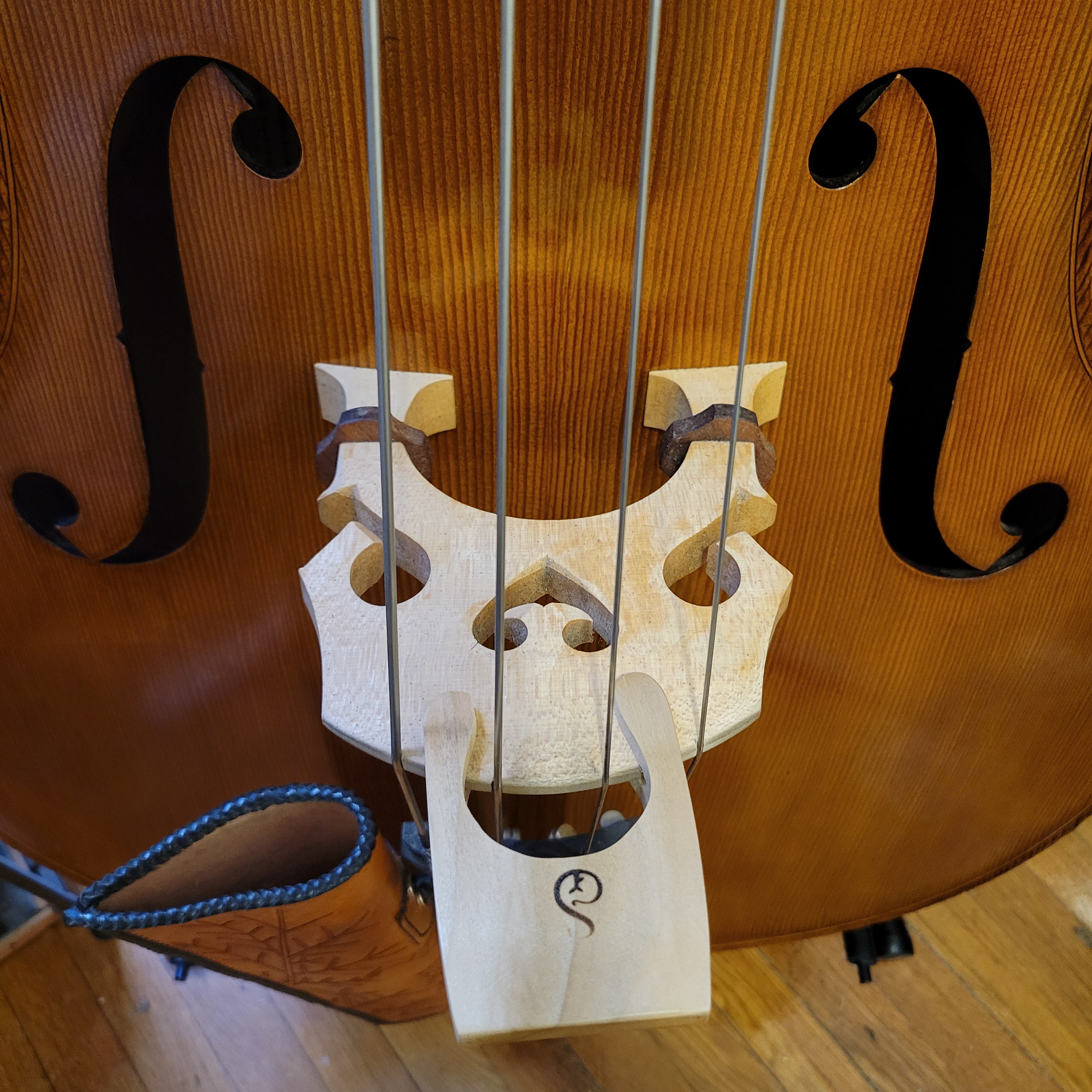
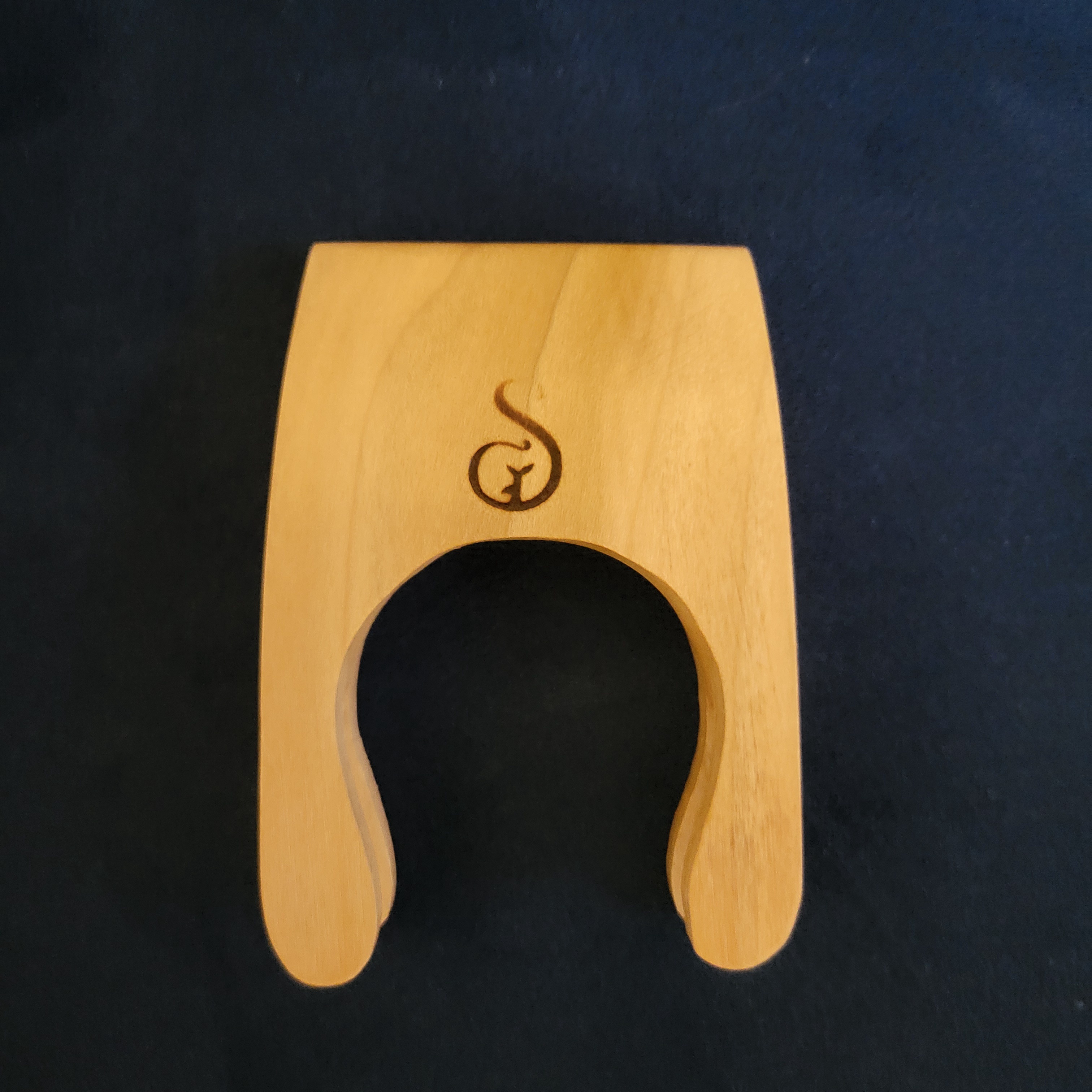
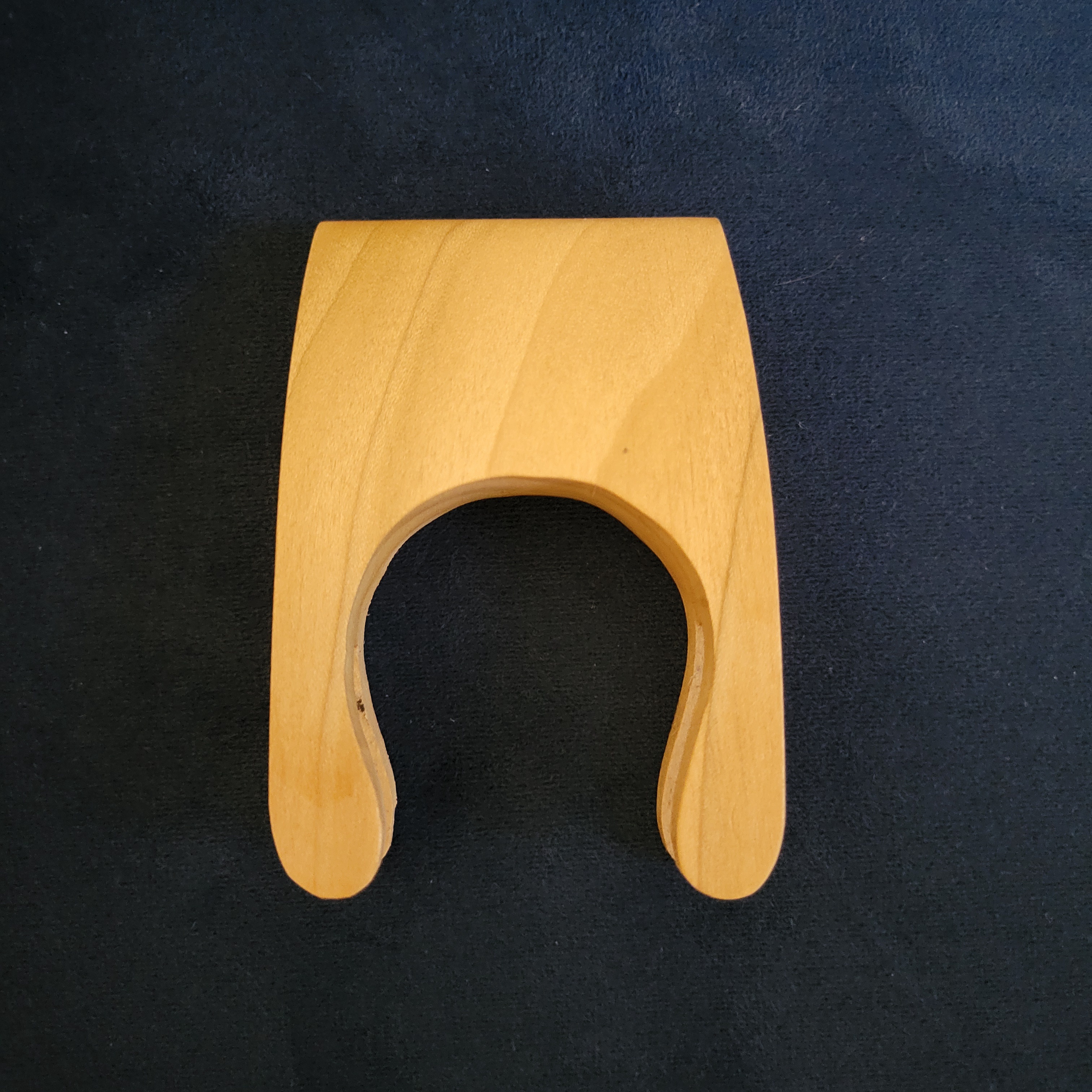
Here are some photos of my mute:
I invited the other bassists from my section to join us. I figured they might be interested in wooden mutes as well, plus I hoped it be instructive to hear the mutes on a range of instruments. Earlier in the week Sienna had sold some mutes to the NYPhil and London Phil, but there were still about 15 to explore.
Not surprisingly, wooden mutes do indeed have a very different sound from rubber mutes. And the timbral differences between the tonewoods and shapes of various mutes were also immediate. (While mutes do dampen an instrument's sound, they aren't so much for lowering volume--a player can do that with their right hand--as introducing a different timbre.) For example, the Oak mutes dampened more of the lower midrange and thus produced a muted tone with a brighter character while the Mahogany mutes dampened more of the upper midrange and treble register and thus produced a muted tone with a warmer character. This makes sense given the well-known qualities of these tonewoods. But instruments are complex systems and the only way to really know how a particular mute will sound is to try it yourself. Indeed, the most valuable part of the experience was hearing how the different mutes responded to each of our instruments. No mute sounded bad on any of our basses and sometimes comparing two mutes produced two different, but equally pleasing timbres. That said, there was always one mute which, after carefully comparison, seemed to work best with each instrument, but which mute this was varied from bass to bass. (Thank goodness for that--it would have been unfortunate if we had all wanted the same mute!) In regard to my bass, for example, everyone agreed that a symmetrical Poplar mute sounded best because of how it fit with the timbre of my bass and because of the resonances it augmented.
Here are some photos of my mute:
Last edited:




