• TalkBass has been independent since 1998. Add your voice.
    Create a free account to reply to discussions, view embedded media, and browse with fewer display ads.
    Join freeLog in
    Want zero display ads or expanded classifieds tools? Compare plans.

Soldering pickups

hello

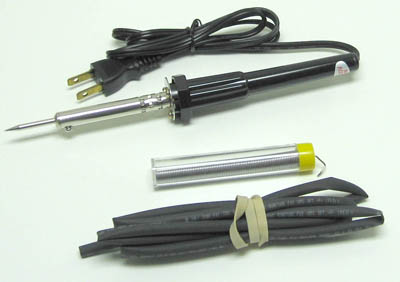
I'm about to be solder jazz pickups for the first time and I was told that I need special "audio grade" solder, will this actually matter or can I use just normal solder i got in this kit?

263soldrkt1.jpg


thanks.
 
Hi.

The solder found on the kits isn't always the best possible solution.

The flux that is in the rosin core solder varies greatly, from good to badly corrosive.

If You just want to solder some cables, potentiometers and pickups, the supplied solder might do.

If You want to assemble some electronics kits, I suggest that you buy a roll of a good quality solder, not necessarily an "audio grade" as that's usually just marketing BS.

If You can, try to buy some "obsolete" and somewhat "illegal" ;) solder that still contains lead. The lead free solders are somewhat a PITA to solder.

I aquired two rolls of M-solder Supreme for cheap and I have to say that it is really easy to solder even though it's lead free. ~40€/100g might be a bit of an obstacle though.

Regards
Sam
 
For electronics, rosin core is best. Definitely don't use acid core, which is meant for plumbing. The most common type of rosin core solder for electronics usually consists of a mix of 60% tin & 40% lead, often referred to as 60/40 Rosin Core solder.

You may see slight variations regarding the mix ratio of tin/lead as well, with a 63/37 mix ratio instead of 60/40. Usually it is more common to find a 60/40 rosin core, but either is fine with a slight preference to the 63/37. If you look at a chart for the melting and cooling properties of solder, you will see that the 63/37 does not go into what is called a "plastic state" as it cools. What that is, as the solder cools after the heat from the iron is removed, the solder will have a frosted look and will not make a very good joint. It will not be as shinny as it should look.

Never use the acid core for electronic work. The acid left behind will absorb water from the air and eat away at the circuits. The acid flux is mainly used for copper water pipes.
 
hello

I'm about to be solder jazz pickups for the first time and I was told that I need special "audio grade" solder, will this actually matter or can I use just normal solder i got in this kit?

263soldrkt1.jpg


thanks.

In most cases solder is just a way to mechanically bond a joint. As far as typical guitar wiring is concerned, electrical transference, in a properly soldered joint, is at the point of contact of the two metals being joined, not through the solder connection. There's no need to go crazy worrying about specialty solders just as long as what you use is electrical solder. Specialty solders become important when you start relying on the actual solder to close a circuit such as in the case of attaching an IC to a circuitboard.

When it comes to soldering irons for guitar work I prefer using one in the 40-45 watt range. They tend to heat the base metal quicker for the solder to flow and adhere so the risk of overheating the component is reduced.
 
I would only pre-tin if the situation requires it. Such as soldering a wire to the back of a pot, or Nuetrik 1/4 plugs. In a perfect solder joint, the parts are already attached to each other by mechanical force, the solder just holds everything together. Or so they told me in gummint soldering class. In real life it doesn't always work out that way.

Wire to wire? Twist together, then solder.

Parallel?? Um wire to wire? ----------//////----------- or =========///// ? I don't think it matters, though I do the first one for appearance.
 
I meant soldering a wire to the pot, should I twist the wire? And whether or not i should solder the wire laid flat against the pot or not.

Back of the pot, or the tabs?

Back of pot: tin wire. melt a little ball of solder to pot. sick all together

Tab: Insert wire through hole. wrap wire around tab one time. squeeze tight with needle nose. apply heat to pot tab, and wire, apply solder to pot tab, and wire, not to the iron.
 

Latest posts