
Enjoy the benefits of a premium membership!
Upgrade Account
-
TalkBass has been independent since 1998. Add your voice.
Create a free account to reply to discussions, view embedded media, and browse with fewer display ads.
Join free Log in
Want zero display ads or expanded classifieds tools? Compare plans.
You are using an out of date browser. It may not display this or other websites correctly.
You should upgrade or use an alternative browser.
You should upgrade or use an alternative browser.
Double Bass Some bass excerpts I put on youtube
- Thread starter dmilburn
- Start date
More options
Who Replied?Very nice. Who do you study with and where?
Just something I noticed...1:50ish on in the Mahler as you start to move your head along with it, these quick short movements can stiffen up your neck, and as a result, the rest of you body. Paul Ellison pointed out to me that I do it sometimes in passages like these, so I'm working on breaking the habit. Try playing that same passage while relaxing your neck and your head and using as little unecessary muscle work as possible, and for me, at least, it frees up the music a ton, as well as the rest of your body. Sounds great though! Thanks for uploading the videos.
Just something I noticed...1:50ish on in the Mahler as you start to move your head along with it, these quick short movements can stiffen up your neck, and as a result, the rest of you body. Paul Ellison pointed out to me that I do it sometimes in passages like these, so I'm working on breaking the habit. Try playing that same passage while relaxing your neck and your head and using as little unecessary muscle work as possible, and for me, at least, it frees up the music a ton, as well as the rest of your body. Sounds great though! Thanks for uploading the videos.
Wow. Excellent playing. I have pretty much nothing to say about the Verdi except that it was great. In the Mahler I think the sfz could, in general, be a little more ferocious. It feels a bit less savage than Mahler seems to ask for. Also, once or twice I felt like you cut rests a hair too short. Otherwise, fabulous. Bravo.
Really good. The Verdi is lovely.
I agree with the above commentor who mentioned you've got a little too much "involvement" with your neck/shoulder muscles on the loud and aggressive sections of the Mahler. You may want ot work on that in order to prevent future injury.
Nice articulation in the Mahler: short and precise. [DEL]I felt that sometimes when ending a phrase on a loud, low note that the intonation on that note was a little uncentered - it seemed to drift a hair sharp. Could be the computer's speakers, or my ears, though.
[/DEL] After listening again with headphones, the intonation seems spot on - my speakers just can't handle the low notes.
Really, very good playing. Thanks for sharing.
I agree with the above commentor who mentioned you've got a little too much "involvement" with your neck/shoulder muscles on the loud and aggressive sections of the Mahler. You may want ot work on that in order to prevent future injury.
Nice articulation in the Mahler: short and precise. [DEL]I felt that sometimes when ending a phrase on a loud, low note that the intonation on that note was a little uncentered - it seemed to drift a hair sharp. Could be the computer's speakers, or my ears, though.
[/DEL] After listening again with headphones, the intonation seems spot on - my speakers just can't handle the low notes.
Really, very good playing. Thanks for sharing.

I put up a couple more
Beethoven 9 4th mvmt Recit
@MDEbass I study with Bransby at IU, I have my resume on my youtube profile if you wanna check it out.
With regards to the tension I can honestly say I've been playing bass for about 13 years and can't remember ever feeling like my neck is sore, although at the first sign of neck tension I'll definitely reevaluate my neck posture. I've had plenty of soreness in my back, right wrist, and left shoulder but never my neck. This also leads to an interesting question as to whether stopping my head from moving would cause tension because my head seems to move pretty naturally. If I stopped my head from moving it could possibly lead me to tense up and stiffen my neck.
Also, this leads to the question of how much tension is acceptable/necessary? It seems to me there's naturally going to be some tension especially in the strauss and mahler excerpts. I try to be able to play tension free the vast majority of the time, but to rip out the biggest sound the instrument can allow it seems some tension (maybe elbow grease is a better term) is necessary. Lately I've been thinking instead of relieving my body of tension all the time, I should domesticate the tension and control it so if I need to rip something good I can. Thanks for the comment, I see what you're saying and I'm always looking for ways to play more efficiently.
Beethoven 9 4th mvmt Recit
@MDEbass I study with Bransby at IU, I have my resume on my youtube profile if you wanna check it out.
With regards to the tension I can honestly say I've been playing bass for about 13 years and can't remember ever feeling like my neck is sore, although at the first sign of neck tension I'll definitely reevaluate my neck posture. I've had plenty of soreness in my back, right wrist, and left shoulder but never my neck. This also leads to an interesting question as to whether stopping my head from moving would cause tension because my head seems to move pretty naturally. If I stopped my head from moving it could possibly lead me to tense up and stiffen my neck.
Also, this leads to the question of how much tension is acceptable/necessary? It seems to me there's naturally going to be some tension especially in the strauss and mahler excerpts. I try to be able to play tension free the vast majority of the time, but to rip out the biggest sound the instrument can allow it seems some tension (maybe elbow grease is a better term) is necessary. Lately I've been thinking instead of relieving my body of tension all the time, I should domesticate the tension and control it so if I need to rip something good I can. Thanks for the comment, I see what you're saying and I'm always looking for ways to play more efficiently.
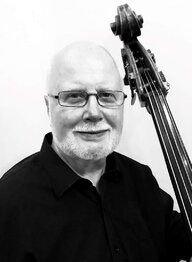
No problems with posture and left hand. Or with the intonation and musicality. Well done!!
I know it is my preference however that I would like to see the bow contact point stay a little further from the end of the fingerboard and adjust more as your notes go higher on the G string.
Another preference is to not bow with such a straight index finger and RH knuckles parallel to the stick. I feel this causes you to underutilise the free movement of your R elbow and cause you to bow too much from the shoulder. In your somewhat jerky youtube pictures there is not a lot of flexibility evident in your R wrist and fingers. If I come to the stick from a relaxed fist and drop my fingers over the stick into the bow hold with normal spread between fingers then turn my hand in slightly by rotating my elbow up and out I can achieve two basic things, (1) power the sound with the relaxed weight of my arm through the fingers without relying on pressing with the index finger alone, and (2), I can free up the elbow because its "hinge joint" points in the same direction as the bow movement. Perhaps Andrew Andersons' tapes (Contrabass Conversations) might help me explain better? I feel that standing in front of your kitchen bench and simulating the bow arm action by running your fingers along the straight edge should convince you of the need to use more flexing of the elbow in the same direction as the bow points.
Would you agree that artistic hand, wrist and arm movements go a long way towards making artistic sounds?
I should qualify the above by saying I am 5' 7". If you have the wingspan of an albatross the length of bow means much less. However, as notes become shorter and faster and bowing retreats into the "comfort zone" surely the "twitch muscles" in biceps and triceps need to come into play, helped by flexibility of wrist and fingers.
What do you think?
Cheers.....
DP
I know it is my preference however that I would like to see the bow contact point stay a little further from the end of the fingerboard and adjust more as your notes go higher on the G string.
Another preference is to not bow with such a straight index finger and RH knuckles parallel to the stick. I feel this causes you to underutilise the free movement of your R elbow and cause you to bow too much from the shoulder. In your somewhat jerky youtube pictures there is not a lot of flexibility evident in your R wrist and fingers. If I come to the stick from a relaxed fist and drop my fingers over the stick into the bow hold with normal spread between fingers then turn my hand in slightly by rotating my elbow up and out I can achieve two basic things, (1) power the sound with the relaxed weight of my arm through the fingers without relying on pressing with the index finger alone, and (2), I can free up the elbow because its "hinge joint" points in the same direction as the bow movement. Perhaps Andrew Andersons' tapes (Contrabass Conversations) might help me explain better? I feel that standing in front of your kitchen bench and simulating the bow arm action by running your fingers along the straight edge should convince you of the need to use more flexing of the elbow in the same direction as the bow points.
Would you agree that artistic hand, wrist and arm movements go a long way towards making artistic sounds?
I should qualify the above by saying I am 5' 7". If you have the wingspan of an albatross the length of bow means much less. However, as notes become shorter and faster and bowing retreats into the "comfort zone" surely the "twitch muscles" in biceps and triceps need to come into play, helped by flexibility of wrist and fingers.
What do you think?
Cheers.....
DP
Very nice playing. Glad to see Bruce is still churning out such solid players! Re: neck tension etc... this doesn't seem to be getting in the way. If you're concerned about avoiding playing with pain or just relaxing a bit, a little Alexander technique and yoga goes a long way.
In the Mahler, the intonation and execution is not quite as solid when you get to the E string.
The Verdi is quite good, as is the "wretch." In the case of both, I'd personally love to hear the closing of phrases a bit broader. Have you spent much time playing these licks in big halls? May just be the little mic on your camera, but remember we are the warmth and thickness at the bottom of the orchestra. Articulation is of course a prerequisite, but make sure you aren't sacrificing the fundamental in looking for precision.
The Brahms is great too; perhaps more contrast? Also, minor issues on the E string.
Kudos for putting yourself out here. Good luck!
In the Mahler, the intonation and execution is not quite as solid when you get to the E string.
The Verdi is quite good, as is the "wretch." In the case of both, I'd personally love to hear the closing of phrases a bit broader. Have you spent much time playing these licks in big halls? May just be the little mic on your camera, but remember we are the warmth and thickness at the bottom of the orchestra. Articulation is of course a prerequisite, but make sure you aren't sacrificing the fundamental in looking for precision.
The Brahms is great too; perhaps more contrast? Also, minor issues on the E string.
Kudos for putting yourself out here. Good luck!
These sound great!
And if it's not too much trouble, I'd also love to hear you play those excepts that were suggested above me.
Really, you are a great player and I have no doubt that you will get a job eventually.
Do you plan on auditioning for any professional orchestras anytime soon?
And if it's not too much trouble, I'd also love to hear you play those excepts that were suggested above me.
Really, you are a great player and I have no doubt that you will get a job eventually.
Do you plan on auditioning for any professional orchestras anytime soon?
I put up a couple more
Beethoven 9 4th mvmt Recit
@MDEbass I study with Bransby at IU, I have my resume on my youtube profile if you wanna check it out.
With regards to the tension I can honestly say I've been playing bass for about 13 years and can't remember ever feeling like my neck is sore, although at the first sign of neck tension I'll definitely reevaluate my neck posture. I've had plenty of soreness in my back, right wrist, and left shoulder but never my neck. This also leads to an interesting question as to whether stopping my head from moving would cause tension because my head seems to move pretty naturally. If I stopped my head from moving it could possibly lead me to tense up and stiffen my neck.
Also, this leads to the question of how much tension is acceptable/necessary? It seems to me there's naturally going to be some tension especially in the strauss and mahler excerpts. I try to be able to play tension free the vast majority of the time, but to rip out the biggest sound the instrument can allow it seems some tension (maybe elbow grease is a better term) is necessary. Lately I've been thinking instead of relieving my body of tension all the time, I should domesticate the tension and control it so if I need to rip something good I can. Thanks for the comment, I see what you're saying and I'm always looking for ways to play more efficiently.
I have to agree. I think there's two kinds of tension - tension that inhibits your playing and tension that enhances the music. The amount of resistance you have to apply to pull a big enough sound out of your instrument for Strauss excerpts will create some tension in the body for most people. I think that is totally different from getting tension in your hands because you don't know how to use them. Technically and musically you know what you're doing, I wouldn't be worrying about neck tension too much since it doesn't seem to be getting in the way. I've seen some really great players doing crazy head and body motion while they play. Eliminating musical body movement is not a prerequisite for great playing, and it really annoys me when people make such a big deal about it.
I think that the dynamics in the Mahler need to be more exaggerated. Maybe it's the recording quality/computer speakers compressing the sound. I understand that you don't want to go too far at the top and get sloppy, but maybe the bottom can be even less and your top dynamic right to the edge of what you can do cleanly. Other than that I don't have much to say except that you sound really great and I wish you the best as you get through school and into the professional world.
Great playing and a very generous contribution to this forum. I am sure there are many like me who will benefit from hearing your interpretation of these extracts. Perhaps you could have come down a fraction in dynamic in the bar before the 16ths in Verdi Othello. I'd love to hear more. 

What I noticed in the Mahler excerpt is that you have a very good 'grippy' tone, especially on the low strings.
I sometimes have trouble getting that much grip on the strings. What is your secret?
I sometimes have trouble getting that much grip on the strings. What is your secret?
Wonderful ! Lots of great stuff going on. Great rythm and pulse throughout. INtense big sound with clarity up the wazooo !
Couple of things though with regards to 3 things
sound
intonation
articulation.
At times I experienced these things in your playing with regards the the above mentioned:
Your sound is intense most of the time. Soften it up a bit. Beeth 9 for ex. bring some singing quality to this. The sound is at times hard at the beginning of the accented noted. Almost britle.Too much consonant K sound. Just let up a bit and it wil be perfect.
Brahms 2.first.. First E is this way. too hard. Let up a tiny bit and a 32nd note longer.
Then the phrasing is too vertical. Note for note.It´s as if each note was a seperate entity not related to the next, Your technique is good
enough so it´s not that.
Vibrato is too intense (amplitude) on the sperated notes and then the phrasing can be more forward not in speed but in direction on the slured motives.
Flowing is the key here
with regards to intonation. It gets a little high (4-5cents) around the c d and e on the g string. Othello for example.beeth 9 as well.
This is nitpicking though. But jurys are looking for whatever.
Glenn
Couple of things though with regards to 3 things
sound
intonation
articulation.
At times I experienced these things in your playing with regards the the above mentioned:
Your sound is intense most of the time. Soften it up a bit. Beeth 9 for ex. bring some singing quality to this. The sound is at times hard at the beginning of the accented noted. Almost britle.Too much consonant K sound. Just let up a bit and it wil be perfect.
Brahms 2.first.. First E is this way. too hard. Let up a tiny bit and a 32nd note longer.
Then the phrasing is too vertical. Note for note.It´s as if each note was a seperate entity not related to the next, Your technique is good
enough so it´s not that.
Vibrato is too intense (amplitude) on the sperated notes and then the phrasing can be more forward not in speed but in direction on the slured motives.
Flowing is the key here
with regards to intonation. It gets a little high (4-5cents) around the c d and e on the g string. Othello for example.beeth 9 as well.
This is nitpicking though. But jurys are looking for whatever.
Glenn
@David Potts "Would you agree that artistic hand, wrist and arm movements go a long way towards making artistic sounds?"
Most definitely I would but you have to be WAY more specific in terms of what artistic hand wrist, and arm movements are... The statement "artistic sounds" is very vague to say the least. I'm not insulting you I'm just asking that you be more specific. I am 6'3 (191cm). My flexibility has much to improve on to be sure, but at my height I can put more arm and shoulder into it than most people can so it might look a little funny. Maybe be less technical and explain what you don't like about my sound (vague), which is ultimately what I'm trying to fix. I tend to judge my sound and then address technical issues as opposed to vice versa. Sometimes it might look funny but if it sounds good it sounds good and few people will argue with that.
@chicagodoubler "Have you spent much time playing these licks in big halls" Not as much as I should thats for damn sure.
@THE SAW "Let's hear 4 more:
Beethoven 5, Mvt 3
Mozart 40 Theme Mvt. I
Strauss Heldenleben #9
Brahms 1, Mvt.1, letter E"
Check my other videos with the exception of Brahms and the B5 trio its up there... I'm planning on putting up much more (at least a couple excerpts a week) so check it. Putting my playing on youtube is GREAT practice. The level of detail I aspire to attain seems to go up tenfold when I put it up for everyone to see.
@A Spotless Mind "Do you plan on auditioning for any professional orchestras anytime soon?"
I took the KC audition a few days ago and didn't make it past the first round. Congrats to Brian Johnson he definitely deserved it. It's a difficult profession, but it's what I signed up for... no regrets.
@ Square Bear "I think that the dynamics in the Mahler need to be more exaggerated" I agree. Can it ever be too exaggerated? I would like to hear someone make the mistake of making Mahler 2 too exaggerated. I'm not being sarcastic at all, seriously.
Here's the scherzo from Beethoven 5
Thanks for the comments this is very helpful, I make videos so I can see my flaws, but sometimes I don't notice flaws that are easily detected by people who don't think the same way as me, and in this profession you gotta please everyone so don't be shy.
Edit: Disclaimer: For the young people deciding on schools, my main teachers are Dennis Whittaker, David Moore, and Bruce Bransby but I do not necessarily represent their views, I speak and play for myself. They each have their own individual critiques of my playing that are mutually exclusive.
Most definitely I would but you have to be WAY more specific in terms of what artistic hand wrist, and arm movements are... The statement "artistic sounds" is very vague to say the least. I'm not insulting you I'm just asking that you be more specific. I am 6'3 (191cm). My flexibility has much to improve on to be sure, but at my height I can put more arm and shoulder into it than most people can so it might look a little funny. Maybe be less technical and explain what you don't like about my sound (vague), which is ultimately what I'm trying to fix. I tend to judge my sound and then address technical issues as opposed to vice versa. Sometimes it might look funny but if it sounds good it sounds good and few people will argue with that.
@chicagodoubler "Have you spent much time playing these licks in big halls" Not as much as I should thats for damn sure.
@THE SAW "Let's hear 4 more:
Beethoven 5, Mvt 3
Mozart 40 Theme Mvt. I
Strauss Heldenleben #9
Brahms 1, Mvt.1, letter E"
Check my other videos with the exception of Brahms and the B5 trio its up there... I'm planning on putting up much more (at least a couple excerpts a week) so check it. Putting my playing on youtube is GREAT practice. The level of detail I aspire to attain seems to go up tenfold when I put it up for everyone to see.
@A Spotless Mind "Do you plan on auditioning for any professional orchestras anytime soon?"
I took the KC audition a few days ago and didn't make it past the first round. Congrats to Brian Johnson he definitely deserved it. It's a difficult profession, but it's what I signed up for... no regrets.
@ Square Bear "I think that the dynamics in the Mahler need to be more exaggerated" I agree. Can it ever be too exaggerated? I would like to hear someone make the mistake of making Mahler 2 too exaggerated. I'm not being sarcastic at all, seriously.
Here's the scherzo from Beethoven 5
Thanks for the comments this is very helpful, I make videos so I can see my flaws, but sometimes I don't notice flaws that are easily detected by people who don't think the same way as me, and in this profession you gotta please everyone so don't be shy.
Edit: Disclaimer: For the young people deciding on schools, my main teachers are Dennis Whittaker, David Moore, and Bruce Bransby but I do not necessarily represent their views, I speak and play for myself. They each have their own individual critiques of my playing that are mutually exclusive.
Just heard the Mahler, a few things:
It's very good. You have obviously put a great deal of excellent work into it and it is a real pleasure to hear you perform. Only a few minor things:
-the staccato eighths and triplets cannot be the same length, and to me, they are almost always the same throughout. This is a subtle difference, but it's a common mistake. Also, on the "G - d g" moments with the 8th-16th rest-16th note- 8th rhythm (Duh dit duh), don't slam the bottom note. It decrescendos to the bottom every time, so it can't be loud - soft - loud. Generally speaking, the note lengths just need to be more precise imo...
It's really great, and video-taping is certainly a splendid method of detailing any difficulties. Keep up the fantastic playing!
It's very good. You have obviously put a great deal of excellent work into it and it is a real pleasure to hear you perform. Only a few minor things:
-the staccato eighths and triplets cannot be the same length, and to me, they are almost always the same throughout. This is a subtle difference, but it's a common mistake. Also, on the "G - d g" moments with the 8th-16th rest-16th note- 8th rhythm (Duh dit duh), don't slam the bottom note. It decrescendos to the bottom every time, so it can't be loud - soft - loud. Generally speaking, the note lengths just need to be more precise imo...
It's really great, and video-taping is certainly a splendid method of detailing any difficulties. Keep up the fantastic playing!
Latest posts
-

-
-

-
 Curious what the percentage of bass players use rounds vs flats is.
- Latest: UntitledProject