Ever wonder what a bass would sound like without the sound post dampening the top plate? I have for years so I set up a test to find out.
I *know* it is traditional and all but I always thought the sound post was, well, primitive, a hard-to-adjust stick and worse, that it probably kept about 1/2 of the top plate from vibrating freely.
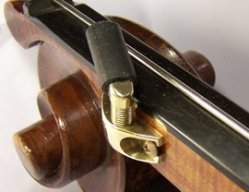
Shown is West German 3/4 laminated I have been rebuilding. The experiment is in place, held by string pressure.


Rather that building a special sound post (platform) from within and put a hole in the top plate, I constructed a hard maple cross-bridge to fully support the bridge G foot by the ribs without touching the top plate center area. There is no sound post to impede the vibration of the top. The E foot drives the top/bass bar in the normal fashion.
Mechanical Result - It is harder to tune because the top is more compliant and pressure from one string effects the others more than usual, particularly the E-D side but once set it stays. Surprisingly string height didn't change much if any. I expected the top to drop with string pressure without the sound post bearing it up and that it would require string height be increased. Not.
Acoustic Result - a very loud and open low end starting at D and increasing toward low E. Like maybe 3 times as loud at low G. Remember this is a ply bass, but typical. There may be some loudness decrease above the D but it is hard to reference and say for sure.
Has any one else experimented with or seen a free-top design?
All rights reserved.
I *know* it is traditional and all but I always thought the sound post was, well, primitive, a hard-to-adjust stick and worse, that it probably kept about 1/2 of the top plate from vibrating freely.
Shown is West German 3/4 laminated I have been rebuilding. The experiment is in place, held by string pressure.
Rather that building a special sound post (platform) from within and put a hole in the top plate, I constructed a hard maple cross-bridge to fully support the bridge G foot by the ribs without touching the top plate center area. There is no sound post to impede the vibration of the top. The E foot drives the top/bass bar in the normal fashion.
Mechanical Result - It is harder to tune because the top is more compliant and pressure from one string effects the others more than usual, particularly the E-D side but once set it stays. Surprisingly string height didn't change much if any. I expected the top to drop with string pressure without the sound post bearing it up and that it would require string height be increased. Not.
Acoustic Result - a very loud and open low end starting at D and increasing toward low E. Like maybe 3 times as loud at low G. Remember this is a ply bass, but typical. There may be some loudness decrease above the D but it is hard to reference and say for sure.
Has any one else experimented with or seen a free-top design?
All rights reserved.