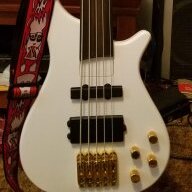
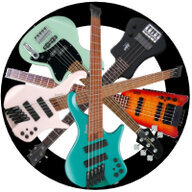
If you're playing through a bass amp at gigs, a 5 won't add much impact to your playing - bass guitar cabinets don't really do the lowest notes on a 4 justice, the lower notes that a 5 affords you won't really sound all that great (yes, a few people will undoubtedly argue with this). If, however, you play gigs where there's a very capable PA, the subs in a great PA will absolutely do the low notes on a B string justice. All my gigs are now ampless, and I get to pay through PA's that are very capable, so a 5 works very well for me. I made the transition a few years ago, and after a few decades of playing just 4's, it was a bit tough - having gigs every weekend, throwing the uncertainty of going back and forth into the mix added a bunch of work. Eventually, I figured out that having just 1 physical platform was a big help in making my playing consistent, so all of my basses are now 5's with the same scale length, string spacing, neck profile, etc.
So, the first question is: do you have a compelling reason to switch? In my case, I end up playing in every key, so the flexibility of a 5 made perfect sense. If I was still playing in a cover band, where we never did different keys, I'd still probably be playing 4's.
Anyway, if you do have a compelling reason, you need to realize that, although some of your skill will transfer, a lot of it will need serious updating. I have heard of folks that bought a 5 and gigged it immediately, but most of us won't be able to do that - there is an investment in time to be able to play a 5 as well as a 4. Some of it is the map in your mind (that knows where notes are) that needs updating, some of it is getting used to a wider neck, some of it is figuring out how to damp one more string (for some folks this is tough, for me it took a little while, but it was mostly an unconscious thing). A 5 is a different musical instrument than a 4. Not Thet different, but it is different.