- May 6, 2003
- 5,272
- 160
- 64
- Disclosures
- Proprietor Fifth Avenue Fret Shop. Technical Editor Bass Gear Magazine
I wrote this essay for BassGear Mag but they won't run it until next year. Thought if there was interest we'd discuss it now.
................
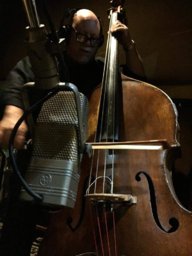
I spent most of this summer without my main instrument the “Alsatian Queen”. It is a 150 year old Double Bass made in Germany or France depending on who you talk to. It’s first several decades in the 19th century were during the Franco Prussian war; hence the name. It has lived a long history from it’s creation in Europe, most of which is unknown. It’s had many stewards over its long life. It has played lots of different music, including several years in the Toronto symphony and many years with a well respected New York jazz player flying around the globe. It’s road worn and looks it.
It came to me in the summer of ‘08, after a several months long shopping spree where I auditioned several dozen basses in the US from the Midwest to the East coast. I played many basses I liked in my price range but kept coming back to the Queen. I had several top notch luthiers look at it and render opinions. They all felt like it was a bass with good tone and solid plates, but with lots of over done repair work on the inside that was choking a pretty excellent bass underneath. I liked the character of the sound as it sat and the feel of the dimensions so I bought it. I knew at some point in the future a big repair job or two was looming.
That time came sooner than I expected when I fractured the rib on the treble side upper bout near the neck while in transport between gigs. It is damage that requires the top plate removal to fix. Although I’d planned to wait some years prior to doing that work while the top was off for the relatively simple crack repairs, the rest of the rebuild work needed to happen because you don’t want to take the top off any more than you have to. I am fortunate enough to live near Nick Lloyd whose work I feel is outstanding. His attention to detail, his skills and experience are very much those of a man of longer years. He set to work while I played gigs with my trusty but not near as inspiring second bass.
He immediately encountered the fallout of one of a long string of repairs the instrument had undergone that was heavy handed, inappropriate, or poorly executed. The top was glued on much to tightly with heavy concentrations of hide glue, so the top put up a fight coming off. The edge of the top needed rebuilding to meet the ribs and close properly. Much of it had improper grain orientation, as did many of the old crack repair cleats. The bassbar was being propped up by some right angle cleats made to heal the bass bar crack. That and lots of other heavy handed work were choking the top and making it less responsive than it could be. All the cleats were removed and we decided it was best to remove and replace the bassbar with a thinner lighter one that was keyed into the repaired crack cleats below. He created a beautiful lattice of diamond cleats on all the reglued top cracks. He expertly fit a new bassbar. He created patches under the edge of the FF’s that would shore up that delicate area as well. The top work was intended to lighten the load on the top by removing unneeded bracing, reduce the size of the bassbar and strengthen previous crack repairs so as to allow the plate to vibrate freer quicker and as such energize the rest of the box more efficiently.
Having finished up the top he then moved to the ribs. He repaired the area where I had crushed it with relative ease. The remaining rib areas had lots of repairs and many areas of thinness and instability. After removing much of the previous repair work he created alternating grafts of thin wood reinforcement and glue soaked linen to strengthen the ribs and prevent further cracks. Laminations like this on the sides serve to strengthen and unlike on the top or back plates do little disservice to tone. In fact one could argue they couple the plates better in a way that can enhance projection. After repairing a few cracks with fresh cleats on the back he closed up the box, set it up and touched up the finish.
The result is amazing. We all knew there was a sturdy loud rich bass in there. We were surprised at how much was actually in there choked down. Its overall voice remained the same. It remained fat and punchy, with complex characteristics that are now more evenly distributed across the bass. They were previously reduced in the E and G strings. Now the E string roars and shakes the box, the A and D have the power, punch and depth they had before and the G string is much livelier. The bass projects across the room in an astounding way. It’s much louder and deeper several feet away than right on top of it. In front or on top of the bass it is louder and more responsive with less effort required to generate sound from it. As it breaks in and get’s used to its new insides I’m sure it will open up even more. I clearly have to adjust my playing to its new ease of use. My heavy handed approach will have to change…and it’s about time.
I was afraid of the changes before they were made. I didn’t want to lose the bass I had come to love; that character that made me want it in the first place. The good news is that all the old stuff is still there plus more. It’s just a better bass overall. It’s still easy to amplify, and now it’s much easier to play and significantly more sturdy. I suppose I’ve made it impossible to blame my playing lapses on the instrument anymore.
................
I spent most of this summer without my main instrument the “Alsatian Queen”. It is a 150 year old Double Bass made in Germany or France depending on who you talk to. It’s first several decades in the 19th century were during the Franco Prussian war; hence the name. It has lived a long history from it’s creation in Europe, most of which is unknown. It’s had many stewards over its long life. It has played lots of different music, including several years in the Toronto symphony and many years with a well respected New York jazz player flying around the globe. It’s road worn and looks it.
It came to me in the summer of ‘08, after a several months long shopping spree where I auditioned several dozen basses in the US from the Midwest to the East coast. I played many basses I liked in my price range but kept coming back to the Queen. I had several top notch luthiers look at it and render opinions. They all felt like it was a bass with good tone and solid plates, but with lots of over done repair work on the inside that was choking a pretty excellent bass underneath. I liked the character of the sound as it sat and the feel of the dimensions so I bought it. I knew at some point in the future a big repair job or two was looming.
That time came sooner than I expected when I fractured the rib on the treble side upper bout near the neck while in transport between gigs. It is damage that requires the top plate removal to fix. Although I’d planned to wait some years prior to doing that work while the top was off for the relatively simple crack repairs, the rest of the rebuild work needed to happen because you don’t want to take the top off any more than you have to. I am fortunate enough to live near Nick Lloyd whose work I feel is outstanding. His attention to detail, his skills and experience are very much those of a man of longer years. He set to work while I played gigs with my trusty but not near as inspiring second bass.
He immediately encountered the fallout of one of a long string of repairs the instrument had undergone that was heavy handed, inappropriate, or poorly executed. The top was glued on much to tightly with heavy concentrations of hide glue, so the top put up a fight coming off. The edge of the top needed rebuilding to meet the ribs and close properly. Much of it had improper grain orientation, as did many of the old crack repair cleats. The bassbar was being propped up by some right angle cleats made to heal the bass bar crack. That and lots of other heavy handed work were choking the top and making it less responsive than it could be. All the cleats were removed and we decided it was best to remove and replace the bassbar with a thinner lighter one that was keyed into the repaired crack cleats below. He created a beautiful lattice of diamond cleats on all the reglued top cracks. He expertly fit a new bassbar. He created patches under the edge of the FF’s that would shore up that delicate area as well. The top work was intended to lighten the load on the top by removing unneeded bracing, reduce the size of the bassbar and strengthen previous crack repairs so as to allow the plate to vibrate freer quicker and as such energize the rest of the box more efficiently.
Having finished up the top he then moved to the ribs. He repaired the area where I had crushed it with relative ease. The remaining rib areas had lots of repairs and many areas of thinness and instability. After removing much of the previous repair work he created alternating grafts of thin wood reinforcement and glue soaked linen to strengthen the ribs and prevent further cracks. Laminations like this on the sides serve to strengthen and unlike on the top or back plates do little disservice to tone. In fact one could argue they couple the plates better in a way that can enhance projection. After repairing a few cracks with fresh cleats on the back he closed up the box, set it up and touched up the finish.
The result is amazing. We all knew there was a sturdy loud rich bass in there. We were surprised at how much was actually in there choked down. Its overall voice remained the same. It remained fat and punchy, with complex characteristics that are now more evenly distributed across the bass. They were previously reduced in the E and G strings. Now the E string roars and shakes the box, the A and D have the power, punch and depth they had before and the G string is much livelier. The bass projects across the room in an astounding way. It’s much louder and deeper several feet away than right on top of it. In front or on top of the bass it is louder and more responsive with less effort required to generate sound from it. As it breaks in and get’s used to its new insides I’m sure it will open up even more. I clearly have to adjust my playing to its new ease of use. My heavy handed approach will have to change…and it’s about time.
I was afraid of the changes before they were made. I didn’t want to lose the bass I had come to love; that character that made me want it in the first place. The good news is that all the old stuff is still there plus more. It’s just a better bass overall. It’s still easy to amplify, and now it’s much easier to play and significantly more sturdy. I suppose I’ve made it impossible to blame my playing lapses on the instrument anymore.