
Enjoy the benefits of a premium membership!
Upgrade Account
-
TalkBass has been independent since 1998. Add your voice.
Create a free account to reply to discussions, view embedded media, and browse with fewer display ads.
Join free Log in
Want zero display ads or expanded classifieds tools? Compare plans.
You are using an out of date browser. It may not display this or other websites correctly.
You should upgrade or use an alternative browser.
You should upgrade or use an alternative browser.
The ampunt of time spent praticing
- Thread starter Fishlips
- Start date
More options
Who Replied?
As a beginner I would spend the first hour with a competent teacher. I would spend the second hour reviewing and practicing what the teacher taught me.
If a teacher is not readily available, learn the basics of the instrument (parts, how to tune, what the controls do on the bass, what the controls do on the amp, how to adjust a strap, how to properly plug in an instrument cable and store it). After that is out of the way, get a good beginner's book that has sheet music at it's core and begin to read. Learn triads, inversions, seventh chords, and pentatonic scales. After that, learn the major scale and its modes.
This will be work but it is work that will pay off in dividends.
If a teacher is not readily available, learn the basics of the instrument (parts, how to tune, what the controls do on the bass, what the controls do on the amp, how to adjust a strap, how to properly plug in an instrument cable and store it). After that is out of the way, get a good beginner's book that has sheet music at it's core and begin to read. Learn triads, inversions, seventh chords, and pentatonic scales. After that, learn the major scale and its modes.
This will be work but it is work that will pay off in dividends.


It is important to have a plan and a schedule for productive practicing, otherwise, you just waste time.
I like the follow the old 'wedding saying':
1.) Something Old. Start by playing something you know you can play well. Songs, scales, etudes, whatever. It doesn't matter. The goal here is to get the sound of the bass in your ear and connect with the feeling of playing well.
2.) Something New. This is where you get your work done. Get after something that you don't do well. Break down the parts, do it as slow as you need to get it right (metronome is a great tool here, mostly to keep you from speeding up). Work on techniques, parts to songs, etudes and anything that you screwed up last time you were playing with other musicians (if you haven't been playing with other folks, get that going ASAP).
3.) Something Borrowed. Play some music you generally don't hear played on bass. TV commercial melodies, children's songs, hymns, easy melodies. If you read music, play some trombone, bassoon, or cello music (if you don't read music, get that on your #2 list of new things!!!)
4.) Something Blue. Play some music that you really love. Something that connects you to the world of being a musician. Here is where you get back to the feeling of why you want to play music, and love the sound of your instrument.
I like the follow the old 'wedding saying':
1.) Something Old. Start by playing something you know you can play well. Songs, scales, etudes, whatever. It doesn't matter. The goal here is to get the sound of the bass in your ear and connect with the feeling of playing well.
2.) Something New. This is where you get your work done. Get after something that you don't do well. Break down the parts, do it as slow as you need to get it right (metronome is a great tool here, mostly to keep you from speeding up). Work on techniques, parts to songs, etudes and anything that you screwed up last time you were playing with other musicians (if you haven't been playing with other folks, get that going ASAP).
3.) Something Borrowed. Play some music you generally don't hear played on bass. TV commercial melodies, children's songs, hymns, easy melodies. If you read music, play some trombone, bassoon, or cello music (if you don't read music, get that on your #2 list of new things!!!)
4.) Something Blue. Play some music that you really love. Something that connects you to the world of being a musician. Here is where you get back to the feeling of why you want to play music, and love the sound of your instrument.

Hi and welcome to TB. 
My suggestions for a complete beginner would be :
1. Learn safe technique. Check out Youtube for "Floating Thumb" technique and "Left/Right Hand Technique for Bass". Also start and end a session by doing some gentle stretches. Again...Youtube is your friend here.
2. Learn the notes on the fretboard. Start with the first five frets.
3. Learn the Major, Minor and Pentatonic scales...for a start.. and learn how chords/arpeggios are derived from scales.
4. Develop your ear by playing along to simple songs and working out the bass lines without tabs using trial and error.
A constructive practice session should consist of a little of all the above. Don't practice for any longer than an hour at a time. Take a break and come back to it. Little and often is the key as far as time spent is concerned.
Lots of good info to be got in the "How To Get Started Thread here :
How to get started?
I would second "ba55i5t's" advice on getting a good teacher. Even five or six lessons would get you off to a good start.
In the absence of that, here is a useful Youtube link with VERY basic (as in...this is the headstock etc) lessons which get harder by degrees.
Learn Bass Guitar - YouTube
Best of luck with the learning journey.
My suggestions for a complete beginner would be :
1. Learn safe technique. Check out Youtube for "Floating Thumb" technique and "Left/Right Hand Technique for Bass". Also start and end a session by doing some gentle stretches. Again...Youtube is your friend here.
2. Learn the notes on the fretboard. Start with the first five frets.
3. Learn the Major, Minor and Pentatonic scales...for a start.. and learn how chords/arpeggios are derived from scales.
4. Develop your ear by playing along to simple songs and working out the bass lines without tabs using trial and error.
A constructive practice session should consist of a little of all the above. Don't practice for any longer than an hour at a time. Take a break and come back to it. Little and often is the key as far as time spent is concerned.
Lots of good info to be got in the "How To Get Started Thread here :
How to get started?
I would second "ba55i5t's" advice on getting a good teacher. Even five or six lessons would get you off to a good start.
In the absence of that, here is a useful Youtube link with VERY basic (as in...this is the headstock etc) lessons which get harder by degrees.
Learn Bass Guitar - YouTube
Best of luck with the learning journey.

1. Learn safe technique. Check out Youtube for "Floating Thumb" technique and "Left/Right Hand Technique for Bass". Also start and end a session by doing some gentle stretches. Again...Youtube is your friend here.
...but don´t depend on just one single source.
if something hurts, don´t do it that way and adjust it to be able to do it comfortably.
for example: i can´t do the floating thumb thing for some reason.
i do the anchoring thumb and mute the e (e and b on the five string) by hooking my pinky to the e string / between e and b...
I want to THANK EVERYONE for the sound advice this exactly what I was looking for good honest advice...I have to say I am overwhelmed with this site so much information...I could spent my two hours a night just reading here...Thank you again and wish me luck in this new adventure
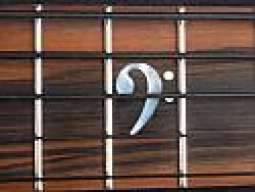
One last thing - learn to READ MUSIC! Tab is incredibly slow and does not include rhythm, do not waste your time with it. Start with a very basic instruction book - Hal Leonard Electric Bass Method by Ed Freidland is an excellent start - work through it slowly and methodically (few pages per week, practice every day) and concentrate on reading. Again, forget about tab, its a waste of time to learn and as you become a more advanced player, it will hold you back if you cannot read bass clef well.
...but don´t depend on just one single source.
if something hurts, don´t do it that way and adjust it to be able to do it comfortably.
for example: i can´t do the floating thumb thing for some reason.
i do the anchoring thumb and mute the e (e and b on the five string) by hooking my pinky to the e string / between e and b...
Agreed. I was merely trying to point out the importance of using a safe technique. How the OP goes about this is entirely up to him. I only gave the floating thumb technique as a good example.
Agreed. I was merely trying to point out the importance of using a safe technique. How the OP goes about this is entirely up to him. I only gave the floating thumb technique as a good example.
great advice you gave, just meant it as an addendum to your post.
when i started i thought that you should always play one finger per fret, because someone on youtube or some other site suggested it...but that hurts
Last edited:



Jaco Pastorius was a big endorser of one finger per fret. I have used it for years, but I came from many years of guitar playing one finger per fret and broke in on stretching over several months.great advice you gave, just meant it as an addendum to your post.
when i started i thought that you should always play one finger per fret, because someone on youtube or some other site suggested it...but that hurts
If the hurt is tendon pain because of strain, you should slow down and check your technique with a qualified instructor. Pain in tendons or the wrist or numbness is a red flag. Stop and get help.
On the other hand, If its muscle pain, thats part of the learning experience. Ease up a bit. Limit your practice time but practice every day, perhaps more than once a day. Use slower longer warm ups.
When I recently moved up from baby piano to the real deal,like stretching octaves, there was muscle and stretching pain. I just cut back on the time spent at a given practice session and used one hour rest breaks and paced the hard stuff. The advanced students do brutal 2 hr practice sessions one or more times a day with no ill effects. The practice rooms are pretty well sound proofed but not perfect.
Jaco Pastorius was a big endorser of one finger per fret. I have used it for years, but I came from many years of guitar playing one finger per fret and broke in on stretching over several months.
If the hurt is tendon pain because of strain, you should slow down and check your technique with a qualified instructor. Pain in tendons or the wrist or numbness is a red flag. Stop and get help.
On the other hand, If its muscle pain, thats part of the learning experience. Ease up a bit. Limit your practice time but practice every day, perhaps more than once a day. Use slower longer warm ups.
When I recently moved up from baby piano to the real deal,like stretching octaves, there was muscle and stretching pain. I just cut back on the time spent at a given practice session and used one hour rest breaks and paced the hard stuff. The advanced students do brutal 2 hr practice sessions one or more times a day with no ill effects. The practice rooms are pretty well sound proofed but not perfect.
what i did is using always ofpf, even if i only needed to span 3 frets, for example.
doesn´t make sense to make big streches when you don´t need. keep things relaxed
thats what i wanted to say
Ok, misunderstood your post. I thought maybe you were a 1 2 4 guy.what i did is using always ofpf, even if i only needed to span 3 frets, for example.
doesn´t make sense to make big streches when you don´t need. keep things relaxed
thats what i wanted to say
Jaco also advocated stretches of a major 3rd on a string which is more than ofpf. I sometimes use that fingering, especially if the index finger is moving, but there are alternate ofpf fingerings that are just as fast.
Conversations about Jaco Pastorius often drift into hyperbole and misinformation. Jaco could easily stretch a major 3rd (possibly more) and yet, in the lower positions, he used Simandl 1-2-4 whenever possible. Probably because he thought it sounded better (the whole entire point of playing music).
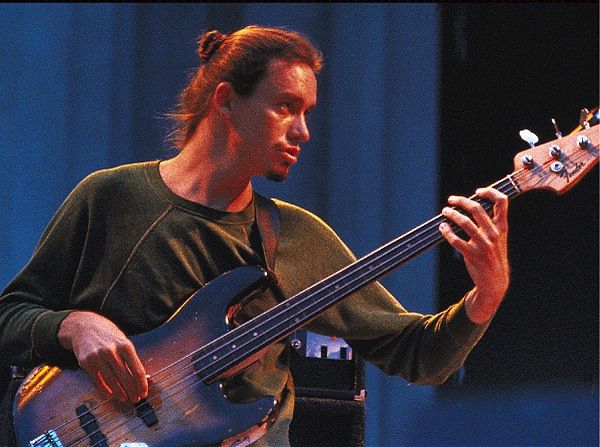
To the original point, Jaco became a great bassist by spending as much time as possible playing with other musicians (especially those who were better than him or had something to teach him).
To the original point, Jaco became a great bassist by spending as much time as possible playing with other musicians (especially those who were better than him or had something to teach him).
Last edited:

stretch and warm-up. review the lesson(s) i had with my teacher. some sight reading practice. fun riffs and/or learning a tune(s). i would use the second hour to post my progress on TB and reading the interesting threads. good luck with your playing!If you had two hours a day to practice and not be disturbed, how would you make the most of that time?

Ok, misunderstood your post. I thought maybe you were a 1 2 4 guy.
Jaco also advocated stretches of a major 3rd on a string which is more than ofpf. I sometimes use that fingering, especially if the index finger is moving, but there are alternate ofpf fingerings that are just as fast.
to me this "you must this and that, and only that one way" isn´t the best approach. (never was for me, thats why school wasn´t able to teach me
 )
)sometimes i play 1 3 4 if it feels right and works.


