• TalkBass has been independent since 1998. Add your voice.
    Create a free account to reply to discussions, view embedded media, and browse with fewer display ads.
    Join freeLog in
    Want zero display ads or expanded classifieds tools? Compare plans.

The best book for sighting reading

I got the Hal Leonard books by Ed Friedland today, but won't really have time to delve into them today. Tomorrow, on the other hand... :bassist:

I want to say thanks to everyone who has participated in this thread, I really appreciate it! I'm certainly going to keep this subbed for the purposes of future purchases. Thanks again and if anyone else has any input, please throw it out there!

You can save a lot of time by being more focused if you chose someone to study with and use whatever book the recommend to correspond with your reading lessons. It will pay off in the long run when you get to a point where the requirements are reading in real time i.e. sight reading.
 
Ahhh, understood. I was unaware of the difference between the two, thanks for the info! I somewhat linked the two together as the same thing because I see them as two steps, one leading to the other, but I understand that I used the wrong terminology. Thanks again!


Wow man, you get butthurt really easily don't you? Did the cool kids not let you sit with them in high school or something? I mean, thanks for reminding everyone that the public library and other free resources exist, but putting that little "Self" in front of my name... really? Is that necessary? I simply quoted you because you were the latest person to recommend something other than what I was looking for. I completely understand that there was a disconnect now thanks to Febs, but of course you'd rather make a sorry attempt at belittling me than pointing out my ignorance on the subject and actually helping. Good try bud.

If you respond to this with any sort of snide remark or comment, you will not get a reply; this is the internet, and I have other much more important things to do than argue with someone all day.


If you don't want to discuss any of the real issues I raised then by all means please don't respond to me. If I got through to just one person I didn't waste my time.
 
Have had several books over the years. Never could develop the dicipline to make myself read.

Then, my teacher assigned me to write out every mode scale in every key and it's relative minor, in each clef. I was allowed to pick the octave to keep it on the staff as much as possible. You may use any resource you wish to aid you in writing the key signatures (such as the internet). This will probably take a couple of evenings. If it works for you like it did for me, when done, you will not be able to look at a note on the third space of the treble clef and not identify it as a C.

Now find all of those notes on your instrument and play the scales.

Next there are only about 17 rhythmic patterns to learn. Find them and learn to associate the pattern with the sound. a dotted quarter and an eigth sound the same as a dotted eigth and a sixteenth at half the tempo.

A couple of hours a night for a couple of weeks, you'll be reading everything in sight.

My $0.02.

Regards
 
I picked up a couple of trombone books that I am currently working through that seem pretty good:
- 40 Progressive Etudes for Trombone by Sigmund Hering
- Melodiious Etudes for Trombone (Book 1) by Joannes Rochut

It's classical style music but will get you reading in a higher register. I also don't worry too much about the tempos listed as some of them would be too fast that you'd probably have to memorize a lot of it to get it up to speed. What I have been doing is playing the same pieces, but doing them in 4 or 5 different positions.

The Carol Kaye books are also good. It's been a while since I have read through them so I'll have to pull those out again.
 
Another thing I do quite a bit these days is transcribe music. It will range from doing it note for note charts to just getting the main lines and the forms (rock, funk, soul - but you could transcribe anything). I think actually doing it yourself can go a long way in getting you used to reading. If you can, do not refer to online TABs. Most of the time they're wrong anyway.
 
Self-Righteous Thunderer are you trying to punish me by making my eyes sore from rolling them? I did not say DON'T get a book to get you started. Many good ones have been suggested and I don't need to belabor that point. What I said is not to get bogged down in "how to" books and to jump in and start reading everything you can get your hands on...just like you'd do if you were learning to read text.
I was making what's called an analogy:

analogy |əˈnaləjē|
noun ( pl. -gies)
a comparison between two things, typically on the basis of their structure and for the purpose of explanation or clarification


I was also pointing out a very valuable free resource, the public library, that many people learning to read have no idea exists.

There's a huge industry in music education books which seems like a good thing and in many ways making available this huge body of information is. A serious problem it creates is that there is little emphasis placed on moving past student thinking into thinking like a confident adult musician. If they did you'd stop buying books and work things out for yourself like an adult does.

as someone who was a woeful reader for years, theres something to be said for the organization and systematic approach that simandl or ed's hal leonard books offer. i tried for years to become a better reader by taking the advice of just picking up anything in bass clef and going to town. it didnt work. after going through those books, picking up random things and reading through them is helpful. it wasnt for years though.
 
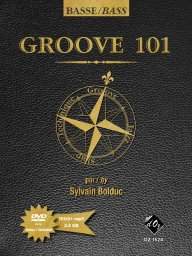
I would recommend this [Invalid or Expired Link Removed] because it makes you work on reading,groove, styles, tone AND time in a very academic and useful way. Those aspects are very important and too often under-estimated
when focusing on professional sight-reading situations.

This is a truly professional approach to sight-reading because it does focus on accurate performance in a lot of styles of bass playing because reading all the notes and rhythms without a focus on accuracy doesn't mean a thing in real live situations. I think this book will bring you to that level and challenge.

This new book on the market is the result of 30 years of professional playing in studios, tv and live situations and 25 years of teaching bass at college and university level to form the next generation of working bass players.
 
I'm sure that there's a lot of threads that have tidbits here and there, and I did use the search function but didn't really find a solid source of info, so I'm just going to ask it outright:

This question is for those of you who have a solid capability at reading music and learned from a book. What book did you use/would you recommend?

I would like very much to play bass for the Army, but there's a LOT of reading involved. I have some simple "Learn to play bass" type books, but they really aren't all that great because they don't have very much practice material in them. Any recommendations out there?

There is no one book. Reading skill is built through experience in practice and performance. Writing music also greatly helps your reading, as does transcription.

To start, all you need is the basic understanding of what notes on the staff correspond to frets on a fingerboard, and the usage of keys and accidentals. After that, read everything you can get your hands on. Not just "bass reading" books, because there are very few in existence. Get Bach books and read the left hand, trombone books, Kaye and Jamerson books, Cello, etc. If you see it's in bass clef, pick it up, don't discriminate. DO NOT reread something until you have exhausted every page of music you have.

Once you've got a lot of practice and are able to maintain a certain level, you're aiming for the same ability that we all have when reading English. The main thing that we see when reading text is the first and last letter, and the rest is filled in by visual context. Reading notation is the exact same thing. There's no secret to it, just tons and tons of practice with a vast diversity of material.
 

Latest posts