
I was trying to fall asleep last night when a random thought came into my head? What if you shone a single beam of light at a glass mirror and angled a bunch of mirrors else where so they also get hit... except do this in a cave the size of a football arena. Would and could it be possible to illuminate that whole entire cave with a single beam of light with mirror's placed all over the cave? or would the energy somehow dissipate over multiple reflection?

Enjoy the benefits of a premium membership!
Upgrade Account
-
TalkBass has been independent since 1998. Add your voice.
Create a free account to reply to discussions, view embedded media, and browse with fewer display ads.
Join free Log in
Want zero display ads or expanded classifieds tools? Compare plans.
You are using an out of date browser. It may not display this or other websites correctly.
You should upgrade or use an alternative browser.
You should upgrade or use an alternative browser.
Theoretical question
- Thread starter paste
- Start date
More options
Who Replied?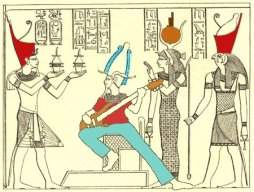
Invalid Link Removed
Mythbusters said:A system of mirrors can be used to reflect sunlight into an underground area and illuminate it sufficiently to allow safe passage. (Based on a scene in the film The Mummy.)
PLAUSIBLE (BUT RIDICULOUS)
Adam and Jamie built an obstacle course in the shop and used it to determine the minimum level of light needed to see. To match the circumstances shown in the movie, Adam went from a brightly lit area into total darkness, then to the course; his goal was to reach the other end without knocking over any glasses. He succeeded at a level of 0.39 lux, while the pair estimated that the movie scene had used roughly 200 lux.
Next, they set up six mirrors to bounce light back and forth down the length of the shop, using a spotlight as the source. Polished metal mirrors gave 1.13 lux, but caused the beam to spread out after only a few reflections. When modern glass mirrors were used instead, the light level registered at 0.49 lux and the beam stayed focused longer. Adam and Jamie realized that the light needed to scatter in order to illuminate the room.
At Treasure Island in San Francisco Bay, they set up a hangar area as a full-scale tomb and brought in six glass mirrors and a 7,000-watt spotlight. After adjusting the mirrors, they measured a light level of 2.3 lux and could easily see their way around. Once the sky cleared, they reflected sunlight into the tomb and found a peak of 2.5 lux until the sun’s position shifted, throwing off the mirrors’ alignment. Finally, Jamie stood in the light beam, which scattered in the air when it hit his white shirt and gave 8.6 lux. The need to keep adjusting the mirrors, and the unlikely prospect of finding several of them ready to use after thousands of years underground, led them to declare the myth “plausible but ridiculous”.
Invalid Link Removed
Yeah, I kinda figured this would work with a couple mirrors (they used 6) but what if you did this in a massive scale (say 100 + mirrors). Would the energy somehow dissipate over multiple reflection or would it work as good as using say 6 mirror's?
paste said:Yeah, I kinda figured this would work with a couple mirrors (they used 6) but what if you did this in a massive scale (say 100 + mirrors). Would the energy somehow dissipate over multiple reflection or would it work as good as using say 6 mirror's?
You need some light to be reflected to another mirror while some is bounced to the surface you want to illuminate.
Yes, you will dissipate the light, drastically losing power per area. Not to mention losing light after each bounce (you don't get 100% reflective mirrors).
If a single beam source was powerful enough the have enough energy (photons) to illuminate an entire sporting field or whatnot, it'd have to probably have enough power to melt or ablate the first mirror (also, if using a laser source which would provide the highest density of photons, you'd be struck to a single wavelength (colour) of light).
I was trying to fall asleep last night when a random thought came into my head? What if you shone a single beam of light at a glass mirror and angled a bunch of mirrors else where so they also get hit... except do this in a cave the size of a football arena. Would and could it be possible to illuminate that whole entire cave with a single beam of light with mirror's placed all over the cave? or would the energy somehow dissipate over multiple reflection?
Unless the light hits an uneven surface, a beam will remain a beam +/- any reflection/refraction caused by hitting a surface at an angle or a mirror that has a clear face and is reflective on the back, respectively. The angle of incidence equals the angle of reflection, so you can aim the beam, but it still needs to scatter. If you wanted to light up a specific area that's a long distance from the source, you would let it remain a beam and use a concave reflector that's designed to cover a specific area, usually a parabola of some sort.
You could illuminate the whole cave but it wouldn't be very brightly because you'll always lose some of the light to diffusion and effects from the surfaces it hits- you don't reflect 100% of the light.
You'll always have some divergence, even a collimated source will diverge in reality.
Though you could counter the beam issue with lenses, though that's complicating a little.
Though you could counter the beam issue with lenses, though that's complicating a little.

I saw somewhere that archeologist were trying to figure out how some of the lower areas inside of egyptian pyramids were illuminated. There were carvings and paintings on the walls but no way to light the room. There was not enough oxygen to keep a flame lit and there were too many twists and turns in some areas to use mirrors to direct sunlight. There is one heiroglyph that looks like it could be a giant light bulb and then there is the bagdad battery.....makes you think......now hold your hands out in front of you and say "aliens". LOL

I saw somewhere that archeologist were trying to figure out how some of the lower areas inside of egyptian pyramids were illuminated. There were carvings and paintings on the walls but no way to light the room. There was not enough oxygen to keep a flame lit and there were too many twists and turns in some areas to use mirrors to direct sunlight. There is one heiroglyph that looks like it could be a giant light bulb and then there is the bagdad battery.....makes you think......now hold your hands out in front of you and say "aliens". LOL
fire up the meme...
I'm not saying it was aliens but...
Inverse square law:
http://en.wikipedia.org/wiki/Inverse-square_law
You couldn't use a flashlight to illuminate something half a mile away for this reason. Whether the beam is travelling in a single direction or being reflected several times along the way doesn't really make much difference.
http://en.wikipedia.org/wiki/Inverse-square_law
You couldn't use a flashlight to illuminate something half a mile away for this reason. Whether the beam is travelling in a single direction or being reflected several times along the way doesn't really make much difference.
Ah...geek heaven
Carry on.

Most of ya'll said that the light would dissipate over multiple reflection. So what if you molded the cave in mirrors so that it covers every square inch and no light can escape to the outside? I can't see how that wouldn't work seeing how the light has no where to go but bounce against the other mirrors?

MatticusMania said:IIRC, I had to do something like this in a Legends of Zelda game.
It was in both ocarina (spirit temple) and majors mask (stone tower).
Now thank you Matt. I shall be playing ocarina for the 25th or so time now. There goes my productivity...


I was trying to fall asleep last night when a random thought came into my head? What if you shone a single beam of light at a glass mirror and angled a bunch of mirrors else where so they also get hit... except do this in a cave the size of a football arena. Would and could it be possible to illuminate that whole entire cave with a single beam of light with mirror's placed all over the cave? or would the energy somehow dissipate over multiple reflection?
Look up "integrating sphere." The pictures in Google Images will tell a pretty good story. And a company called Labsphere has theory papers that you can download and read.
The practical issue is that anything short of perfect reflectivity will quickly eat up most of the light. Even 99% reflectivity will cause a significant loss after a couple dozen bounces. And 99% reflectivity over the range of wavelengths that we see, is actually difficult to achieve.
paste said:
Most of ya'll said that the light would dissipate over multiple reflection. So what if you molded the cave in mirrors so that it covers every square inch and no light can escape to the outside? I can't see how that wouldn't work seeing how the light has no where to go but bounce against the other mirrors?
Basically:
You would need a massively powerful lightsource.
Light per area at the source would have to be massive to have any sort of brightness over an area many orders of magnitude larger.
You also lose a lot of light per bounce, dropping a few % per bounce. As a few have mentioned, you just don't get 100% reflective mirrors.
Look up "integrating sphere." The pictures in Google Images will tell a pretty good story. And a company called Labsphere has theory papers that you can download and read.
The practical issue is that anything short of perfect reflectivity will quickly eat up most of the light. Even 99% reflectivity will cause a significant loss after a couple dozen bounces. And 99% reflectivity over the range of wavelengths that we see, is actually difficult to achieve.
Basically:
You would need a massively powerful lightsource.
Light per area at the source would have to be massive to have any sort of brightness over an area many orders of magnitude larger.
You also lose a lot of light per bounce, dropping a few % per bounce. As a few have mentioned, you just don't get 100% reflective mirrors.
Yeah I forgot mirror's arent 100% reflective. My dreams been shattered .

paste said:Yeah I forgot mirror's arent 100% reflective. My dreams been shattered .
That's on one of the reasons it wont provide enough light, as has been mentioned by others, the irradience is going to drop as the area gets larger.
If you have 100 golf balls in a square meter, then try covering a football field with the 100 golf balls, you're going to have nowhere near the concentration of golf balls you had initially!
Latest posts
-
-
 Questions about added costs on selling used goods to Canada
- Latest: beaglesandbass
-

-

-
