• TalkBass has been independent since 1998. Add your voice.
    Create a free account to reply to discussions, view embedded media, and browse with fewer display ads.
    Join freeLog in
    Want zero display ads or expanded classifieds tools? Compare plans.

Tips for drummer picking up bass for first time??

Hi all, and thank you for allowing me to join the community!

I've been playing drums for 26 years now, and while I'm still very much so active in playing them, I wanted to expand my horizons and pick something... quieter to noodle on while my daughter and/or wife are asleep. I figure I can practice with a small amp during the day, but can unplug for later nights.

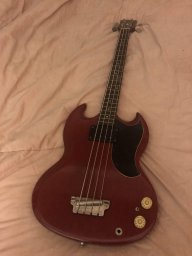
The bassist of one of my bands sold me a vintage Squier jazz bass in great condition for super cheap, more as a favor for a friend, so I'm set there, and am picking a cheap amp up soon. He played it for a while at last practice to show me how it played and sounded, and I was impressed! I should be all set there.

I am a complete noob at the bass, and the last thing I want to do is pick up any bad habits, so I was hoping to get some tips and tricks on what bad techniques I'd be in danger of developing, how to avoid them, and what the best approach is to playing, especially taking my drumming background into account. I primarily play funk, rock, blues, and jazz, but I am by no means a pro drummer. I don't know all the flashy stuff, but can lay down a groove with the better of them Rhythm is in my blood, and I want to translate that over to bass.

Thank you in advance!!
 

Attachments

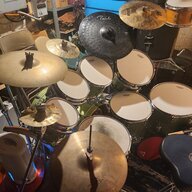
  • 20231213_213043.jpg
    20231213_213043.jpg
    2.4 MB · Views: 20
First off, take at least a couple of lessons. Sitting knee-to-knee with someone who can give you immediate feedback on technique is priceless.

Also, join TalkingBass.net, it's a free membership. Once you join, go to the Free Lesson Map.

Lesson Map

Go through the first two lessons - Beginner Lessons and Bass Fundamentals. You should be able to breeze through those fairly quickly. Then dive into the Music Theory lessons. That will provide you with a solid foundation for understanding and playing the bass.

Good luck on your bass journey . . .
 
As others have said, nothing beats lessons. A good teacher can show you proper technique, help you develop healthy playing habits, and give you a solid foundation to build upon.

A few tips:

Just like with percussion, you need to be loose, relaxed, and pay attention to how much force you exert to play a note. Crank your bass volume up high and find the minimum pressure it takes to produce a note. Practice playing at that level; don't try to make it loud just by increasing the force you put into your fingers.

Nothing should hurt. Having slightly raw fingertips isn't uncommon but you shouldn't be feeling pain from playing. The most common issue beginners have is gripping the neck too tight or plucking too hard, which can cause all kinds of pain issues.

Give yourself credit for the journey you have already taken. You aren't a beginner. You know a lot already and have experience that lends itself directly to being a good bass player. Working on time, feel, groove, ear training, understanding rhythm, all that stuff takes years to develop and you are already a master! By comparison, learning the names of 12 notes and where to put your fingers on the fretboard is a much smaller and easier task to take on.
 
Hi all, and thank you for allowing me to join the community!

I've been playing drums for 26 years now, and while I'm still very much so active in playing them, I wanted to expand my horizons and pick something... quieter to noodle on while my daughter and/or wife are asleep. I figure I can practice with a small amp during the day, but can unplug for later nights.

The bassist of one of my bands sold me a vintage Squier jazz bass in great condition for super cheap, more as a favor for a friend, so I'm set there, and am picking a cheap amp up soon. He played it for a while at last practice to show me how it played and sounded, and I was impressed! I should be all set there.

I am a complete noob at the bass, and the last thing I want to do is pick up any bad habits, so I was hoping to get some tips and tricks on what bad techniques I'd be in danger of developing, how to avoid them, and what the best approach is to playing, especially taking my drumming background into account. I primarily play funk, rock, blues, and jazz, but I am by no means a pro drummer. I don't know all the flashy stuff, but can lay down a groove with the better of them Rhythm is in my blood, and I want to translate that over to bass.

Thank you in advance!!

Well you already know half the battle, a good rhythm sense. What you need to learn is pitch, as well the scales needed make the chord changes sound logical. That is the bassists #1 job, to provide the logic of the piece’s, progression.

I’d suggest you start with songs with simple bass lines and record those practice sessions. You’re never going to remember every note you played, or how well you played them or not. Do not beat yourself up when reviewing, listen to what you did well and repeat.
 
All good advice, you probably know as a drummer the hardest habits to break are the ones you establish as a beginner... the same is very true for bassists...

As politically incorrect as it sounds, find a real ********* of a teacher for at least a couple lessons. You'll appreciate it later on... either by quitting, or by not having problems years later.
 
Now you have to know what key the song is in. And tuning is more critical. You've added stress to your life, but it can be worth it.

Assuming you're a good drummer you already have the most important skill set for any musician....timing.
 
Hi all, and thank you for allowing me to join the community!

I've been playing drums for 26 years now, and while I'm still very much so active in playing them, I wanted to expand my horizons and pick something... quieter to noodle on while my daughter and/or wife are asleep. I figure I can practice with a small amp during the day, but can unplug for later nights.

The bassist of one of my bands sold me a vintage Squier jazz bass in great condition for super cheap, more as a favor for a friend, so I'm set there, and am picking a cheap amp up soon. He played it for a while at last practice to show me how it played and sounded, and I was impressed! I should be all set there.

I am a complete noob at the bass, and the last thing I want to do is pick up any bad habits, so I was hoping to get some tips and tricks on what bad techniques I'd be in danger of developing, how to avoid them, and what the best approach is to playing, especially taking my drumming background into account. I primarily play funk, rock, blues, and jazz, but I am by no means a pro drummer. I don't know all the flashy stuff, but can lay down a groove with the better of them Rhythm is in my blood, and I want to translate that over to bass.

Thank you in advance!!
Look up bassbuzz and Scott's Bass Lessons on YouTube
 
  • Like
Reactions: Wyrdlow
Hi all, and thank you for allowing me to join the community!

I've been playing drums for 26 years now, and while I'm still very much so active in playing them, I wanted to expand my horizons and pick something... quieter to noodle on while my daughter and/or wife are asleep. I figure I can practice with a small amp during the day, but can unplug for later nights.

The bassist of one of my bands sold me a vintage Squier jazz bass in great condition for super cheap, more as a favor for a friend, so I'm set there, and am picking a cheap amp up soon. He played it for a while at last practice to show me how it played and sounded, and I was impressed! I should be all set there.

I am a complete noob at the bass, and the last thing I want to do is pick up any bad habits, so I was hoping to get some tips and tricks on what bad techniques I'd be in danger of developing, how to avoid them, and what the best approach is to playing, especially taking my drumming background into account. I primarily play funk, rock, blues, and jazz, but I am by no means a pro drummer. I don't know all the flashy stuff, but can lay down a groove with the better of them Rhythm is in my blood, and I want to translate that over to bass.

Thank you in advance!!
Fellow drummer here. I did the same thing last year and started playing bass. You will NOT regret this.

If you've spent any time working out of Stick Control, take those habits with you into playing bass: Tension is not your friend. You may find yourself squeezing the hell out of the neck to keep the notes from buzzing, so fall back on your drumming instincts and release that tension. Trust your hands to tell you when you're pushing too hard. There are a couple of finger techniques for the left hand (look up OFPF and Simandl). Unlike drums, hand size and finger length are going to be something of a factor and you'll want to choose which of those left hand techniques is most comfortable for you at first. Ultimately, I think of it like knowing matched or traditional -- pick your favorite, but work on both.

Don't sweat the coordination part. You've already wired your brain to deal with it.

If you do warmup stretches for drumming, do them for bass as well. It's a lot of the same muscles and tendons, but it's a pretty different use case.

If you can read drum charts but not necessarily the notes of the staff, work on that too. I never liked being left out of the conversation between the other musicians when it came time to talk chords and melody.

Nice to see another drummer picking up bass. Have fun with it!
 
  • Like
Reactions: logdrum
Lessons from an accomplished bassist that is a well rounded musician.

Thumb behind the neck, not wrapped around it.
Use all four fingers on your fretting hand.
If you are serious, learn to read standard notation in bass clef as you are learning the notes on the neck.
 
  • Like
Reactions: aprod
Lots of good suggestions here!

One thing you’ll find is that in addition to learning to play the right notes on the right strings, you’ll also have to learn to prevent the strings you aren’t playing from sounding (“muting” them). A lot of this is in right-hand technique and a good teacher will get you going on it; I didn’t take lessons so it took me longer than it should have to figure it out!

Best of luck and hope you have much fun with the bass.
 
Hi all, and thank you for allowing me to join the community!

I've been playing drums for 26 years now, and while I'm still very much so active in playing them, I wanted to expand my horizons and pick something... quieter to noodle on while my daughter and/or wife are asleep. I figure I can practice with a small amp during the day, but can unplug for later nights.

The bassist of one of my bands sold me a vintage Squier jazz bass in great condition for super cheap, more as a favor for a friend, so I'm set there, and am picking a cheap amp up soon. He played it for a while at last practice to show me how it played and sounded, and I was impressed! I should be all set there.

I am a complete noob at the bass, and the last thing I want to do is pick up any bad habits, so I was hoping to get some tips and tricks on what bad techniques I'd be in danger of developing, how to avoid them, and what the best approach is to playing, especially taking my drumming background into account. I primarily play funk, rock, blues, and jazz, but I am by no means a pro drummer. I don't know all the flashy stuff, but can lay down a groove with the better of them Rhythm is in my blood, and I want to translate that over to bass.

Thank you in advance!!
Just play it.

Use two fingers. Glide over the strings, not pulling at them. It's a relaxed finger tip thing.

Rest your thumb on the string above the one you're playing. That's how you mute the strings that aren't being played, so that they don't ring out when you hit a note. Vibrations carry. You have to learn to mute. Figure it out quickly, and you're set for life.

Just play bro. Have fun with it.