• TalkBass has been independent since 1998. Add your voice.
    Create a free account to reply to discussions, view embedded media, and browse with fewer display ads.
    Join freeLog in
    Want zero display ads or expanded classifieds tools? Compare plans.

Tone

GAS, fiddling with EQ, gear all the rest is fun, but I overdo it. The audience won't notice many (most?) of the things I spend time and money on.

Tone alone is not tone with other musicians in a usual practice place. Tone at practice is not the tone of gigs, where certain bass freqiencies can shake the roomin ways unwanted.
 
How many guys worry about thier Tone when playing out in a bar or a live audience? It seems that unless your audience is quiet and the room is just right, then it doesn't really matter much.

I like my tone to be good. Whether it’s a guitar, a drum, a singer or an electric bass- if it sounds like poop the audience will notice. So I make it a point to have a good tone. It matters.
 
my "tone" or sound doesn't get lost in a noisy bar environment, because I am far and away the loudest sound in the room. if you are in a 5 block radius, you can't help but hear what my bass sounds like. pow!


giphy-3.gif
 
I guess I was just wondering if it matters live and 'tone', regardless of preference, gets lost in a noisy bar crowd.


Perhaps your being overly fatalistic. Tone is not lost. You certainly have less control over your tone in a live setting, but you have some control. You can make it better, and you can definitely make it worse.
 
How many guys worry about thier Tone when playing out in a bar or a live audience? It seems that unless your audience is quiet and the room is just right, then it doesn't really matter much.
Control the things you can and don't worry about the things you can't. My bass sound is something I can control up to when it leaves the speaker cones, so I do what I can.
 
I'm currently having issues within my band regarding simply bring heard. We play many small venues and FOH support is not needed. Even when it is, I can't seem to make others in the band as well as their significant others that it would make the band sound better if the bass guitar could be heard clearly. They seem to only want to hear the vocals, guitar, and keys. The snare drum usually cuts through the mix well, but the kick is also MIA. I've tried to explain that the bass guitar should sound should be more than just the sound of "humming in thr background".

I agree with your appraisal of what should be. But you also need to consider what is realistic in whatever acoustic environment you are performing in. If the venue is boomy and has a lot of reverb, then it's definitely challenging to get definition from the bass and bass drum, even when they are performing solo. Ultimately I think tone matters, but we are often greatly constrained by acoustics. That doesn't mean we shouldn't learn to adapt to the environment and do the best we can to overcome whatever acoustic obstacles we are faced with. Unfortunately,if you can't effectively deal with this sort of limitation, you are probably not cut out to be a professional musician.
 
  • Like
Reactions: JRA
I made the transition to IEMs last year. One result of which is that I now have pretty much no control over the tone the audience hears from me.

I had to drop the leash on that; it was driving me a little crazy at first. Now I just make sure my bass sounds good and that I'm playing as well as I can, and let the FOH guy handle the tone. There's a little bit of Zen there if you do it right.


Unless your blowing out the room with your amp, it shouldn't make much different to the audience whether your on IEMs or running an amp. Either way the audio tech should be dialing in the best possible sound. I do think using a preamp/DI is a good idea with IEMs. This gives you more direct control over the sound of your bass in your IEM mix. As an audio tech, I would ask you to dial in your tone during sound check and then try to leave the controls alone during the show. If you are the type of player that uses multiple sounds during a show, then ideally I would want to work with you to check and possibly dial in each preset. Ideally different patches should be checked in the context of the actual song they will be used in. This can lead to a long sound check, which is not always possible.
 
I worry if the front of house is getting my tone correct at every gig but as long as I can hear the tone I want I'm not too picky. If we have a sound engineer I try to get 'em on the same page of the tone I want but I just let 'em do their thang for the most part.

After a few drinks it's about rock n roll . Having fun is top priority for me.
 
How many guys worry about thier Tone when playing out in a bar or a live audience? It seems that unless your audience is quiet and the room is just right, then it doesn't really matter much.


I care about my tone, but I don't get upset that I don't have complete control over it or that the audience might hear something different. What I'm hearing when I'm playing has to be what I like and what I think sounds as good as possible given the space, but I know I don't have complete over it on the stage or what the audience hears. The FOH EQ will change it to fit the band mix or the space has terrible acoustics or there's an equipment problem with the PA or the room is filled with talking people or whatever or the stage is a weird shape and half the outlets are dead, etc.

I spend time with my gear at home, getting to know the different parameters and what I think sounds great. Then on stage I run into reality - but I tweak things to try and get the best monitor tone I can, both with my gear and working with the sound person if they're running monitors. I do want the audience to get the best bass tone possible, but I'm usually playing bars or outdoor parties, so I know my 'perfect' bass tone might not make it out to the folks.

Also, I think a big chunk of a player's tone comes from their fingers. I've had stand-in gigs where I've played some else's bass/amp and it still sounds like me - the way I pluck the strings, mute the strings, release the strings, etc are me.

That being said, I usually get a compliment or two on the bass tone, usually from other musicians in the crowd. One party last summer a fantastic guitar play found me after the show and called out my tone that night (PF-115, PF-210, PF-800, P Bass with Roto 77s, no distortion, Empress compression) as being some of the best bass he's ever heard - clear and present.
 
  • Like
Reactions: Wasnex and JRA
After going through many amps and dozens of basses, as well as listening to all the live recordings of myself and other bands I have made, I have reached the conclusion that a great tone is only cared about by ourselves and perhaps some musicians in the audience. The people watching don't care if you are playing a Squier or a Fodera, rounds or flats, as long as there is a thump in the right place at the right note. As long as the sound is not so muddy you can distinguish it, or so bright and tinny it isn't bass, than it doesn't matter to the audience. All those little subtleties that we only hear in our "bedroom sound" don't really matter in the end. Just play well.
 
So much is beyond our control in a live situation, I long ago abandoned a "perfect" tone for one that is robust , functional and hard for sound guys and odd situations to f up.

Once I can be heard clearly in the mix, Further concern is just extra worry sauce.


I can be difficult to get a good sound that you can hear clearly 4' in front of your rig without being too loud for the room. Adjusting your setup and expectations so you can hear a well as possible is a good idea. Within that little environment, I adjust my tone to suit my taste. I don't typically worry what's going on outside of that area, other than ensuring I am not so loud that I am causing problems.

I make sure FOH gets a nice clear signal to work with. The audio tech is going to do what the audio tech is going to do. If your lucky, you get to work with an audio tech who cares about your sound concept and will work with you to realize your tone out front.

I am actually a bit of a control freak, but I realize the futility of trying to exercise absolute control over my tone in the entire performance environment. It's not realistic or possible, and anyone who thinks it is, is going to be frustrated and upset all the time. I prefer to be more stoic about the situation.
 
  • Like
Reactions: JRA
How many guys worry about thier Tone when playing out in a bar or a live audience? It seems that unless your audience is quiet and the room is just right, then it doesn't really matter much.
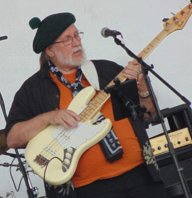
Tone matters - presuming you can be heard in the group and are not just a dull thud and roar. If you can't hear the individual notes, it probably doesn't matter. HOWEVER, I absolutely believe it is necessary to hear it clearly. My gear now is either all Eden or Eden and DNA - all designed by David Nordschow. They do clear and articulate very well. I really like the way my Jazz bass sounds played through them.

I also think that @twofingers is right when he says, "I sure do. I have more fun and play better when I sound great at the same time." If I'm not sounding good on stage, I'll tweak it bit by bit until I do. So yeah, I'm also not happy if I don't sound good.

We did an open-mic night at a venue we want to get booked at a couple of weeks ago (I HATE auditions). The bassist for the house band was using was a sterling bass through an EA head driving an EA 212 cab. It sounded good. It was a bit more low frequency heavy than I go for, but it wasn't muddy - he knew how to get a good sound out of his gear. I set up my Eden WT500/800 and two Eden EX112 cabs. After we played 5 songs and started to break down our gear, the bass player came over and complimented me about my amp and cabs. Called it a "sweet sounding set up" and he wanted to know more about it. So I told him about my set-up and how I ran it.

It's always good to have customers at the club come up and tell us how good we sound, but they often don't know why it sounds good, just that it does. it's another thing entirely when another bassist, who has good gear and a good sound, comes up and compliments me on my sound and wants to find out more about it and how I set it.
 
I guess I was just wondering if it matters live and 'tone', regardless of preference, gets lost in a noisy bar crowd.

Good tone shouldn’t be getting lost in a noisy bar.

You’ll loose some nuance. Stuff that matters in isolation you’ll never hear in a mix... but on the other side of the coin stuff that sounds ugly and nasty in isolation is often the stuff that sounds good in a mix.

Beyond that, I worry about tone at rehearsal and during sound check. Once the music starts I’m focused on performance.

IMO/YMMV
 

Latest posts