
Enjoy the benefits of a premium membership!
Upgrade Account
-
TalkBass has been independent since 1998. Add your voice.
Create a free account to reply to discussions, view embedded media, and browse with fewer display ads.
Join free Log in
Want zero display ads or expanded classifieds tools? Compare plans.
You are using an out of date browser. It may not display this or other websites correctly.
You should upgrade or use an alternative browser.
You should upgrade or use an alternative browser.
torque v power
- Thread starter Icey101
- Start date
More options
Who Replied?

If you're riding/driving legally, torque can make your ride/drive more fun. Whipping through corners is fun.
In my experience, four cylinder bikes and turbocharged cars leave me wanting more in the low end. But I've never had a Harley or V8 powered American car that left me wanting more top end.
In my experience, four cylinder bikes and turbocharged cars leave me wanting more in the low end. But I've never had a Harley or V8 powered American car that left me wanting more top end.

Best way to get a feel is to drive a (turbo) diesel car vs a gasoline one, with similar displacement, the diesel will have more torque while the gasoline will have more power, quality of ride depends on how you validate that term. On a track I would go for the gasoline, or in case of bikes the MIJ 4 cylinder bikes, on anything else I'd prefer a diesel car or a v-twin on a bike, I.e. Buell, Harley, Ducati, etc.
But these days it's all vague, diesels are so good they're winning world class races (Le Mans).
But these days it's all vague, diesels are so good they're winning world class races (Le Mans).

In my experience, four cylinder bikes... leave me wanting more in the low end...
On cheesy touring bikes, perhaps. My no longer owned ZX-7R had more than enough low end to put it AND me on our asses in first through third. Easily.
Harleys can cause deafness in one ear. Consider that you musicians.
I've had the same experience with drummists......
The only torque that matters is the amount of torque at the axle (or the force where the rubber meets the road, same deal).
Whether it got there via a low torque at the crankshaft multiplied by gearing, or via high torque at the crankshaft transferred directly is immaterial, the tire doesn't know and doesn't care*.
* At normal traction levels. Start slightly spinning the rear wheel around a corner and you'll find one/two big power pulse(s) rather than four small power pulses is more controllable. See also: Big Bang vs. Screamer firing orders.
Whether it got there via a low torque at the crankshaft multiplied by gearing, or via high torque at the crankshaft transferred directly is immaterial, the tire doesn't know and doesn't care*.
* At normal traction levels. Start slightly spinning the rear wheel around a corner and you'll find one/two big power pulse(s) rather than four small power pulses is more controllable. See also: Big Bang vs. Screamer firing orders.

Power gets you top speed.
Torque gets you acceleration.
I had an 1100 tourer with a mess of torque, made short work of passing trucks on the winding two lane roads we call State Highways. Not much fun in heavy traffic. An automatic scooter is more fun then.
Horses for courses.
Torque gets you acceleration.
I had an 1100 tourer with a mess of torque, made short work of passing trucks on the winding two lane roads we call State Highways. Not much fun in heavy traffic. An automatic scooter is more fun then.
Horses for courses.

And 1HP=33000 BTU, if anyone cares.
Wow, so I'm going to start telling people that I drive a car with a 12.8 million BTU engine. That sounds much better than 390 horsies!

Horsepower is a measure of FORCE
Torque is a measure of FORCE APPLIED IN A CIRCLE
Since it's the wheels turning that makes your vehicle actually move, it is a given that torque is the only meaningful measure of how fast you can accelerate.
If you want to you can think of horsepower as the potential to produce torque.
Torque is a measure of FORCE APPLIED IN A CIRCLE
Since it's the wheels turning that makes your vehicle actually move, it is a given that torque is the only meaningful measure of how fast you can accelerate.
If you want to you can think of horsepower as the potential to produce torque.
Best way to get a feel is to drive a (turbo) diesel car vs a gasoline one, with similar displacement, the diesel will have more torque while the gasoline will have more power, quality of ride depends on how you validate that term. On a track I would go for the gasoline, or in case of bikes the MIJ 4 cylinder bikes, on anything else I'd prefer a diesel car or a v-twin on a bike, I.e. Buell, Harley, Ducati, etc.
But these days it's all vague, diesels are so good they're winning world class races (Le Mans).
A recently swapped cars for a week with a friend (he needed mine 'cause it has a tow bar). It's one of those fancy turbo-diesel VW Golfs (a GTi), and it was a very cool car to drive. If you have to stop and take off quickly, no need to bother with 1st gear, it's got enough torque to take off in 2nd easily. I must admit, I've never driven one before, but I'm surprised they're not more popular. They're cheap as hell to run, go like the clappers, and the motors are the quietest things I've ever heard (or not heard) at highway speed. They also don't mind being thrown around corners. I wouldn't mind one myself if had the money - very nice cars indeed.
And 1HP=33000 BTU, if anyone cares.
1HP is also about 745 watts. My 400W amp has just about a half a horse!
1HP is also about 745 watts. My 400W amp has just about a half a horse!
I've heard a few amps that sound a bit like half a horse. Strangely enough, I rather liked them.
Horsepower is a measure of FORCE
Torque is a measure of FORCE APPLIED IN A CIRCLE
Since it's the wheels turning that makes your vehicle actually move, it is a given that torque is the only meaningful measure of how fast you can accelerate.
If you want to you can think of horsepower as the potential to produce torque.
Actually this isn't true. I'm a little tired to go into the specifics, but it is horsepower that controls the rate at which you accelerate. Power applied to your drivetrain is what creates the torque at the end of the system to propel the car forward. All comes down to the amount of power you have available in a certain gear above the power required to sustain the current speed at which you're traveling.
Actually this isn't true. I'm a little tired to go into the specifics, but it is horsepower that controls the rate at which you accelerate. Power applied to your drivetrain is what creates the torque at the end of the system to propel the car forward. All comes down to the amount of power you have available in a certain gear above the power required to sustain the current speed at which you're traveling.
Very true. I don't know if you use the term "power band" in the States, but it's basically the period (in revolutions) between peak torque and peak power of an engine. With a tractor, it's a thin line, but very low in the rev range. The same is true of a 2 stroke dirt bike, only it's very high in the rev range.
Those are sort of the two extremes, and for a car engine, you basically want something with the broadest power band possible. It's the balance between HP and torque that make a really good motor (depending on it's purpose). It's silly to say one is more important that the other.

Horsepower can be described as a unit of work, and torque does not nessesarily mean HP.
My wife can "torque" all day, and still not get any work done.
My wife can "torque" all day, and still not get any work done.
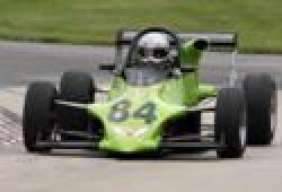
In road racing, torque is what you really need on corner track out to gather speed for the next straight.
This is accomplished at lower revs, thereby having the ability to mat it getting out of the corners, if that makes sense.
The HP comes into play at higher revs after the torque has leveled out.
Just an observation from the seat of the pants.
Jeff
This is accomplished at lower revs, thereby having the ability to mat it getting out of the corners, if that makes sense.
The HP comes into play at higher revs after the torque has leveled out.
Just an observation from the seat of the pants.
Jeff
Hi.
^This.
THANK GOD for the fact that power and torque aren't the only deciding factors when choosing our rides though.
Regards
Sam
Yes the 8Track Player and CB Radio are the deciding factors!

Horsepower is a measure of FORCE
Torque is a measure of FORCE APPLIED IN A CIRCLE
Since it's the wheels turning that makes your vehicle actually move, it is a given that torque is the only meaningful measure of how fast you can accelerate.
If you want to you can think of horsepower as the potential to produce torque.
Force per unit mass is the only meaningful measure of acceleration.
Power is the product of torque and rotational speed.
When I was once shopping for a car, I noticed that all of the cars in the "class" that I was looking at had roughly 2 liter engines, roughly equal torque, and the rated power was roughly proportional to the rpm where power was specified. I reasoned that I will never push the engine to its max rpm, so the power ratings were meaningless.
People use those terms because they roll off the tongue better than "American made crap"
I can't wait to go out and drive my Canadian-made car. Oh, sorry- those are American companies.


