• TalkBass has been independent since 1998. Add your voice.
    Create a free account to reply to discussions, view embedded media, and browse with fewer display ads.
    Join freeLog in
    Want zero display ads or expanded classifieds tools? Compare plans.

Touching your tube is bad. Right?

The glass used for tubes is really quite thick, has to hold a vacuum after all. They're a LOT thicker than a lightbulb. So, unless you've had oil from your fingers cause the glass envelope of a tube to crack, you're fine touching your tubes. If tubes were that delicate they never would've sold tube socks to dampen microphonic vibrations - after all that's a piece of highly insulative rubber right on the outside of the tube. And think about all the other applications for tubes, both now and back in the day, do you the soviet military was issuing rubber gloves to radio and radar techs?
The heaters will stop pushing electrons long before you can introduce any mechanical issues with oil, a tube sock, or anything else.
 
I had a bit of a debate with a guitar buddy.

I told him that after you change or touch a tube, you should wipe it clean with isopropyl alcohol.

He fiddles with his tubes constantly, and he says he has never had a problem. Changing them in and out and buying "vintage" tubes that sound the same to me.

The advice I was given in 1978 has stuck with me: "If you get oil from your skin on the tube, it can create a 'hot spot' that can affect performance or even destroy the tube"

Is this true?

True - tubes and the oil from your hands don’t play well together, so it’s best not to touch them.
 
I wouldn't worry about oil from your fingers getting on an audio tube. Just don't change tubes while eating a peanut butter sandwich. Wiping them because you want to keep them clean is fine. Years ago there were high temperature broadcast tubes that required special precautions. Perhaps this is where this comes from.

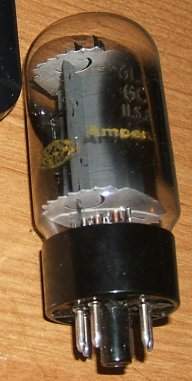
Some tubes have the tube number etched onto the glass bulb, others simply have it painted on. I wouldn't use isopropyl alcohol as it can remove the lettering on the tube.

What is more of a concern is the thick layer of dust, dirt, and grease that can accumulate over time. This will inhibit proper cooling of the tube, cause hot spots, and can lead to premature failure. So clean the gunk out of your amp when it needs it.

 
Complete myth. According to Lord Valve himself, you can fondle audio tubes all day with greasy filthy fingers without shortening their life by so much as a second. I tend to believe him about these matters. ;)

I tend to agree that it's a myth, but I'd still not touch them any more than necessary. I certainly wouldn't worry about wiping them down with alcohol every time you touch them (halogen bulbs on the other hand should be), especially vintage tubes - you'll wipe off the labels.

Edit: David, you beat me to it! :p
 
I had amps come in with the inside covered in a thick layer of grease from smoke machines, they were working fine, an it wasn't the valves causing trouble.

This is true, a lot of folks will have a problem and end up attributing it to the tubes simply because that's what they can seen - it's almost always something internally. Keeping the pins clean is far more important.
 
Oils are an unlikely concern from a contamination standpoint. True, they could char on the surface of the glass; but, that would not do much to the tube performance. Even on a halogen bulb, the char layer thickness would be unlikely to affect the radiative output a whole lot.

A more likely concern would be alkali ions, which we carry around inside of us. Li, Na, Ca, Mg etc ions have fairly high rates of diffusion through glass and can interact with various components, such as the filament metals, in a destructive way. AFAIK, that is the concern with the halogen bulbs.

The rate of transport through the glass crudely doubles every 10 degrees centigrade. So, halogen bulbs, where the bulb is literally glowing, are probably somewhere north of 750 C during operation. Your standard power tube has the filaments glowing around 700 C, but the glass most likely is not more than 250 C or 300 C. The rate of transport of alkali ions at those temperatures is not so much of a concern. It is non-zero, but pretty low.

Another thing is that the tubes were initially developed for use in World War I to communicate with ships at sea. And, you will see the Mil Spec designations on many of them. You can be sure that the designs were intended for military use; and so, they would need to stand up to typical skin contact. In fact, I would be amazed if there hadn't been a whole regimen of lifetime testing including handling as part of the qualification processes. 70 or 80 years ago, of course. They are pretty durable.

Don't know if any of that helps.
 
  • Like
Reactions: downlowuponit
I used to watch a certain boutique amp builder rip tubes out and swap on the fly like they were m&m's. It's not unusual for my guitars to pull a tube out of somewhere and swap it on the spot also. All of these guys were very well versed in amps and how they work, so it never seemed like an issue like it is with a headlight. The amp builders hands were so callused, I don't thin he even used a rag...just ripped them out bare handed. I remember watching him go through dozens of NOS tubes at his bench on a single amp in one sitting, pointing out subtleties between them (which I pretended to hear). It makes sense to me that they would be similar to headlights, where the oil from your hands could help overheat the bulb and crack it.
 
Handle tubes all you want, I've seen tubes operate covered with oil, grime, bubble gum, melted plastic...

However, as others have noted, the lettering on many tubes can very easily be rubbed off. I've got dozens of very nice old used tubes that are missing their labels, so they are now basically worthless.

Is interesting how you suddenly can't tell the difference between old Brimars and mullards and all the cheaper brands that were made exactly the same once the writing rubs off.
 
Is interesting how you suddenly can't tell the difference between old Brimars and mullards and all the cheaper brands that were made exactly the same once the writing rubs off.

He didn't say he couldn't tell the difference, he said that once the labels are gone they are basically worthless. :D They're a lot easier to identify with the labels still on them. Even if you had a bunch of Mullards a less knowledgeable person who has no idea how it identify different types of tubes would be far less likely to want them than if they were labeled as such.
 
Even one step further, I've got a bunch of smoked glass tubes with no lettering on them now. They came in a big bucket of "pulls" which had everything from 0V2 to 50L6 and every oddball voltage in between.

Okay, so what are they? Can't even tell the heater voltage. I've tried sticking them in the freezer, trying to read the condensation. I've tried lighted magnifiers. All you can see is the base style and the number of pins, it's impossible to see inside the tube. Some of them appear to be premium tubes, with chrome tops. Other than sticking them in my tube tester and arbitrarily testing them, they're hopeless.