• TalkBass has been independent since 1998. Add your voice.
    Create a free account to reply to discussions, view embedded media, and browse with fewer display ads.
    Join freeLog in
    Want zero display ads or expanded classifieds tools? Compare plans.

Double Bass Trying to Help My Son Solve His Upright Feedback Issue

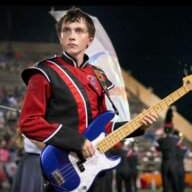
I purchased an Upton Standard Hybrid for my son three years ago. It was bought for what we assumed would be primarily Orchestral use. When he added Jazz Band to his schedule after entering the 9th grade I figured he would play his Fender. When his Jazz director discovered he was just as adept at Upright as guitar we both received a quick lesson in Jazz history. He currently uses at Revo Solo and a GK MB150. He’ll put the amp on a chair and point toward the center of the stage. He’s usually buried behind the drums and guitar. I keep encouraging him to utilize the PA system but yesterday at a Jazz Festival in Hot Springs, Arkansas he chose against it. By the time he realized he didn’t have the volume on tap that his director wanted it was to late. I could tell he was getting feedback from his amp by the frustrated look on his face. I’ve been on the search button for quite awhile now and feel okay with just asking a simple question. Will $500 solve this problem? I may even be willing to throw more at it if necessary. Should I buy him a Full Circle? A preamp and/or HPF? FDeck or Fishman? How about a tall Amplifier stand. There is not even a set of upright strings for sale it the city I live in. Everything will be online purchases. I probably would have to get the pickup installed professionally. I want him to have as close to professional quality gear as I can afford. Can someone give me a recipe for success or at least tell me where to start before I start throwing money away. At age 15 Patrick is a very skilled Bassist. As a father I enjoy and even relish helping him out. Soon he won’t need it but I’ll have the memories. Thanks in advance.
 
  • Like
Reactions: Adam Booker
The RevSolo is a hot pickup. Meaning it has a very high output. I think you can solve this with an impedence matching pre amp. You don’t need to sink 500, but if you want to, the Grace Designs Alix has all he will need for the rest of his life. Or until he jumps into the microphone world.

Failing that, Fishman and FDeck are respectable and affordable options.
 
I think the GK is fine (it's been a standard for many) and with an extension speaker below it, he should be good to go when the big band is loud. Doesn't the school provide the amp?

Then it's a matter of tweaking the tone controls, possibly aiming the cabs away from the bass, etc. It will be different in every room.

Tons of info about feedback here. Do a search.
 
In my experience a F-deck preamp is an excellent and inexpensive bunch of arrows for one's "stop the feedback" quiver: gain control right at the bass, a phase-reversal switch, and an adjustable HPF.

I rarely encounter feedback I can't tame with it... and having everything right there is very handy when the room fills with people *after* the soundcheck and suddenly you're chasing feedback again. :)
 
Last edited:
Great choice of bass and pickup! I have an earlier Upton model they don't make anymore and a Rev Solo 2. It's the most feedback resistant piezo pickup I've ever used, and while I do really like the Full Circle as well, the Rev Solo is just as good or better at feedback resistance. But it can't work miracles.

First off, you need to explain to the kid that instruments go in the PA and the idea onstage is not to fill the entire room with your amp, but to have enough volume in your amp to get a good onstage blend with everyone else and not overwhelm them. And you let the PA do the work, especially with a big giant hollowbody instrument like an upright. In a smaller room, maybe you can use just the amp, but always best to use the PA when you have it available. Always.

Second, a high pass filter can help, but only in the very low end. I also use a little 6-band graphic EQ to target the areas that are feeding back so I can dial the offending frequencies down while changing the sound of the frequencies that aren't feeding back as little as possible. There are lot of different eq's and preamps you can get for this purpose. And of course there's the EQ on his amp which is good for setting his tone in broad strokes then fine tuning it with a second EQ that's a little more pinpointed.

Third, keep as much distance between the bass and the amp as possible, within reason of course. It's not an issue at lower volumes, but at high volumes, it certainly is.

Fourth, this is a drastic measure, but you can plug up the F-holes. I don't like doing it because I don't like the way the bass responds as a result, but I have done it on occasion with rental basses that aren't as feedback resistant as mine. I just took some masking tape and covered up the F-holes, and I'm able to get a good deal more volume out of an amp when I need it. You can get more elegant solutions such as custom made F-hole covers, but since I only need them on occasional rentals, it's not much of an issue for me.

But the main thing for controlling feedback will always be watching your volume and playing at a volume that blends in well with everyone else onstage.
 
The link on feedback is very informative, it will help. Fighting feed back is about getting all the steps right.

In a big band Jimmy’s advice about getting some distance between you and the amp is especially imporant. When you’re stuck at the back of the stage behind drums and guitar it is often hard to create some distance. I always carry a long speaker chord with me so I can place my speaker far away and still control the amp.

I also agree with his advice about using the pa, if the pa and the person controlling it are up for the job. Ime with not-so-professional big bands the pa is there mainly for the singer, keys and solo’s. Often pa and soundperson are not very capable in the low end and you’ll have to be able to fend for yourself.
 
I purchased an Upton Standard Hybrid for my son three years ago. It was bought for what we assumed would be primarily Orchestral use. When he added Jazz Band to his schedule after entering the 9th grade I figured he would play his Fender. When his Jazz director discovered he was just as adept at Upright as guitar we both received a quick lesson in Jazz history. He currently uses at Revo Solo and a GK MB150. He’ll put the amp on a chair and point toward the center of the stage. He’s usually buried behind the drums and guitar. I keep encouraging him to utilize the PA system but yesterday at a Jazz Festival in Hot Springs, Arkansas he chose against it. By the time he realized he didn’t have the volume on tap that his director wanted it was to late. I could tell he was getting feedback from his amp by the frustrated look on his face. I’ve been on the search button for quite awhile now and feel okay with just asking a simple question. Will $500 solve this problem? I may even be willing to throw more at it if necessary. Should I buy him a Full Circle? A preamp and/or HPF? FDeck or Fishman? How about a tall Amplifier stand. There is not even a set of upright strings for sale it the city I live in. Everything will be online purchases. I probably would have to get the pickup installed professionally. I want him to have as close to professional quality gear as I can afford. Can someone give me a recipe for success or at least tell me where to start before I start throwing money away. At age 15 Patrick is a very skilled Bassist. As a father I enjoy and even relish helping him out. Soon he won’t need it but I’ll have the memories. Thanks in advance.

As others have said, what he has is fine. Nice bass, good pickup, and a very resiliant and serviceable amplifier, especially for it's size and weight. Jazz history is a important
part of knowing what instrument to use, but it's not the bible only a guideline. :laugh::smug: I know I'll be stepping on some toes here, but if you put a great bassist behind a screen
so no one can see them or their instrument, many in folks in the audience would never know the difference. Just my take however. Remember gear's great but most touring professional bassists aren't especially picky about what amp their using. It's in the ears, heart, and hands.
 
As others have said, what he has is fine. Nice bass, good pickup, and a very resiliant and serviceable amplifier, especially for it's size and weight. Jazz history is a important
part of knowing what instrument to use, but it's not the bible only a guideline. :laugh::smug: I know I'll be stepping on some toes here, but if you put a great bassist behind a screen
so no one can see them or their instrument, many in folks in the audience would never know the difference. Just my take however. Remember gear's great but most touring professional bassists aren't especially picky about what amp their using. It's in the ears, heart, and hands.
As others have said, what he has is fine. Nice bass, good pickup, and a very resiliant and serviceable amplifier, especially for it's size and weight. Jazz history is a important
part of knowing what instrument to use, but it's not the bible only a guideline. :laugh::smug: I know I'll be stepping on some toes here, but if you put a great bassist behind a screen
so no one can see them or their instrument, many in folks in the audience would never know the difference. Just my take however. Remember gear's great but most touring professional bassists aren't especially picky about what amp their using. It's in the ears, heart, and hands.
 
Thanks for all the great advice. My son and I just took a few minutes to read through all the replies again. For him to hear the advice from other musicians instead of Dad is exactly what he needed. One final question. I have already sent Mr. Decker an email concerning how to go about purchasing the FDeck. Hopefully I’ll hear something back soon. Right now I could get GD ALiX new for $500 after the 20% discount. I have every reason to believe after having 3 hours every day for 4 years of high school, performing in our city’s youth Symphony and youth jazz orchestra, repertoire theater and all the church gigs this is something he will do in college as well. I’m wondering if I should consider the ALiX as an investment that will serve him all the way through college and beyond?
 
The Alix is great (I wrote the review of its big brother for bass Gear Magazine), but I don't think you necessarily need to spend $500 on a preamp at this stage of the game. I used the FDeck preamp for years and still keep it in my car as a backup. I eventually replaced it with a Sansamp Para Driver DI (discussion at the link provided) and have been very happy with that. Both of these units do a great job and are a fraction of the cost of an Alix.
 
The Alix is great (I wrote the review of its big brother for bass Gear Magazine), but I don't think you necessarily need to spend $500 on a preamp at this stage of the game. I used the FDeck preamp for years and still keep it in my car as a backup. I eventually replaced it with a Sansamp Para Driver DI (discussion at the link provided) and have been very happy with that. Both of these units do a great job and are a fraction of the cost of an Alix.

Agreed. I could use an Alix myself, and have been a pro for 45 years now, and still use less expensive alternatives.
 
I own the Felix and it’s a great piece of gear. Grace’s warranty service covers their products for 5 years. That said putting the Alix into a MB150’s front end is redundant and kind of overkill. So, my reccomendation would be to start small with the FDeck. You can order it right of his website. Just my take.
The HPF does work for the low lows, but I still think the kid still could use something for the other freqs. Doesn't necessarily need to be as high end as an Alix, but some little EQ or pre tailored to upright would be good. Honestly, I think MXR's little 10 band graphic EQ would be fine for now, and it would give him a much better idea of what happens at each frequency before he dives into the world of parametric EQ.

EDIT: And actually, over half his problems would be solved if he just turned down and let the PA handle covering the room!
 
Last edited:
The HPF does work for the low lows, but I still think the kid still could use something for the other freqs. Doesn't necessarily need to be as high end as an Alix, but some little EQ or pre tailored to upright would be good. Honestly, I think MXR's little 10 band graphic EQ would be fine for now, and it would give him a much better idea of what happens at each frequency before he dives into the world of parametric EQ.

Agree with most of this, but the input impedance of the MXR 10 band is only 470 kΩ, which is not high enough to properly load most piezo pickups. Both the FDeck and the Sansamp Para Driver have input impedances higher than 1 MOhm, which is recommended for most piezo pickups.
 
Agree with most of this, but the input impedance of the MXR 10 band is only 470 kΩ, which is not high enough to properly load most piezo pickups. Both the FDeck and the Sansamp Para Driver have input impedances higher than 1 MOhm, which is recommended for most piezo pickups.
A legit point, Chris, however, I use the MXR 6-Band with my upright sporting a Rev Solo and have never had a problem. Don't know why...maybe the wireless that goes directly in front of it (Line 6 G70)? But I'll definitely agree that there are pres along those lines for upright that would probably work better.

EDIT: Input impedance of the G70 is a meg. Maybe that IS why the 6-band doesn't give me a problem :D Looks like I have a little experimenting to do over the next couple days.
 
Last edited:
@JimmyM My understanding is that the impedance load on the pick up happens at the very first device you plug it into. So if you were plugging into a wireless first, the pick up would be seeing whatever the input impedance of the wireless system is. I stand ready to be corrected by the more technically minded people among us, though!
 
EDIT: And actually, over half his problems would be solved if he just turned down and let the PA handle covering the room!

Absolutely, there’s really no effective way to use an onstage amp inside a big band rhythm section, that will reach out front, to the house. PA’s are
so good now it’s very easy to get the sound to the audience.