Enjoy the benefits of a premium membership!
Upgrade Account
-
TalkBass has been independent since 1998. Add your voice.
Create a free account to reply to discussions, view embedded media, and browse with fewer display ads.
Join free Log in
Want zero display ads or expanded classifieds tools? Compare plans.
You are using an out of date browser. It may not display this or other websites correctly.
You should upgrade or use an alternative browser.
You should upgrade or use an alternative browser.
Two-Saddle Basses
- Thread starter jhb138
- Start date
More options
Who Replied?

That sounds like waaaay more effort than it's worth.You can also use a mathematical formula to determine a string gauge that intonates at a precise saddle to nut length.
You have to use strings from a manufacturer that provides single strings at very fine gauge increments with a chart of the Unit Weight of the strings.
I had to use this method for my 9 string octave-baritone since it used a 3-saddle tele bridge.
 Not to mention that the tension of your strings is going to be all over the place. :S
Two saddle bridge is the thing I like least about my '68 Tele. Bad idea. But I put up with it.
I'm not familiar with those. How do they work?
They are Wilkinson swivel saddles for Tele or '51 P basses. You can find them around still.
They work the same way as a regular 2-saddle bridge saddle as far as the adjustment goes, except they add one more bolt there in the middle that can be loosened to adjust the angle of the saddle for setting string intonation. After you get the right angle you tighten the bolt down and it's good to go for other adjustments.
AllParts carries them for Telecasters right now, but I don't see that they have the bass ones. I think I got mine on Ebay but I ordered them a long time ago for my project bass. The neck I bought for my project snapped at the headstock so I haven't made much progress on it until I could afford a new neck recently.
I like 'em.
There's more than one way to adjust intonation.
Ummmmmm...
Maybe with one of these?
I don't know. I haven't run the math ever on it, but I think adjusting from the bridge puts the fret in a different spot relative to the string length vs. this nut.
This "compensated" nut might just be marketing BS, or maybe it works. I'm not sure.
Last edited:
Here's my 2-saddle project :
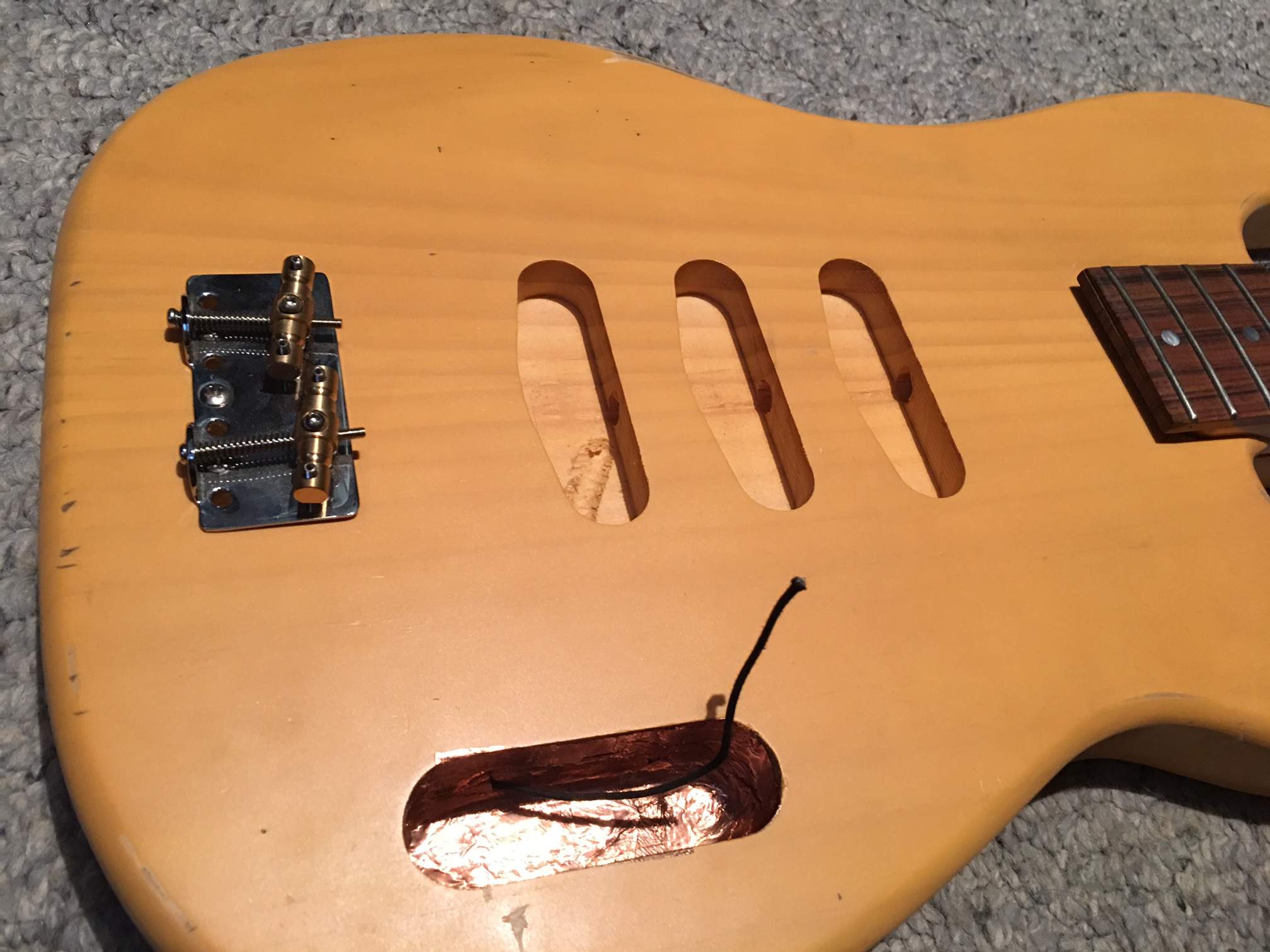
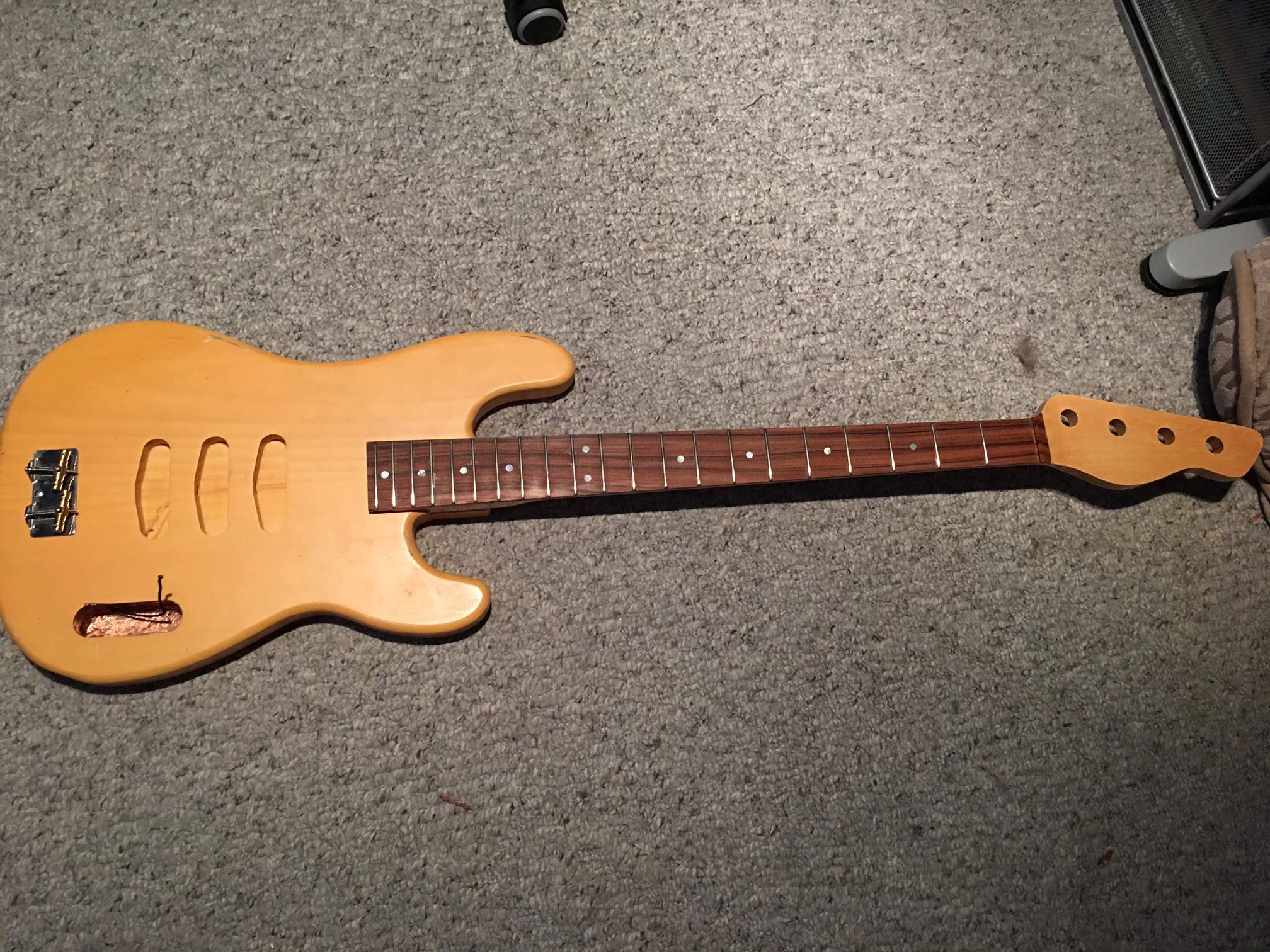
The body and neck are finished in nitro. Body made in the USA by Rosser guitars, and then a local luthier in the greater Seattle area made the neck.
I have a custom set of pickups I had wound by a guy over on the East coast for it that have the middle RWRP for hum-cancelling. They each have 1/4" magnets and are wound to about 10k.
The controls will be a bit weird. I have the harness for it already.
Pickup selector will select neck or bridge coil, middle coil is always on.
Volume has treble-bleed mod, and is a push/pull for series/parallel (middle in series or parallel with output of pickup selector). The idea was I can pop it into series mode and then use the volume right away to cut some bass back. For about 1/4 turn of the volume it cuts bass and leaves the highs (treble-bleed does that), then after that it's a regular volume.
Then I have a varitone on the harness now but I'll probably swap it for a tone pot. The tone pot might be a push/pull for some other function in the up position, like mid-cut. I have a spare prewired push/pull tone pot that does that already.
The goal was to have a passive bass that is some blend of P-bass and a Stingray. However it ended up more like a Gibson G3 mixed with a L1000 or Kiloton as I made design choices and had limitations discovered. The pickups are located around the P sweet spot and the MM sweet spot.
The challenge was getting something like a 2-band EQ in this bass. G&L does it with the PTB passively but I have much less space. So I opted for the treble-bleed volume to make my volume control dual-function.
Anyway. I need a couple parts and I'm ready to put it together finally.
The body and neck are finished in nitro. Body made in the USA by Rosser guitars, and then a local luthier in the greater Seattle area made the neck.
I have a custom set of pickups I had wound by a guy over on the East coast for it that have the middle RWRP for hum-cancelling. They each have 1/4" magnets and are wound to about 10k.
The controls will be a bit weird. I have the harness for it already.
Pickup selector will select neck or bridge coil, middle coil is always on.
Volume has treble-bleed mod, and is a push/pull for series/parallel (middle in series or parallel with output of pickup selector). The idea was I can pop it into series mode and then use the volume right away to cut some bass back. For about 1/4 turn of the volume it cuts bass and leaves the highs (treble-bleed does that), then after that it's a regular volume.
Then I have a varitone on the harness now but I'll probably swap it for a tone pot. The tone pot might be a push/pull for some other function in the up position, like mid-cut. I have a spare prewired push/pull tone pot that does that already.
The goal was to have a passive bass that is some blend of P-bass and a Stingray. However it ended up more like a Gibson G3 mixed with a L1000 or Kiloton as I made design choices and had limitations discovered. The pickups are located around the P sweet spot and the MM sweet spot.
The challenge was getting something like a 2-band EQ in this bass. G&L does it with the PTB passively but I have much less space. So I opted for the treble-bleed volume to make my volume control dual-function.
Anyway. I need a couple parts and I'm ready to put it together finally.
Last edited:
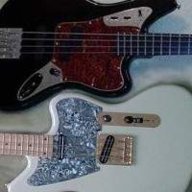
That sounds like waaaay more effort than it's worth.
Nope. Tension is within a pound between all strings. Here's a photo of the instrument I was talking about. Note all the saddles end up
in a straight line even though they are an octave apart. It's tuned aaA ddD ggG. I did not expect it to be accurately intonated, but it is.
I admit that math is a pain (at least for me) but once you understand the math equation its very easy calculator work.
If I were doing it for a 2 saddle bass I'd use 34" on the D&G and 34.1" on the E&A instead of the same scale length all across like this.
My #2 and #1:
I don't mean to be a hater ... but there is nothing about a 2 saddle bridge I like. I don't like the look and I certainly don't like the lack of ability to adjust intonation. But I do love everything else about the look of the early Fender.
And you guys saying you can make up for the intonation with a compensated nut or by choosing custom strings or the guy saying that intonation is overrated --- I don't know what you're smoking but I'm glad I'm not smoking it.
And you guys saying you can make up for the intonation with a compensated nut or by choosing custom strings or the guy saying that intonation is overrated --- I don't know what you're smoking but I'm glad I'm not smoking it.
I don't mean to be a hater ... but there is nothing about a 2 saddle bridge I like. I don't like the look and I certainly don't like the lack of ability to adjust intonation. But I do love everything else about the look of the early Fender.
And you guys saying you can make up for the intonation with a compensated nut or by choosing custom strings or the guy saying that intonation is overrated --- I don't know what you're smoking but I'm glad I'm not smoking it.
A compensated nut is making the string longer relative to the bridge. That's where one might believe that.
As I said though, I'm actually not sure that would work because the frets are in a different position if you adjust from the nut, vs. adjusting from the bridge.
Strings might work if you can balance the tension exactly right but I think it would throw off the string feel we're used to.
The way I am dealing with intonation issues on my Tele 2-saddle bass is by using those Wilkinson Swivel saddles which can be adjusted for intonation string by string. They're more of a pain than a 4-saddle bridge to adjust, but it keeps the vibe of a 50s P bass so it's a trade off.
Intonation is a compromise - even with a piano where, you don't have frets to deal with, they still have to compromise the tuning to try and get you a "middle ground" where it sounds "sort of" in tune in all the keys. With a fretted instrument, sometimes you need the compensated nut to get the first few frets to a better compromise --- so the compensated nut is really for getting the first few frets better in tune, the saddle adjustment is getting the intonation over the entire fretboard to the best compromise.
Fretless and a better ear than I have is the only way to have perfect intonation.
Fretless and a better ear than I have is the only way to have perfect intonation.
On my Hofner's floating bridge, I've got intonation just about spot on (granted the little saddle 'frets' can be shifted a bit), so I'd think a two-saddle bridge is at least as adjustable.
I love the look of '51 P-basses, Tele-basses, and the like. The two-saddle bridge is in keeping with the minimalist look.
Keep 'em coming!
I love the look of '51 P-basses, Tele-basses, and the like. The two-saddle bridge is in keeping with the minimalist look.
Keep 'em coming!

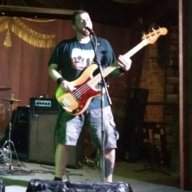
I don't mind the two saddle bridge on my Squier Bronco; I can get the intonation close enough for it to be a non-issue, but I don't use this bass for recording at all. in a live setting, I doubt anyone will notice if you're out by a cent or two.
Exactly! Glad someone understood what i was saying. Lol.I'd call it a non quantifiable preference issue and call it a day.I know, this kind of thing drives logic driven people nuts.


They are Wilkinson swivel saddles for Tele or '51 P basses. You can find them around still.
There are also a couple of places making angled saddles for them.
They're exactly the same as the stock ones, only the adjustment screw hole is at a slight angle. Gets the intonation closer without adding swivel parts.
Very common on 3 saddle guitars.

The 2 saddle bridge & intonation, lots of assumptions thrown about. I call it Divine intonation because sometimes it takes a Higher power to achieve. But for the most part, after 30 years of playing flat wound strings on thru 2 saddle bridges, sporting everything from Fender, LaBella, Pyramid, GHS [115 to 55!!], and [currently] TI flats, I've not had trouble finding the right balance on intonation. Sure, there's the occasional nudge of the saddle right or left when necessary. Could be that TI flats are more forgiving or maybe the custom saddles I use are better at the task, not sure.
All I know is I love the look, love the sound, and it's in tune.
All I know is I love the look, love the sound, and it's in tune.

I like my Bronco's bridge. I really dig the looks and I got intonation quite well I don't really notice anything out of place while I play.
IMHO the 4 saddle is still better,but I love how 2 saddles look.
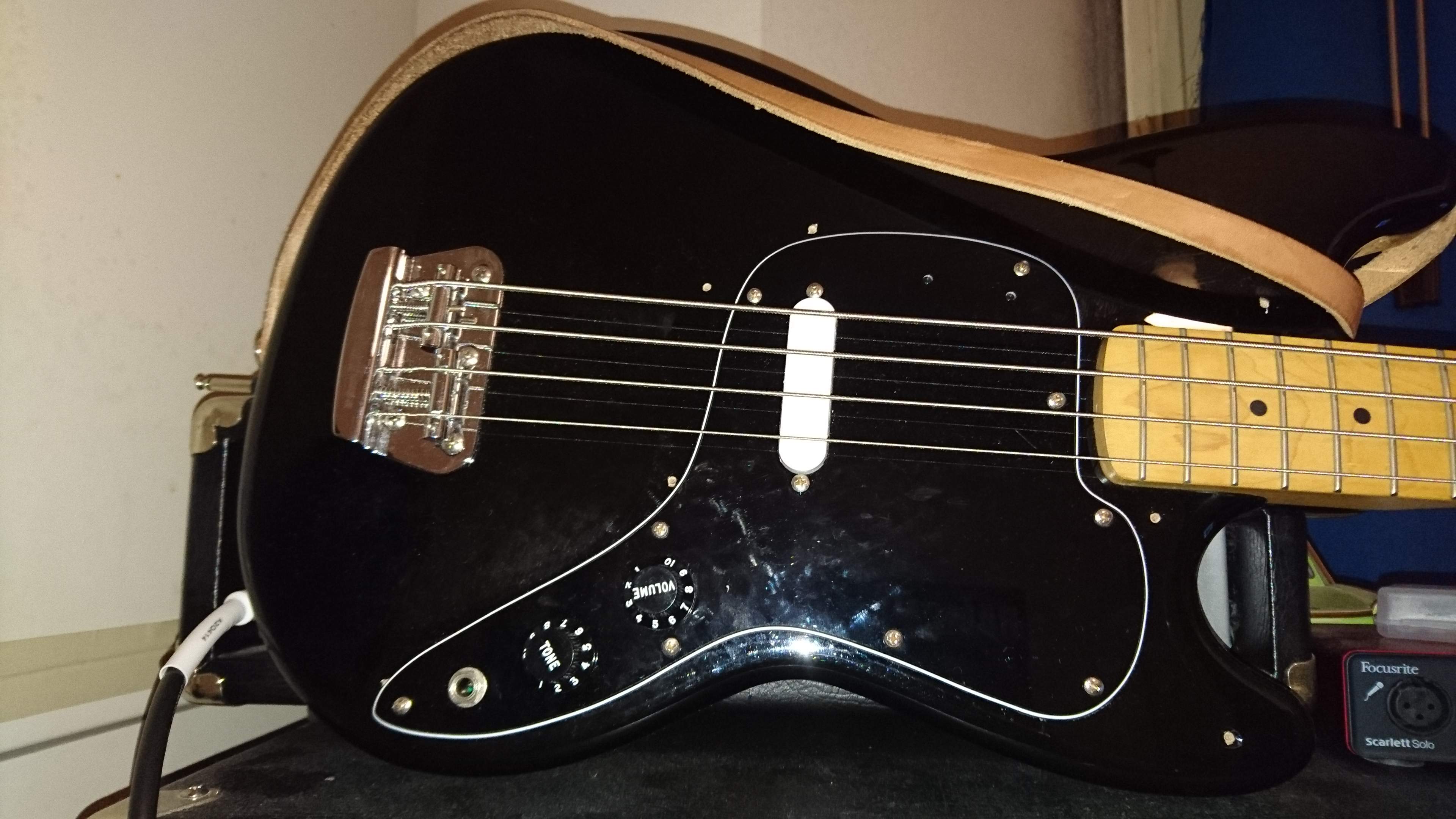
IMHO the 4 saddle is still better,but I love how 2 saddles look.

- Jun 6, 2012
- 4,837
- 6,859
- Disclosures
- I don't wait 30 minutes after eating, to go swimming.
There are also a couple of places making angled saddles for them.
They're exactly the same as the stock ones, only the adjustment screw hole is at a slight angle. Gets the intonation closer without adding swivel parts.
Very common on 3 saddle guitars.

That's cool. Actually I'd prefer those to the swivel-saddles TBH.
I've used compensated saddles for Telecasters with the 3-saddle bridges. The makers shave a bit off the saddle on one side or the other. I've never seen that before for Tele basses.