- Aug 1, 2005
- 3,546
- 1,421
- Disclosures
- Private Inventor - Bass Capos
After reading Mathews Bass Building Project I was surprised at how traditional tools and methods are still the focus of bass luthiery. I dont want to knock them, but if I were going to build a bass, I would try to get as much of the rough work as possible out of the way with modern technology, and leave the hand tools for the fine work at the end. There are commercial fabricators out there who own big 3+-axis CNC routers and who, if you brought them the glued up stock and good cad files, might be willing to cut a top and round back for you for like 500 bucks. This is certainly how all these Chinese instruments are being made. You might even score such a machine for yourself on Ebay, software included, for like the cost of a really good bow.
Now, it isnt all as simple as that, of course. You need to get access to some good cad/cam software, learn to use it, and have the cleverness to be able to translate the shapes you want into digital surfaces. A pretty daunting task, yes, but compared to carving out the shape with hand planes I would look into it anyway.
I realize that you just cant just decide on dimensions and make a good bass. You need to decide where to leave extra thickness and thin later by tapping and intuition, for example. All Im saying is, the technology is out there now to eliminate much of the grunt work that goes into making a bass, and it is now affordable.
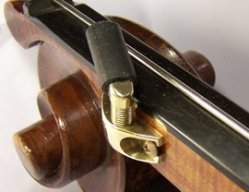
I have no ambitions myself on these lines, and am no master of 3d surfacing, but I did own a CNC knee mill, and still implement the technology for my Capo project. It is a wonderful thing, and I think it is ripe for exploitation by American bass builders. I would like to see it happen. I would be happy to provide any assistance I can to anyone who is curious.
Robobass
Now, it isnt all as simple as that, of course. You need to get access to some good cad/cam software, learn to use it, and have the cleverness to be able to translate the shapes you want into digital surfaces. A pretty daunting task, yes, but compared to carving out the shape with hand planes I would look into it anyway.
I realize that you just cant just decide on dimensions and make a good bass. You need to decide where to leave extra thickness and thin later by tapping and intuition, for example. All Im saying is, the technology is out there now to eliminate much of the grunt work that goes into making a bass, and it is now affordable.
I have no ambitions myself on these lines, and am no master of 3d surfacing, but I did own a CNC knee mill, and still implement the technology for my Capo project. It is a wonderful thing, and I think it is ripe for exploitation by American bass builders. I would like to see it happen. I would be happy to provide any assistance I can to anyone who is curious.
Robobass




 )
)