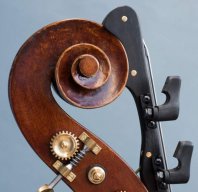
The second honey coloured bass is also carved and is my gigging work bass. I have played this bass since 1974 and it has done many thousands of gigs, as you can see by the varnish

Sidney Orpwood put the original light colour oil varnish on it and spent many hours french polishing. He was very proud of how it looked. It looked perfect for about 10 years then started to get cold checking and chips from gigging. You can see why I generally never take the perfect Chandler, my other bass, out of the house.
Hoping to copy the results of the Chandler fix I went to the art store and got a couple of matching art pens. Trying it on the honey coloured bass nothing matched and looked acceptable. The chips in the finish, although some are over 40 years old, looked like white raw wood. My solution, until a luthier can do things properly, is linseed oil. The linseed oil does a great job of making the white raw wood look kinda old.
The first two pictures is the dark Chandler bass before & after touch ups. The honey colour bass looks better after getting hit with linseed oil, it looked a lot worse untouched.
The last photo is the art pen, linseed oil and nail coat. The hide glue was for a small repair.
My conclusion is if you have a dark bass the art pen can work great. Not so for a honey coloured bass. The linseed oil makes the raw wood damage look a bit better though.
Of course a luthier should do a good match on the honey bass.
Last edited: