• TalkBass has been independent since 1998. Add your voice.
    Create a free account to reply to discussions, view embedded media, and browse with fewer display ads.
    Join freeLog in
    Want zero display ads or expanded classifieds tools? Compare plans.

Double Bass Velcro clamps for fingerboard

I don't know if anyone else has tried velcro as a clamp for re-gluing a fingerboard. Simply cut 3 lengths of velcro that will go around the neck and overlap . You have to use both pieces that make the strips stick to each other. The two pieces that you have stuck to each other must reach around the neck and overlap. Do a dry run without the glue to see how it works. Wrap one strip around the center of the positioned fingerboard as tight as you can, and then slide it up the neck toward the bridge. As the neck gets thicker, the velcro tightens its grip and sucks the board down tight. Repeat with the other two strips so you get a feel for where to position and how far they will slide. Now repeat with the glue in place... Bass repair 003.JPG Bass repair 005.JPG
Bass repair 003.JPG
Bass repair 005.JPG
 
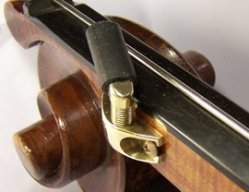
OK Robobass, You might be surprised how much pressure the velcro generates, but clamps would be a sure thing. I did run into something unexpected. I need to learn how to clamp the fingerboard where it leaves the neck, headed for the bridge. The back and the fingerboard are not parallel. How do you clamp up there and not have the clamp slip?
 
OK Robobass, You might be surprised how much pressure the velcro generates, but clamps would be a sure thing. I did run into something unexpected. I need to learn how to clamp the fingerboard where it leaves the neck, headed for the bridge. The back and the fingerboard are not parallel. How do you clamp up there and not have the clamp slip?
I'm probably not the best person to ask, but I use a double stick tape on the board and button to keep the clamp in place. It's called "Rotunda" from RHC Tapes, and is made especially for craftsmen who want to mount something for gluing or machining but then remove it without leaving a sticky mess. I'm sure real luthiers have special jigs for this application.