• TalkBass has been independent since 1998. Add your voice.
    Create a free account to reply to discussions, view embedded media, and browse with fewer display ads.
    Join freeLog in
    Want zero display ads or expanded classifieds tools? Compare plans.

Warwick V/V/T/T wiring confusion

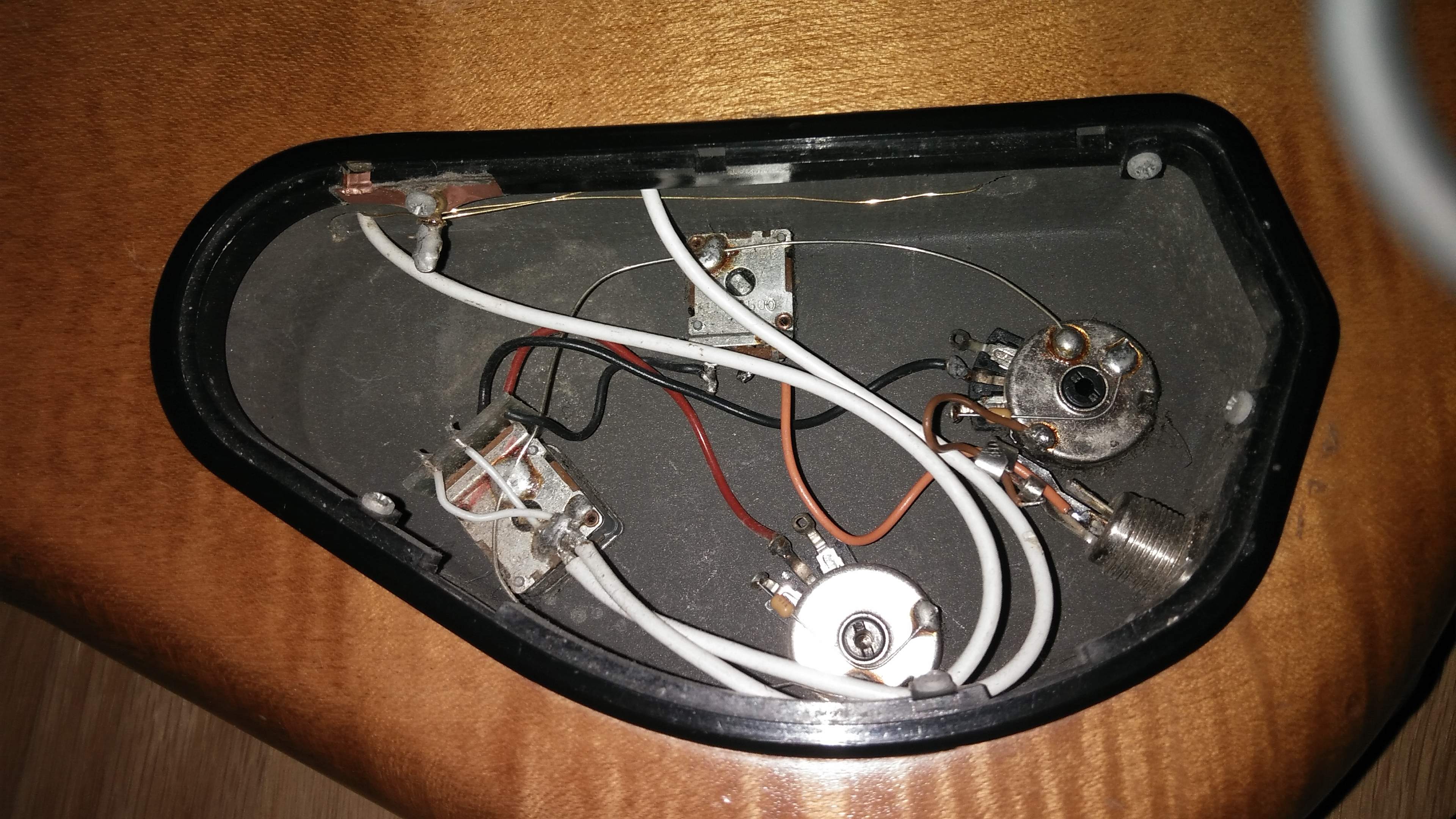
My passive p/j style Warwick is wired VVTT. I've included a couple gut shots for your perusal.

I recently bought a new P style pup to try out. It has two wires - a black and a white one. As you can see in the gut shot, the lead coming from the existing stock P pup is a single white wire, soldered to the blend pot at what is seemingly a single solder point for both the P and J pickups.

I clearly have no idea what I'm doing here but I'm not going to let that stop me. Could somebody give me an idea of what I need to do to get this thing wired up? I do have soldering experience, I'm just confused as crap right now. Thanks
IMG_20170326_214729.jpg
IMG_20170326_214905.jpg
 
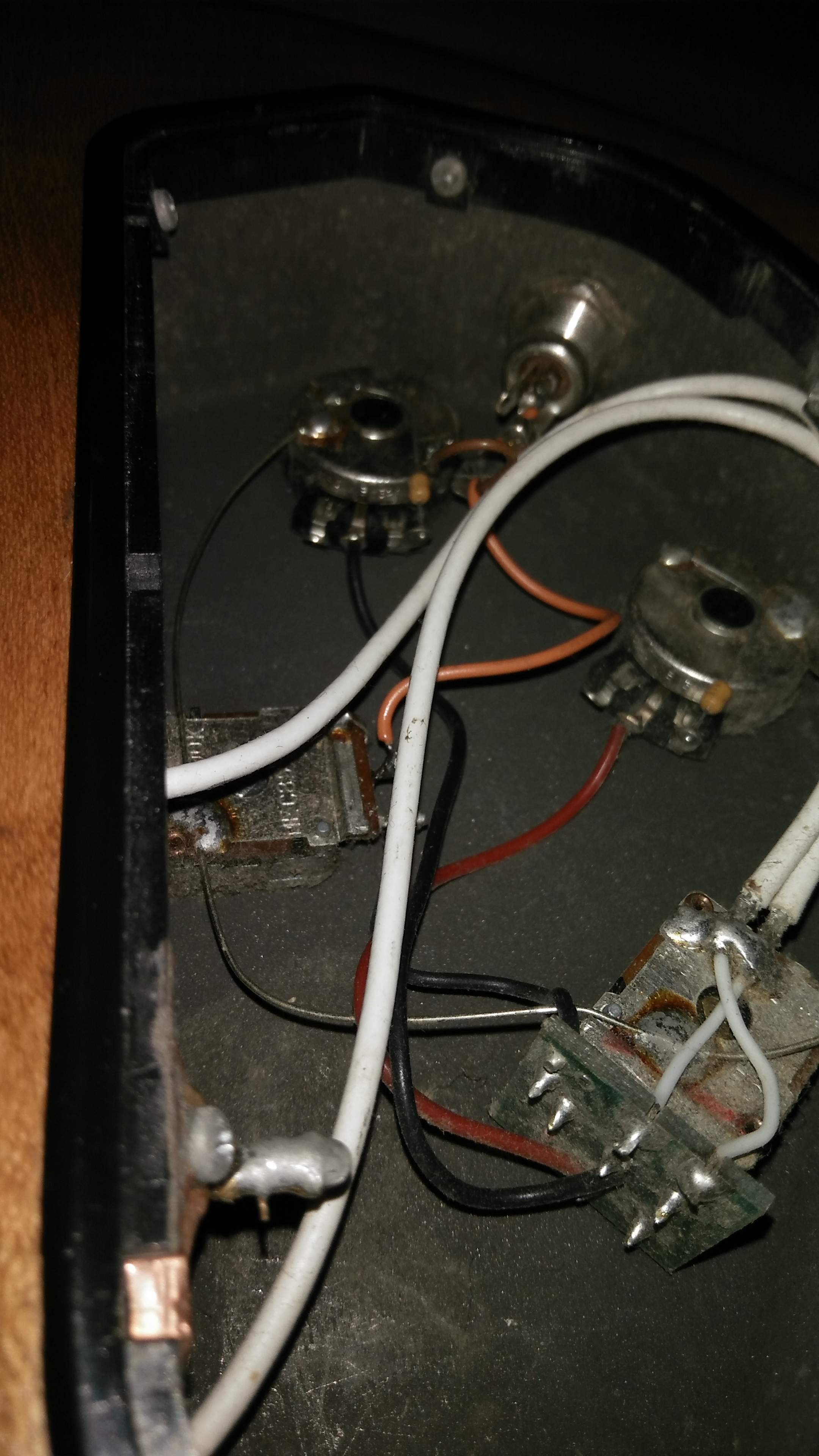
Welp. That didn't work. Here's a pic of where I'm at. The pickup makes no sound. When I blend back toward the bridge pup, I get sound but the P pup isn't working. I guess I'll try reversing then wires to see what happens. Any advice?
 

Attachments

  • IMG_20170327_013613.jpg
    IMG_20170327_013613.jpg
    665.8 KB · Views: 77
Welp. That didn't work. Here's a pic of where I'm at. The pickup makes no sound. When I blend back toward the bridge pup, I get sound but the P pup isn't working. I guess I'll try reversing then wires to see what happens. Any advice?

You shouldn't cut the old pickup wire short. If you ever want to re-use or sell that pickup, the wire is going to be too short to work with. As a general rule of thumb, never cut pickup wires unless you have to, and then only cut away as little as possible.

In any case, you probably have a short between the shield braid and the center conductor. Remove the coaxial cable entirely, and solder the new wire directly to the pot's input.
 
  • Like
Reactions: superheavyfunk
You shouldn't cut the old pickup wire short. If you ever want to re-use or sell that pickup, the wire is going to be too short to work with. As a general rule of thumb, never cut pickup wires unless you have to, and then only cut away as little as possible.

In any case, you probably have a short between the shield braid and the center conductor. Remove the coaxial cable entirely, and solder the new wire directly to the pot's input.
Darn. Okay then... Lesson learned. Let's try this again.
 
the lead coming from the existing stock P pup is a single white wire, soldered to the blend pot at what is seemingly a single solder point for both the P and J pickups.
It's not a single conductor, that is a shielded wire. The center conductor is the "hot" wire, the braided wires are the shield and ground. It may look like a single wire, but it's two conductors. If you allow the two conductors to touch, it short circuits your pickup and you get no sound.
 
It's not a single conductor, that is a shielded wire. The center conductor is the "hot" wire, the braided wires are the shield and ground. It may look like a single wire, but it's two conductors. If you allow the two conductors to touch, it short circuits your pickup and you get no sound.
Yep. That's exactly what happened. In the end, I soldered the new white wire directly to the pcb attached to the blend pot and everything works perfectly now.

Next, I need to find a humbucking jazz bridge pup and my bass mods will finally be complete!
 
BTW, I know of a lot of ppl have a hate on for the VVTT style of wiring - many complain that the tone knobs don't work correctly but I must say that however Warwick has this bad boy wired up, it sounds great and works well. The tone knobs don't seem to be in parallel and one doesn't rob the other of treble. *shrug*

I can't explain it but it works...
 
BTW, I know of a lot of ppl have a hate on for the VVTT style of wiring - many complain that the tone knobs don't work correctly but I must say that however Warwick has this bad boy wired up, it sounds great and works well. The tone knobs don't seem to be in parallel and one doesn't rob the other of treble. *shrug*

I can't explain it but it works...

Apparently you don't actually have VVTT wiring on this bass. You have a volume and a blend, plus two tones. If the blend pot is A/C taper, then that provides the necessary isolation to allow the tone controls to work independently of each other.
 
Apparently you don't actually have VVTT wiring on this bass. You have a volume and a blend, plus two tones. If the blend pot is A/C taper, then that provides the necessary isolation to allow the tone controls to work independently of each other.

Yeah, that was some kind of brainfart there. It is indeed Master Vol/Blend/Tone/Tone. What does A/C taper mean and how does it differ from linear and audio taper pots? Is that why there's a PCB on the pot?
 
Blend pots are essentially 2 pots stacked on top of each other. One will have an A taper (normal log) and one will have a C taper (reverse log). The PCB is most likely there to make it easier to assemble.

Edit: wrote linear instead of log
 
Last edited:
  • Like
Reactions: superheavyfunk
Blend pots are essentially 2 pots stacked on top of each other. One will have an A taper (normal linear) and one will have a C taper (reverse linear). The PCB is most likely there to make it easier to assemble.

You mean audio and reverse audio. Reverse linear is exactly the same as linear, by definition of linearity.

With the A/C taper, you literally have two normal audio taper pots (one reverse tapered) stacked together, so any time you are away from the center detent, it is like having a dual volume scheme with both volumes turned down. It's not a very good way to have a blend pot, because you are always attenuating the output, but the advantage for this particular scheme is that you always have the necessary resistance between the two pickups that allows each tone control to only cut treble for its respective pickup. If you had VVTT wiring, each tone control would be a master tone control whenever its respective volume pot were turned all the way up.
 
  • Like
Reactions: superheavyfunk
You mean audio and reverse audio. Reverse linear is exactly the same as linear, by definition of linearity.

With the A/C taper, you literally have two normal audio taper pots (one reverse tapered) stacked together, so any time you are away from the center detent, it is like having a dual volume scheme with both volumes turned down. It's not a very good way to have a blend pot, because you are always attenuating the output, but the advantage for this particular scheme is that you always have the necessary resistance between the two pickups that allows each tone control to only cut treble for its respective pickup. If you had VVTT wiring, each tone control would be a master tone control whenever its respective volume pot were turned all the way up.

Yes sorry, I meant logarithmic (audio) don't know why I typed linear
 

Latest posts