• TalkBass has been independent since 1998. Add your voice.
    Create a free account to reply to discussions, view embedded media, and browse with fewer display ads.
    Join freeLog in
    Want zero display ads or expanded classifieds tools? Compare plans.

What makes a bass a "one trick pony"?

While the player has a great effect on the sound that comes out, I'd say the "one trick pony" designation lies in the bass itself. Across the same playing style, some basses don't change in sound much, If you wire a single pickup straight to the jack, the bass itself doesn't have many tonal option in and of itself. Basically: Less options=less tricks.


I've wired a single pickup straight to the jack and wrought many tonal options out of it.
 
Q. What makes a bass a "one trick pony"?
A. The player

Even with one pickup and no tone or volume controls, a bass can get a huge variety of tone and nuance, all of which are in the touch and creativity of the player.

Conversely, there is a huge variety of tones that a "one trick pony" can't get. Sure, within a certain range of tones there are a lot of things a player can do to coax more tones out of a single-pickup bass. The EQ settings have a lot to do with it and, of course, playing position and attack.

That said, the tonal variety offered by, say, a single-pickup Stingray or a P bass, is much more constrained than that of a J bass or similar two-pickup bass. Bring your P bass over and we'll compare it against one of my Jazz basses or BN5s.

I think the term "one trick pony" implies that there are limitations to the range of tones a bass can get, rather than saying the bass only has one tone. There's nothing wrong with having a 1TP if, as someone said above, you want that trick. If you like the sound of a P bass, then you should have a P bass. Ditto Stingray.

For me, I can't hang with that. I like a bass with two pickups and active 3-band EQ, semi-parametric mid preferred. I have got to have access to whatever tone I'm hearing in my head.
 
I've wired a single pickup straight to the jack and wrought many tonal options out of it.

Oh of course. I was just saying that some basses just can't change much across a single playing style. It would still have many tricks through the player, but playing fingerstyle over the neck would still vary very little compared to a multi-pickup bass with tone and volume.
 
Oh of course. I was just saying that some basses just can't change much across a single playing style. It would still have many tricks through the player, but playing fingerstyle over the neck would still vary very little compared to a multi-pickup bass with tone and volume.

To my ears, a basic P sounds distinctly different playing fingerstyle just behind the pup compared to over the heel of the neck. Playing downstrokes with my thumb over the heel of the neck and a pick behind the pup and it sounds like 2 different bass guitars to my ears. :)
 
I've never seen a true one-trick pony, i.e. a bass that only produced one sound no matter what I did, but there are a lot of basses that produce different tones I DON'T like, and only have a one or a few sounds that I do. Those basses are close enough to a one-trick pony that I probably won't own one unless a particular gig demands it at some point in my life.

So there's what makes a bass a one-trick pony for me; they only have one or two tones I like using. For my money, I want more versatility.
 
I'd like to think of my Sadowsky as a one trick Budwieser Clydsdale.......:ninja:

Actually, just for giggles, I put my Roland V-Bass pick-up on my Hofner Club Bass.....to hear it sound like a Music Man really, REALLY screws with you head!!!
 
I dont know but I only need one tone, does not matter if I playing my J, my P or my Stingray , I set up the tone and eq during the sound check and never touch the knobs again, if I need a different tone I will move my pluking hand to the bridge or neck depending on what I am after.
 
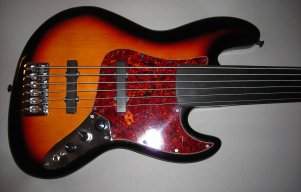
I couldn't disagree more, My DB teacher has a 5 string fretless electric bass with one pickup and a volume control and nothing else. Its very much a one trick pony bass and thats exactly why he has that bass, because he wanted that trick.

I couldn't agree more. While I might not call a a P-bass a "one trick pony" I DO certainly call a MM Stingray one. You guys can talk about "it's all in the fingers" and how EQ changes everything, and how the player makes the sound and on and on, but you are probably a bunch of Fender 4 string players who are trying to justify your one trick bass. Sure you can make some variations in tone by how you play, but I put it to you: A stingray always seems to have that certain "stingray sound". That's its "trick". And in case you don't know it's a WONDERFUL trick that some people have built a whole career upon. What is wrong with that? Why is everyone so defensive? Who said my Stingray has to be able to sound like my fretless Alembic 6 string? (or vice versa) It's just dumb to think that because it can't, it is somehow less of a bass.
 
A bass is a "one trick pony" only in the hands (or far more often, the EYES) of the person making the assertion. [snip]

That's my feeling as well. Some basses do have less potential for variations in sound (multiple pickups, active/passive), but a bass is "one trick" only if the person playing it treats it that way.

Variations in hand placement and playing technique can create a variety of sounds when playing any bass.
 
Seriously though, I think he's referring to a certain bass' inheritent tonal qualities. I can get my Stingray & Sterlings to sound similar to my Fender Jazz's in a live/band situation; however, in a side by side comparison without a band...you can easily tell which one is which.
 
To me, many basses have an inherent sound to it, like the stingray and P bass. No matter what you do, it still has that stingray tone to it. But to some people it seems that more bass = new tone. To me a stingray tone with more bass to it doesn't equal new tone at all.
 
Q. What makes a bass a "one trick pony"?
A. The player

Even with one pickup and no tone or volume controls, a bass can get a huge variety of tone and nuance, all of which are in the touch and creativity of the player.

+ A LOT

I use my flatwounded Morris P for everything. The Katy Perry, the Zed, the funky music, white boy. :bassist:

Attack, hand positioning(both bridge to neck-wise, but also how you are hitting the string), and maybe even EQ on amp o.0... can do a lot.

I don't care though. Mine gets the same kind of love for everything :) And that's because I'm a one trick pony. The basses shouldn't be blamed.
 
I couldn't agree more. While I might not call a a P-bass a "one trick pony" I DO certainly call a MM Stingray one. You guys can talk about "it's all in the fingers" and how EQ changes everything, and how the player makes the sound and on and on, but you are probably a bunch of Fender 4 string players who are trying to justify your one trick bass. Sure you can make some variations in tone by how you play, but I put it to you: A stingray always seems to have that certain "stingray sound". That's its "trick". And in case you don't know it's a WONDERFUL trick that some people have built a whole career upon. What is wrong with that? Why is everyone so defensive? Who said my Stingray has to be able to sound like my fretless Alembic 6 string? (or vice versa) It's just dumb to think that because it can't, it is somehow less of a bass.

All Stingrays sound like Stingrays, but all Stingrays do not sound alike unless you think Tony Levin sounds like Louis Johnson.
 
I'm listening to McCartney. I'm listening to Geddy Lee.

And I'm listening to this guy:

YouTube - Rickenbacker 4003 Slap

And I'm thinking, someone's definition of a "one-trick pony" is very, very different from mine.

Well, Geddy/Squier used rounds; I'll be willing to be Sir Paul used flats... And they all EQed their basses quite differently.
 
onetrickpony.gif