• TalkBass has been independent since 1998. Add your voice.
    Create a free account to reply to discussions, view embedded media, and browse with fewer display ads.
    Join freeLog in
    Want zero display ads or expanded classifieds tools? Compare plans.

What to call a put together bass?

Parts bass sounds good.

I suppose every Guarneri, Amati and Strad should then be called Frankenfiddles as they've all had their original gut strings dumped, short necks replaced, soundposts replaced, neck angle changed to the point that the original makers wouldn't recognize the sound they make as steel strung modern remakes. I know there is only 1 Strad in a museum (don't remember which) that is unplayed and wholly all original. They're electric basses, get over it.

In addition to your list of mods, soundplates have also been re-thicknessed and bassbars reinforced (lengthened).Also, changes to the bridge design.
The violin you mention is the "Messiah" (1716).Currently at the Ashmolean Museum of Oxford.
Not the only one but definitely one of very few to reach us in "mint" condition.
 
A local craftsman was doing "Reclamation" basses which were fabricated from cast-off components. You could very well end up with a Washburn neck on a Yamaha body with lord-knows-what in terms of pups & elex. Can't recall his name but he did bring a sampling of his work to a TB get-together...impressive!

Riis
 
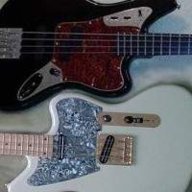
14203249_663732117115109_3774916603286216994_n.jpg


$200 brand spanking new Squier VM Jag - Discarded everything but the body, control plate, tort and strap buttons
$600 Moses custom fan fretted graphite neck
$150 Good Fender tuners including Hipshot Drop D and F logo neck plate and A string retainer.
$150 Bartolini Pickups and pots, knobs, switch etc...
$100 Badass bridge, Strat boat jack and upper control plate.
$0 My time routing, drilling, sawing, soldering, filing and generally molesting things.
-----------------------------
$Priceless = Grand total.

I don't care what you call it. It plays and sounds amazing, goes months without needing re-tuning, has never needed a setup after the first one it got when it was assembled and I love it. I have not had gas for another bass since.
 
  • Like
Reactions: Arnel M.
Yamaha started the same argument with itself by convincing the Japanese market that pianos have a lifespan of about ten years. Enterprising capitalists decided they could get boatloads of these "useless" pianos from Japan and sell them here in the states. Yamaha came up with a load of garbage about those pianos being "built specifically for the Japanese climate" and called them "gray market" pianos..... not quite "black market".

.

You're right that it's a boatload of garbage. There is no such thing as "seasoned for the American Market". Which American Market? The dry southwest? The wet south or the eastern seaboard which is both depending on the season? The big problem was that in the first couple of decades of Yamaha production, the wood was simply not seasoned enough to be stable before being put into pianos. I happened to talk shop with one of the guys who started buying up the commodity pianos for resale here in the U.S. A guy Named Tony Hahn at Past Perfect Pianos who told me the excess pianos are because in Japan there's a social stigma against buying used because it's what poor people do and Japanese are very class conscious. A lot of the pianos come out of educational institutions where they are beat to death, then are polished up and lightly refurbished and shipped over by the container load. Interestingly enough, these pianos are considered such "safe bets" that 30 year old versions get almost as much as new with warranty pianos from China.

Yamaha US offers no parts or support for grey market pianos but because nothing is simple, a few years ago Yamaha US started brokering it own line of refurbished pianos to it's dealers. They, I, we, you, are all just trying to get along and make a few sheckels while we're at it.

Mugre
 
  • Like
Reactions: two fingers