Enjoy the benefits of a premium membership!
Upgrade Account
-
TalkBass has been independent since 1998. Add your voice.
Create a free account to reply to discussions, view embedded media, and browse with fewer display ads.
Join free Log in
Want zero display ads or expanded classifieds tools? Compare plans.
You are using an out of date browser. It may not display this or other websites correctly.
You should upgrade or use an alternative browser.
You should upgrade or use an alternative browser.
What's the black box on a p-bass?
- Thread starter tokethatsmoke
- Start date
More options
Who Replied?

Finger rest when it's on that side of the strings. If it's on the other side of the strings, it's a thumbrest. I don't know anyone that actually uses them, but they look cool to me when they're in the position they are in your pictures.


Ric5
Inactive
- Jan 29, 2008
- 29,772
- 30,452
- Disclosures
- I like 5, 8, 10, and 12 string basses

That is where they used to put the preamp on the old basses ...
They could fit in there because they didn't use batteries. They had to be wound like watches. The automatic winding models required that you move around on stage enough to keep it going.
Don't believe these guys. They're fulluvpoo.
That "little box" is a tone block. You can get them made from various types/species of wood, and each different type will change the tone of your bass. You can even get one made from steel if you like to play metal.
That "little box" is a tone block. You can get them made from various types/species of wood, and each different type will change the tone of your bass. You can even get one made from steel if you like to play metal.
That "little box" is a tone block. You can get them made from various types/species of wood, and each different type will change the tone of your bass. You can even get one made from steel if you like to play metal.


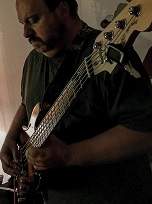
It's a weird carryover from the prototypes, which actually contained a bubble level, so you could achieve perfect vibrational coupling to the stage.
But it all proved too costly, and honestly, it was an ergonomic nightmare, what with the vibrational coupling necessitating a neck-pointed-down-stance...(but now they explain it away as "neck dive"...boooo) but the conundrum is Fender had already produced THOUSANDS of pickguards of varying materials, as evidenced by your own photo, so the holes were already there. So what else could they do than screw in a piece of painted scrap wood and call it a "feature"....
But it all proved too costly, and honestly, it was an ergonomic nightmare, what with the vibrational coupling necessitating a neck-pointed-down-stance...(but now they explain it away as "neck dive"...boooo) but the conundrum is Fender had already produced THOUSANDS of pickguards of varying materials, as evidenced by your own photo, so the holes were already there. So what else could they do than screw in a piece of painted scrap wood and call it a "feature"....

It's a black box, like a flight recorder, so that if your band ever has a train wreck they can go back and analyse the black box and see if was the bassists fault!

It's a black box, like a flight recorder, so that if your band ever has a train wreck they can go back and analyse the black box and see if was the bassists fault!
Awe, dang it! Beat me to it.

Rob

When you're sitting on your Fender stool playing, the bass always tries to slide out and down your leg that it is resting on at some point; it allows you to grab it and pull it back.
For all other basses, I have to keep my keys in my pocket so they can't slide out on me over the bump.
Nothing worse than dropping your bass while practicing on a stool.
For all other basses, I have to keep my keys in my pocket so they can't slide out on me over the bump.
Nothing worse than dropping your bass while practicing on a stool.


They could fit in there because they didn't use batteries. They had to be wound like watches. The automatic winding models required that you move around on stage enough to keep it going.
That's actually what led Larry Graham to use slap technique-the percussive vibrations were enough to keep the mechanism wound through a set. Between sets, his tech would gently rock the bass to keep it topped up.