
Enjoy the benefits of a premium membership!
Upgrade Account
-
TalkBass has been independent since 1998. Add your voice.
Create a free account to reply to discussions, view embedded media, and browse with fewer display ads.
Join free Log in
Want zero display ads or expanded classifieds tools? Compare plans.
You are using an out of date browser. It may not display this or other websites correctly.
You should upgrade or use an alternative browser.
You should upgrade or use an alternative browser.
What's your B like?
- Thread starter syndrome666
- Start date
More options
Who Replied?
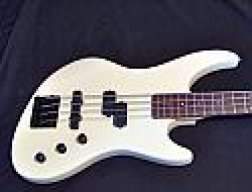
right now i'm using a MIM fender jazz 5. the B string is so tight, i love it.. I us D'addario light gauge strings so i have plenty of give on the Low B.
OK - I need your advice.
I dislike the B string on my MIM Jazz. It's floppy and sounds weak and "farty," if you know what I mean. It's currently strung with Ernie Ball 130's but I was thinking of going to 135's to get a better sounding B. I assume your opinion would be to go lighter on the gauge, not heavier? What gauge do you play that makes the B tight and sound good? 125?
Do you have stock p'ups in it or have you replaced them? I was thinking of swapping mine out to improve upon the B.
I love the feel and string spacing of the neck, and while it is a little heavy for my taste, it's a great bass other than that miserable B string.

I read on here that some have said that a lighter string, say, a .110 to .120, actually sounds (deeper?) and feels better than a heavier gauge, maybe a .130. Wouldn't going to such a lower gauge string cause some "buzz" at the nut area, esp if it's (the nut) is cut for the originally installed heavier gauge from the manufacturer, or is that difference insignificant enough to not cause that "buzz?" Dang, that's a mouthful!!!
oops... continue my question: Any advice for strings for this 35" scale that has a tighter B/guage? Thanks
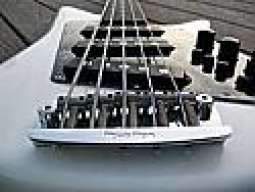
My feeling is that you take 10 bass players you'll get 5 different opinions on whether a basses B=string is good or bad or mediocre.
Technique, Style, Aggressiveness, String Dimension and plain preference all come into play.
Personally I've found that most complaints about B-strings come from people who expect to hammer on a b-string with reckless abandon and can't understand why it has less tension than an E string.
IMHO.
(Already there's distinct contradictions between same models of basses and great/poor B-strings... just depends on the player and their preference/interpretation of what's good/bad. No way to really define what's good or bad IMHO)
Technique, Style, Aggressiveness, String Dimension and plain preference all come into play.
Personally I've found that most complaints about B-strings come from people who expect to hammer on a b-string with reckless abandon and can't understand why it has less tension than an E string.
IMHO.
(Already there's distinct contradictions between same models of basses and great/poor B-strings... just depends on the player and their preference/interpretation of what's good/bad. No way to really define what's good or bad IMHO)

3 Laklands (US and Skyline) and all the B's are fantastic (Chromes, Lakland light Nickels). Keeps me from looking elsewhere.
I have a 35" neck through semi-hollow w/Black Beauties and the B is thunderous.
I have a 35" neck through semi-hollow w/Black Beauties and the B is thunderous.

I'm very happy to see this thread.
I recently joined a band that plays in Dropped B, which is something I've never done before. I'm struggling to figure out how I want to approach this. I have a SR5 that Ideally would be the B and then the other 4 strings tuned up a step to match the guitar tuning. (I know I don't have to, I want to).
My other option is to take one of my 4-stringers and tune it down. I'd RATHER do this just because I like playing 4-strings better for a number of reasons. The only thing is I'm assuming the larger gauges wouldn't work well on the bass.
So it's basically use the 5-string which is MADE for this situation or use a 4-string (which i'd prefer) and toy around with it to make it work. I'm stuck!
I recently joined a band that plays in Dropped B, which is something I've never done before. I'm struggling to figure out how I want to approach this. I have a SR5 that Ideally would be the B and then the other 4 strings tuned up a step to match the guitar tuning. (I know I don't have to, I want to).
My other option is to take one of my 4-stringers and tune it down. I'd RATHER do this just because I like playing 4-strings better for a number of reasons. The only thing is I'm assuming the larger gauges wouldn't work well on the bass.
So it's basically use the 5-string which is MADE for this situation or use a 4-string (which i'd prefer) and toy around with it to make it work. I'm stuck!

Less floppy B for my Schecter Diamond C-5 35" scale? Thanks
As mentioned earlier, I would pay particular attention to string construction with string gauge being the secondary consideration. Without trying to sound like a shill, the DR Lo Riders are a good example of a stiffer string based on a hex, not round, core. Here's a blurb from their website:
"Stainless Steel Bass Strings wound on Hexagonal Cores
Lo-Rider stainless steel bass strings are round wound and constructed upon a hexagonal core. They provide more depth of tone, and are a bit stiffer than Hi-Beams. Bass players who are into slapping, popping, and tapping will love the high end and depth of Lo-Rider. The slight bit of stiffness makes Lo-Rider bass strings very accurate when playing harmonics. Great consistency, and great string-to-string balance are DR hallmarks."
Just one of many brands but the DR's are the first that came to mind.
Riis
Thanks! I use DR Sunbeams on my FAmJazz'75reissue and like them a lot, so I feel good about your recommendation and will try their Lo-Riders on my Schecter C5.
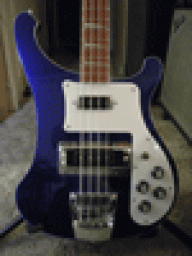
Lakland Skyline 55-02, TI Powerbass Roundwounds - tight B string with a consistent feel across the neck. I sold all my other fivers and kept this one, mostly because of the great B string.
As mentioned earlier, I would pay particular attention to string construction with string gauge being the secondary consideration. Without trying to sound like a shill, the DR Lo Riders are a good example of a stiffer string based on a hex, not round, core. Here's a blurb from their website:
"Stainless Steel Bass Strings wound on Hexagonal Cores
Lo-Rider stainless steel bass strings are round wound and constructed upon a hexagonal core. They provide more depth of tone, and are a bit stiffer than Hi-Beams. Bass players who are into slapping, popping, and tapping will love the high end and depth of Lo-Rider. The slight bit of stiffness makes Lo-Rider bass strings very accurate when playing harmonics. Great consistency, and great string-to-string balance are DR hallmarks."
Just one of many brands but the DR's are the first that came to mind.
Riis
I have noticed the same thing. Some of my basses liked round cores and some liked hex cores. In general, the hex core strings tend to feel tighter/stiffer.

My Squier Pro Tone V (34" scale) has an awesome B string. No floppiness or "deadness," intones well, etc.

The five-stringers that I have either owned or played with a nice tight B-string are: Wal MkII and MkIII, Tobias Signature, Sadowsky M5-24 and Smith BSR5MW. None of these are a match for the B-string on any Dingwall which are, as fullrangebass mentions, the best ever.
Honourable mention to the B on the Peavey Cirrus (US) too.
You wouldn't be talking about mine would you?

I agree that nothing beats a Dingwall B string!
My Carvin SB5000 has an excellent B, which you will get to hear some day soon.
Thanks! I use DR Sunbeams on my FAmJazz'75reissue and like them a lot, so I feel good about your recommendation and will try their Lo-Riders on my Schecter C5.
Please check their website Link Removed as they offer quite a variety.
Tension and stiffness can be mutually exclusive terms. Keep this mind when string shopping....it will save you a lot of aggravation and $$. Let us know how the Lo-Riders (or other) work out on the Schecter.
Riis
Alembic Epic 5 String. I've used DR, Dean Markley and Curt Magan strings, never had an issue with string tension

My Dingwall ABZ has the best B of anything I have ever played or owned......honorable mention to my MTD 535, Lakland 55-94 and Lakland 55-63.
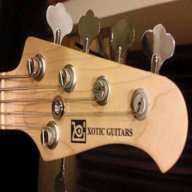
ok well in my honest opinion lakland and status have the best B regardless of what brand I have used on them. both 35" scale and 130 gauge. ymmv....


