
Enjoy the benefits of a premium membership!
Upgrade Account
-
TalkBass has been independent since 1998. Add your voice.
Create a free account to reply to discussions, view embedded media, and browse with fewer display ads.
Join free Log in
Want zero display ads or expanded classifieds tools? Compare plans.
You are using an out of date browser. It may not display this or other websites correctly.
You should upgrade or use an alternative browser.
You should upgrade or use an alternative browser.
Where is the New VT Bass??? O.O
- Thread starter tonesponge
- Start date
More options
Who Replied?I just took another look at the Tech21 site, there is the subtle addition of a button with a speaker icon next to it. Beyond that, there appears to be no sign of this change.
Musician's Friend has the old model on "clearance" for the same price it has always been, but does not have the new model available. My guess is companies will switch over once they run out of the old model and they will get the new one when they order more.
Here's the tech21 link: [Invalid or Expired Link Removed]
I was hoping this change would decrease the price on the old model, but no such luck, apparently.
Musician's Friend has the old model on "clearance" for the same price it has always been, but does not have the new model available. My guess is companies will switch over once they run out of the old model and they will get the new one when they order more.
Here's the tech21 link: [Invalid or Expired Link Removed]
I was hoping this change would decrease the price on the old model, but no such luck, apparently.

All that was added was a speaker sim defeat switch as is already available on most of the other Character series pedals.
However, this mod is also offered via Putnam Guitars, along with many other mods. So if you don't want to sell your old one and buy a new one this is another option, and you could get a DI or blend knob added as well. (however it will probably be as much or more than a new one depending on if you get your VT used or new, and what price you paid for it)
However, this mod is also offered via Putnam Guitars, along with many other mods. So if you don't want to sell your old one and buy a new one this is another option, and you could get a DI or blend knob added as well. (however it will probably be as much or more than a new one depending on if you get your VT used or new, and what price you paid for it)

TheFantod
#5 of the Pentaverate. Took Col. Sanders' spot.
You know what would be sweet? If someone could post the Speaker Defeat Mod for us DIY guys.
Just a thought....
Just a thought....
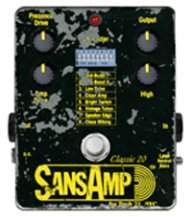
All that was added was a speaker sim defeat switch as is already available on most of the other Character series pedals.
However, this mod is also offered via Putnam Guitars, along with many other mods. So if you don't want to sell your old one and buy a new one this is another option, and you could get a DI or blend knob added as well. (however it will probably be as much or more than a new one depending on if you get your VT used or new, and what price you paid for it)
The newer version has the speaker sim defeat switch. This was added as many people felt that the speaker sim was too "bright" going into the front end of their amps even though the speaker sim can be pretty much dialed out by using the EQ controls on the pedal. The newer pedals have a filter that is engaged when the speaker sim is turned off. This makes it easier to run into the front end of another amp's preamp. Otherwise your pedal will be even brighter still. There is a mod on the newer pedals where you can cut a trace to bypass that filter but that is not recommended for use in front of an amp.
The newer version has the speaker sim defeat switch. This was added as many people felt that the speaker sim was too "bright" going into the front end of their amps even though the speaker sim can be pretty much dialed out by using the EQ controls on the pedal. The newer pedals have a filter that is engaged when the speaker sim is turned off. This makes it easier to run into the front end of another amp's preamp. Otherwise your pedal will be even brighter still. There is a mod on the newer pedals where you can cut a trace to bypass that filter but that is not recommended for use in front of an amp.
Thanks for posting.
Still, there's something which isn't quite clear. From what I understand, with the sim engaged, the new pedals sound exactly the same as the old pedals without the speaker sim switch, correct? So, if the sim is a low-pass filter (rolls off high frequencies), wouldn't the sound be even brighter when the sim was disengaged? If so, I don't understand how disengaging the speaker sim would be of any help if the tone is already too bright going into the amp, as the sound coming out of the pedal would be even brighter if you disengaged the sim.
Thanks for posting.
Still, there's something which isn't quite clear. From what I understand, with the sim engaged, the new pedals sound exactly the same as the old pedals without the speaker sim switch, correct? So, if the sim is a low-pass filter (rolls off high frequencies), wouldn't the sound be even brighter when the sim was disengaged? If so, I don't understand how disengaging the speaker sim would be of any help if the tone is already too bright going into the amp, as the sound coming out of the pedal would be even brighter if you disengaged the sim.
I think you misunderstood the explanation of the speaker emulation. The 6dB per octave high roll off is the filter that is engaged when the Speaker Sim is turned off. Because our SansAmp pedals are designed to be used for multiple applications such as, in front of an amp, into a power amp or directly into a board our Speaker Emulation circuit utilizes a gentle EQ curve unlike similar products. By merely bypassing the Speaker Sim and not having the filter it would not work well at all into the front end of an amp or into a mixing board.
From our manual.
SPEAKER SIMULATION*
Speaker simulation is an integral part of the circuitry. Each model is tuned to match the
speaker/cabinet of that amplifier. It is designed for a smooth, even response as would be
achieved by a multiply-miked cabinet, without the peaks, valleys, and notches associated
with single miking. The shape of the speaker curve will not adversely effect or interfere
with the frequency response of your own cabinet. The speaker simulation works in tandem with
the EQ controls to custom tailor the overall sound.
If desired, however, you can defeat the speaker simulation by disengaging the speaker switch (up
position). This will provide a slight 6dB per octave high-rolloff. As many amplifiers have a pre-amp
section with highs emphasized, this compensation will provide a more natural pre-amp sound
when going into the front of such an amp. Conversely, when going directly into a power amp or
an amp without highs emphasized, you may need to increase the High control on the pedal to
compensate for the lack thereof.
I think you misunderstood the explanation of the speaker emulation. The 6dB per octave high roll off is the filter that is engaged when the Speaker Sim is turned off. Because our SansAmp pedals are designed to be used for multiple applications such as, in front of an amp, into a power amp or directly into a board our Speaker Emulation circuit utilizes a gentle EQ curve unlike similar products. By merely bypassing the Speaker Sim and not having the filter it would not work well at all into the front end of an amp or into a mixing board.
From our manual.
Thanks for the response.... though perhaps I'm still not getting it.
From what I understand, the speaker simulation is a low-pass filter which rolls off high frequencies at around 5 kHz in an attempt to emulate the sound of a paper cone speaker cabinet (which would also roll off high frequencies in a similar manner).
If this simulation were defeated (removed), then that would remove the 5 kHz low-pass filter from the signal path, resulting in a brighter signal with more extended treble response above 5 kHz.
Maybe what you're saying is that when the simulation is bypassed, there is still a low-pass filter, but it has a more gentle roll-off than the speaker simulation? If so, then bypassing would still be brighter, but not as much as if there were no low-pass filter at all.
Thanks for the response.... though perhaps I'm still not getting it.
From what I understand, the speaker simulation is a low-pass filter which rolls off high frequencies at around 5 kHz in an attempt to emulate the sound of a paper cone speaker cabinet (which would also roll off high frequencies in a similar manner).
If this simulation were defeated (removed), then that would remove the 5 kHz low-pass filter from the signal path, resulting in a brighter signal with more extended treble response above 5 kHz.
Maybe what you're saying is that when the simulation is bypassed, there is still a low-pass filter, but it has a more gentle roll-off than the speaker simulation? If so, then bypassing would still be brighter, but not as much as if there were no low-pass filter at all.
In order for the pedal to be useful in front of a bass amp we have to use a filter in the circuit otherwise the sound will be too harsh. So even though the SansAmp speaker emulation circuitry (which is more than a simple filter) is bypassed there is a simple filter in place for use in front of the amp.
There is a mod on the new circuit boards where you can cut a trace and that way you would have the sound without the additional filter when the Speaker emulation is bypassed. That would only be helpful when using the pedal to drive just a power amp although it's really not necessary.
EngagedOK... so which is brighter sounding? Speaker-Sim engaged or disengaged...?
The 6dB per octave high roll off is the filter that is engaged when the Speaker Sim is turned off.
Yes but there's also a big high end roll-off when the Speaker Sim is turned on (at 5k)!
Yeah.... that's the thing.... speakers naturally roll off most of the upper treble. So what would be more helpful is to have the figures for the low pass filter with and without the speaker simulation. Given the normal behavior of speakers, one would expect there to be less highs with speaker sim engaged, as bass/guitar speakers act as a low pass filter.
Yeah.... that's the thing.... speakers naturally roll off most of the upper treble. So what would be more helpful is to have the figures for the low pass filter with and without the speaker simulation. Given the normal behavior of speakers, one would expect there to be less highs with speaker sim engaged, as bass/guitar speakers act as a low pass filter.
^
Exactly! Please Tech 21, explain this more clearly.
I'm not quite sure what you're trying to find out? Do you already own the pedal? The sound of the new pedal with the speaker sim bypassed should sound darker when used in front of an amp. It's darker because of the high end roll off that is engaged when the speaker sim is bypassed. Without that filter the sound would be even brighter with the speaker sim bypassed.
Yes, I own a VT Deluxe.
What I want to know is this:
- The VT Deluxe already has a very sharp high end roll off at around 5k. (that's with the sim permanently ON)
- How does the disengaged speaker sim compare? Where is the roll off? And how fast?
I thought the point of the speaker sim turned ON is to have a high end roll off just like a 8x10 sealed cab. What I don't understand is that you are saying is that with the speaker sim turned OFF it sounds more like a sealed 8x10 because it's also got a high end roll off...
What I want to know is this:
- The VT Deluxe already has a very sharp high end roll off at around 5k. (that's with the sim permanently ON)
- How does the disengaged speaker sim compare? Where is the roll off? And how fast?
I thought the point of the speaker sim turned ON is to have a high end roll off just like a 8x10 sealed cab. What I don't understand is that you are saying is that with the speaker sim turned OFF it sounds more like a sealed 8x10 because it's also got a high end roll off...
Yes, I own a VT Deluxe.
What I want to know is this:
- The VT Deluxe already has a very sharp high end roll off at around 5k. (that's with the sim permanently ON)
- How does the disengaged speaker sim compare? Where is the roll off? And how fast?
I thought the point of the speaker sim turned ON is to have a high end roll off just like a 8x10 sealed cab. What I don't understand is that you are saying is that with the speaker sim turned OFF it sounds more like a sealed 8x10 because it's also got a high end roll off...
If you go back to post #10 I already explained this. I think the misunderstanding is that our SansAmp products are emulating a tube amp in it's entirety. This includes distortion. One of the byproducts of distortion is that it generates more harmonic content and overtones. This is the reason for the speaker emulation and also the reason that most bass and guitar speakers roll off high end around 5k. That high end roll off smooths out these frequencies and we get a more pleasing sound. Otherwise you would hear quite a bit of fizz in your sound. If you were to take a distortion pedal and run it into a mixing console by itself you would hear the very effect I am talking about.
If you listen to some of the YouTube videos of our VT Bass pedal they are recorded direct. That means they are going through a flat response system. There is no additional EQ or speaker. YouTube - SansAmp VT Bass Character Series pedal
When you put the pedal into the front end of an amp you are now going through another preamp and tone stack, a power section which may or may not be flat response and a set of speakers. Our speaker emulation circuitry was designed to work with your amplifier. Having said that there is no way for us to predict how you will set the tone controls on your amp or what type of speaker system you are using. That's why we provide the active EQ section so you can adjust for that.
Are you having an issue with the pedal in your rig? I know some have requested specific numbers but the EQ curve of our speaker sim is more complex than a simple EQ plot and it's also dependent on the tonal and distortion settings of the pedal. Numbers are pretty meaningless unless you like what you're hearing.
Yes it is awesome that you guys come here and answer our questions. Thanks.
No, I'm not having a problem with my VT, but wondering if I should get the new one for the speaker sim bypass option.
I still don't really understand the reasoning behind the speaker sim ON being brighter than speaker sim OFF. But I do understand that there needs to be a roll off either way, because of the distortion. Thanks for the help.
No, I'm not having a problem with my VT, but wondering if I should get the new one for the speaker sim bypass option.
I still don't really understand the reasoning behind the speaker sim ON being brighter than speaker sim OFF. But I do understand that there needs to be a roll off either way, because of the distortion. Thanks for the help.


