
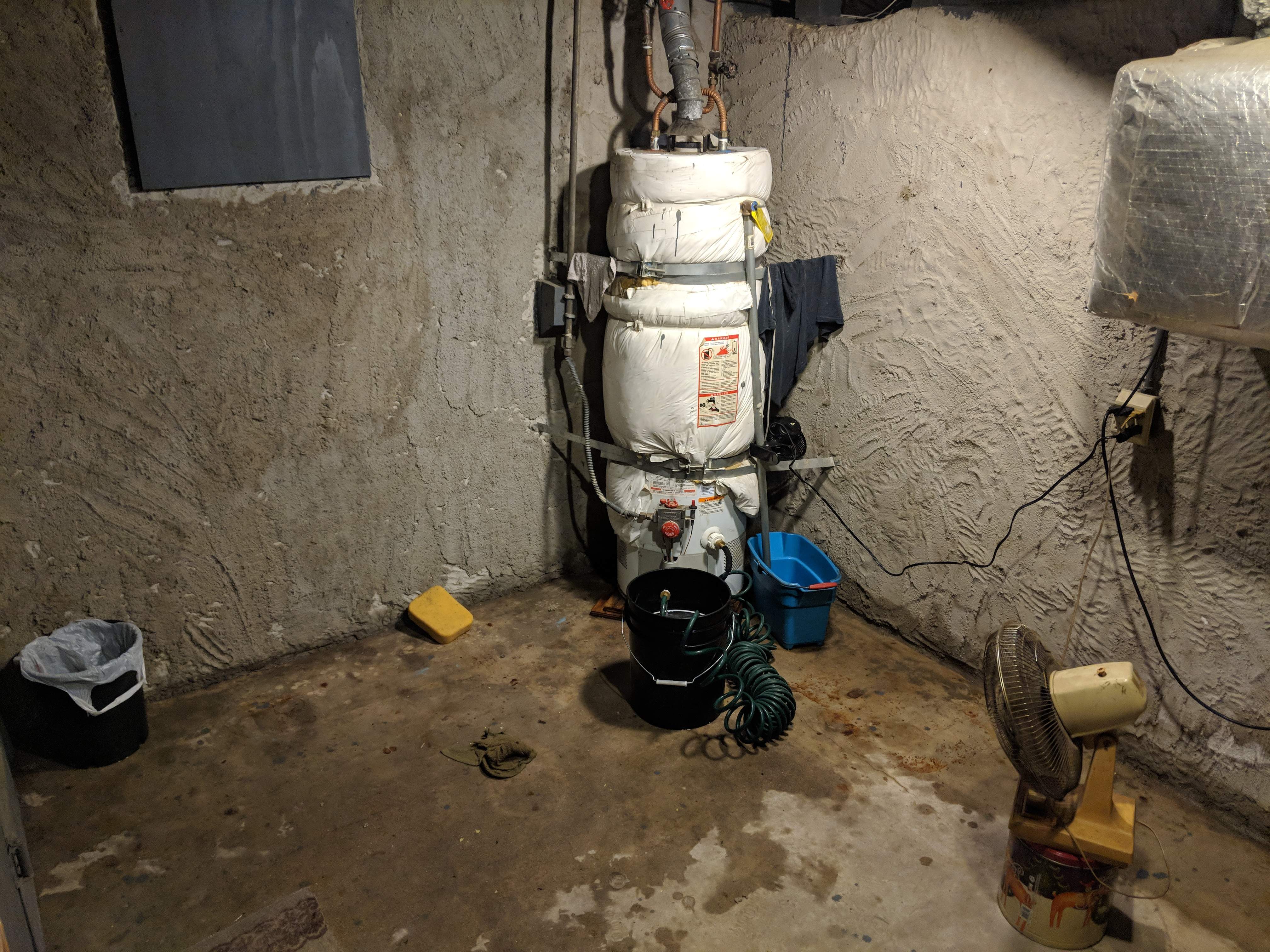
So my medium-small conventional gas water heater gave up the ghost. It's a small, 1.5 person household. Gas and Electricity rates are both reasonable. What do I replace it with and why?

TalkBass has been independent since 1998. Add your voice.
Create a free account to reply to discussions, view embedded media, and browse with fewer display ads.
Join free Log in
Want zero display ads or expanded classifieds tools? Compare plans.




A 50 gal tank is also helpful when you have guests.T B's resident plumber here. Many jurisdictions require a permit to replace a water heater. Very few actually enforce them though. Cali may very well be one of them though so you might want to do some research to be safe. As to what to replace it with , I usually recommend a straight up replacement to keep things simple. That looks like a pretty standard gas unit and that is what I would go with. For just two people in the house , a 40 Gal unit is sufficient but a 50 Gal gives you some wiggle room if anyone likes long showers. The difference in cost between a 40 and a 50 is not that much. As stated above , the warranty is irrelevant and just a matter of cost as the tanks are the same for both 5 and 10 year warranties. Most areas now require expansion tanks to be installed. For the most part , this is just a political money grab. Those systems worked fine before the tanks became mandatory. I don't know if Home Depot and Lowes sell gas units so you might have to go to a plumbing supply house if you are doing it yourself. Doesn't matter where you go , they will all cost about the same. Don't waste your money on a deluxe or super high efficiency unit. The long term savings aren't really all that great. Since it is a gas unit , I highly recommend having someone licensed and skilled with gas installations do the work. Messing up a gas connection or a flue connection can kill ya.' Almost all water heater tanks are made by the same company so one is not necessarily better than another one. It's simply a matter of who assembles the water heater that determines the name brand on it. Don't waste your time with all the external insulation. Modern water heaters are well enough insulated these days and you will be throwing your money away on the added insulation. And as always , have a nice day.
Feel free to PM me if you have any further questions , or just put them in the thread. You might want to like this post if you ask a question so I will get an alert. Otherwise , I might not know a question has been asked.



T B's resident plumber here. Many jurisdictions require a permit to replace a water heater. Very few actually enforce them though. Cali may very well be one of them though so you might want to do some research to be safe. As to what to replace it with , I usually recommend a straight up replacement to keep things simple. That looks like a pretty standard gas unit and that is what I would go with. For just two people in the house , a 40 Gal unit is sufficient but a 50 Gal gives you some wiggle room if anyone likes long showers. The difference in cost between a 40 and a 50 is not that much. As stated above , the warranty is irrelevant and just a matter of cost as the tanks are the same for both 5 and 10 year warranties. Most areas now require expansion tanks to be installed. For the most part , this is just a political money grab. Those systems worked fine before the tanks became mandatory. I don't know if Home Depot and Lowes sell gas units so you might have to go to a plumbing supply house if you are doing it yourself. Doesn't matter where you go , they will all cost about the same. Don't waste your money on a deluxe or super high efficiency unit. The long term savings aren't really all that great. Since it is a gas unit , I highly recommend having someone licensed and skilled with gas installations do the work. Messing up a gas connection or a flue connection can kill ya.' Almost all water heater tanks are made by the same company so one is not necessarily better than another one. It's simply a matter of who assembles the water heater that determines the name brand on it. Don't waste your time with all the external insulation. Modern water heaters are well enough insulated these days and you will be throwing your money away on the added insulation. And as always , have a nice day.
Feel free to PM me if you have any further questions , or just put them in the thread. You might want to like this post if you ask a question so I will get an alert. Otherwise , I might not know a question has been asked.
If you go with a conventional tank, consider a deep leak containment pan, or a containment drainage pit, with a sump pump. Go nuts!
This (and your prior post) appears to make the confused claim that tankless water heaters can't leak, or somehow magically leak less than a tank. Both types can and do leak, and both types are connected to very large water reservoirs and will leak a great deal until the supply is turned off. Whether the inside of the heater holds 1 quart or 100 gallons makes very little difference to the amount of leakage.

I’m listening, always want to learn.
Are you saying that a conventional 40-50 gallon tank water heater poses the same water leakage risk as a tankless?
If you are standing around waiting for the water heater to leak, and shut if off instantly, the tank leaks more. This pretty much never happens - at which point 50 gallons one way or the other is small change by the time someone comes home, or wakes up, or otherwise notices the flood in progress, as both connect to a supply that can provide thousands of gallons in most cases.I’m listening, always want to learn.
Are you saying that a conventional 40-50 gallon tank water heater poses the same water leakage risk as a tankless?