I treat all commitments the same. Whether work related, favors for friends, small club gig... doesn't matter, I'm giving 100% effort. That attitude has worked very well for me.Nothing against people who have spare equipment, but does situation really call for it?
What kind of gigs? If people payed tickets to see you or those are corp/private parties, ok that's common sense. If it's local pub or small club? Ok, it's your personal preference and that's fine by me.
But let me ask you, does your keys player carry spare keys? Does drummer have spare snare or kick pedal? Singer has one more mic? Those are as (un)likely to fail as bass guitar.

Enjoy the benefits of a premium membership!
Upgrade Account
-
TalkBass has been independent since 1998. Add your voice.
Create a free account to reply to discussions, view embedded media, and browse with fewer display ads.
Join free Log in
Want zero display ads or expanded classifieds tools? Compare plans.
You are using an out of date browser. It may not display this or other websites correctly.
You should upgrade or use an alternative browser.
You should upgrade or use an alternative browser.
Why bring 2 basses to a gig?
- Thread starter RyanOh
- Start date
More options
Who Replied?
D
And spare batteries right?Back in the day (70’s), I generally had a second bass around which was more or less a travel bass. My new Precision was primary and a Japanese copy was my bang around bass. I broke one string onstage during that decade. Had more trouble with patch chords and floor monitors.
A year ago I took a series of gigs with a Santana Tribute band. I took my single go to bass, a EBMM Sterling to the stage, plugged it in and tested it, all good. We waited to be called up and paraded through the club to the stage. Picked up my bass and it was dead. A frantic two minutes ensued as the soundman and I debugged the problem as the band and audience watched all too quietly.it was like a frantic stress filled minute till I popped in a new battery. Covid had taken another victim, my annual change batteries on my bday ritual. I now consider taking two basses to gigs and often do.

I’ve actually experienced bandmates having broken skins, kick pedals and mic failures waaaay more often than a dead head or bass issue. Responsible players they were they had replacement/backups or the tools and knowledge to do a quick fix.Nothing against people who have spare equipment, but does situation really call for it?
What kind of gigs? If people payed tickets to see you or those are corp/private parties, ok that's common sense. If it's local pub or small club? Ok, it's your personal preference and that's fine by me.
But let me ask you, does your keys player carry spare keys? Does drummer have spare snare or kick pedal? Singer has one more mic? Those are as (un)likely to fail as bass guitar.
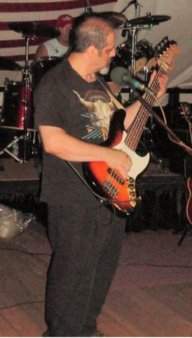
Good Lord, some of y'all act like bringing another bass is some great inconvenience.
I have a whole trailer full of PA gear to contend with,
I wish all I had to do was bring what I needed to play bass.
I have a whole trailer full of PA gear to contend with,
I wish all I had to do was bring what I needed to play bass.

I find it funny, in any field, when the people doing the minimum have negative feelings about the people putting in 100%. These threads are never about the “show up and hope for the best” crowd having to defend themselves, rather it’s usually the contrary. That’s fine with me… I’m always happy to replace “that last bassist we had”.

Got a new (used) bass today (no pics suck it up). Gonna bring a backup. I always bring a backup when some component hasn't yet proven itself.

That is true. But, I have seen people on this forum write about carrying spare amp, cab and other equipment. There was a poll recently with results sugesting most folks here are, as expected, home players, amateurs and some semi-pros. I just don't get all the paranoia with spare equipment.
It's "paranoia" until you have a critical piece of gear go down on you at a gig. Then, somehow, it's genius.

Military rule-of-redundancy(ies): two is one and one is none. For that fact, they should be driven to the gig in separate vehicles.
Riis
Riis

That's exactly what I'm saying. Drummer may have spare skins, but he doesn't carry a whole spare drums set. He'll take 5 and fix it best he can and finish the gig. Keys player will have spare power or instrument cable if his cuts out.I’ve actually experienced bandmates having broken skins, kick pedals and mic failures waaaay more often than a dead head or bass issue. Responsible players they were they had replacement/backups or the tools and knowledge to do a quick fix.
So, having spare strings, cable and basic tools is common sense for a bass guitarist.
Whole spare instrument and amp?
Human is one most unreliable piece of equipment, period. So, spare bass guitar player has to drive his own vehicle with redundand equipment. And take alternate route!Military rule-of-redundancy(ies): two is one and one is none. For that fact, they should be driven to the gig in separate vehicles.
Riis

Military rule-of-redundancy(ies): two is one and one is none. For that fact, they should be driven to the gig in separate vehicles.
I'm much more important than the bass, and I refuse to be taken to a gig in multiple vehicles.
I don't have fire insurance on my house because it never burned down before.

I agree! Why bring 2 when you can bring 3 or 4 ?!
For 3-4 hour gigs, I bring my BEAD tuned bass that’s used on about 6 songs, and one or two others that are EADG with Hipshot D-tuners on the E. I can switch basses very quickly, often while songs are starting, and always have a backup in case a string breaks or something goes wrong, which has happened before.
For 3-4 hour gigs, I bring my BEAD tuned bass that’s used on about 6 songs, and one or two others that are EADG with Hipshot D-tuners on the E. I can switch basses very quickly, often while songs are starting, and always have a backup in case a string breaks or something goes wrong, which has happened before.
For all wedding/corporate/high end gigs I always have a spare bass. My pedal board can go straight to board if amp dies (which has happened to me twice in 36 years of gigging). If its a doublebass gig I only bring one!That's exactly what I'm saying. Drummer may have spare skins, but he doesn't carry a whole spare drums set. He'll take 5 and fix it best he can and finish the gig. Keys player will have spare power or instrument cable if his cuts out.
So, having spare strings, cable and basic tools is common sense for a bass guitarist.
Whole spare instrument and amp?
ironic.


My dad played professionally for years. He taught me that (1) amateurs practice until they get it right, while professionals practice until they can't get wrong, and (2) failing to prepare is preparing to fail. I prepare for bass failure by taking a backup bass, and it's always a copy of my #1. It's come in handy quite a few times over the years as I've had tuning machines, controls, and output jacks fail, strings break, and so on.
I prepare for failures of my DI by carrying a spare DI. I prepare for failure of our backing tracks iPad by carrying a copy of that iPad. We prepare for failure of our mixer by making sure the sound guy brings his. We have a backup amp in the rack. We have extra mic cables and power cords on the reels. I have extra strings, patch cords, mics, mic clips, power strips, batteries, picks, drumsticks, ears, ear amps, iPad cords, tools, etc. in a small stage bag. The drummer brings an extra snare. The guitarists bring extra guitars.
Things we're using multiples of on-stage, like keyboards, toms, lights, speakers... we can get by with an individual failure that wouldn't kill the show. So, we don't being spares of these. But we do have plans on how to work around failures.
For outdoor gigs, our weather can be extremely hot, windy, and stormy without warning, so we have to plan for that too. So, we bring extra tarps, bungees, weight bags for the canopy, sunglasses, sunscreen, hats, fans, drinks, etc.
When someone has to miss a gig, we have a list of subs, and could also cover them in backing tracks if we can't get a sub.
I've had my share of failures over the years. There have been a few late starts, but with a reasonable level of forethought, planning, and preparation, I've never had to cancel a gig because of an equipment failure or a missing person.
Our early attempts at failure planning went through several preparations. Preparations A through G were progressively better. But our current plan... Preparation H... really does a great job of saving our butts!
I prepare for failures of my DI by carrying a spare DI. I prepare for failure of our backing tracks iPad by carrying a copy of that iPad. We prepare for failure of our mixer by making sure the sound guy brings his. We have a backup amp in the rack. We have extra mic cables and power cords on the reels. I have extra strings, patch cords, mics, mic clips, power strips, batteries, picks, drumsticks, ears, ear amps, iPad cords, tools, etc. in a small stage bag. The drummer brings an extra snare. The guitarists bring extra guitars.
Things we're using multiples of on-stage, like keyboards, toms, lights, speakers... we can get by with an individual failure that wouldn't kill the show. So, we don't being spares of these. But we do have plans on how to work around failures.
For outdoor gigs, our weather can be extremely hot, windy, and stormy without warning, so we have to plan for that too. So, we bring extra tarps, bungees, weight bags for the canopy, sunglasses, sunscreen, hats, fans, drinks, etc.
When someone has to miss a gig, we have a list of subs, and could also cover them in backing tracks if we can't get a sub.
I've had my share of failures over the years. There have been a few late starts, but with a reasonable level of forethought, planning, and preparation, I've never had to cancel a gig because of an equipment failure or a missing person.
Our early attempts at failure planning went through several preparations. Preparations A through G were progressively better. But our current plan... Preparation H... really does a great job of saving our butts!

Back in the day (70’s), I generally had a second bass around which was more or less a travel bass. My new Precision was primary and a Japanese copy was my bang around bass. I broke one string onstage during that decade. Had more trouble with patch chords and floor monitors.
A year ago I took a series of gigs with a Santana Tribute band. I took my single go to bass, a EBMM Sterling to the stage, plugged it in and tested it, all good. We waited to be called up and paraded through the club to the stage. Picked up my bass and it was dead. A frantic two minutes ensued as the soundman and I debugged the problem as the band and audience watched all too quietly.it was like a frantic stress filled minute till I popped in a new battery. Covid had taken another victim, my annual change batteries on my bday ritual. I now consider taking two basses to gigs and often do.
wouldn't it be easier just to pack some batteries in your gig bag? That's what I do
We all know the real reason. It's so we can tell our wives we need more gear!
I’ve been at important gigs where the guitarists’ tube amps died…. twice. Luckily, the amps quit during soundcheck and he was able to rush home to grab a small combo amp. I’ve been on stage when a strap button pulled out, stripping the wood. No backup guitar. So, we had to stop the show and figure out a fix. I’ve had a drummer’s kick pedal blow apart. He had to stop and borrow one from another band to complete the show.Nothing against people who have spare equipment, but does situation really call for it?
What kind of gigs? If people payed tickets to see you or those are corp/private parties, ok that's common sense. If it's local pub or small club? Ok, it's your personal preference and that's fine by me.
But let me ask you, does your keys player carry spare keys? Does drummer have spare snare or kick pedal? Singer has one more mic? Those are as (un)likely to fail as bass guitar.
Needless to say, I have a backup amp inches from my main one, spare batteries, spare microphone, extra cables (they always give out at the worst time), tool kit, tape… you name it. I’m the prepared one in the band and I’ve only had one equipment failure in 30 years and switched to my backup bass without missing a beat.

I’ve seen George do that before. He’s hell on strings!Maybe 8-9 years ago, I saw The Meters at the Austin City Limits theater. In the middle of the show, George Porter (one of the all time greats) broke a string on his P Bass during a song.
The band just kept playing while he walked over to the side of the sage, grabbed a string out of his case, and proceeded to change the string right there on stage. He tuned up, and was right back in the song. No tech, no back-up bass, no stopping the show... he didn't even take the bass off.
SMOOTH!
It’s a good point however. I’ve seen George a lot over the years and I have never seen him have a backup bass. Maybe I just never saw it. But since 99.99% of the bass players in the world aren’t worth a hair on his butt, I’ll trust George


