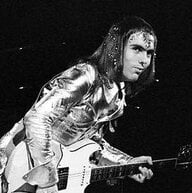
When it comes to different genres of popular music whether the music is "popular" metal, funk, jazz, blues, "50s, 60s, 70s, 80s, 90s Hits" or whatever, I'm sort of taken back when I look up a song, then look up the band, and then see pictures of the band members back when the song I'm interested in learning became a "Hit." As someone in my 70s I'm like, "Who are these young kids!" This has to do with my sudden interest in going back and learning the bass lines to songs I listened to in the 60s and 70s when I was a teen or in my twenties myself.
And that got me thinking about how much of the music that I've come to enjoy over a whole lot of years were composed and played by kids in their teens and twenties. Why is that do you think? Why do young folk have these sudden surges of intense creativity, and then that creativity sort of wanes over time and those bands are suck playing the music they wrote when they were young and are now playing as grey haired and slightly balding old farts like myself who might even need a cane to walk out on to the stage <laughs> Thought?
I think it has to do with the market and how artists are marketed.
Popular culture has been youth culture since the 50s. People tend to "set" their taste when they're in their teens. There has actually been a fascinating survey asking people what decade was best or worst for various things - anything from family cohesion to the economy, and including when were the best movies, best music, etc. Turns out people's responses track very closely to their own life cycle - families were strongest when you were eight, music was best when you were fourteen, the economy was best when you were old enough to get a job but too young to pay your own bills, etc.
Most teenagers aren't terribly interested in music by old farts, no matter how good it is. Popular music has ALWAYS been about image and fashion, and identifying with the artist, as much as it's about music. So new acts of young artists get heavily marketed to a young market segment. That's when their songs track as hits on the charts.
That market cohort gets older, and so do the artists. But the listeners have already heard the output of the artist and picked their favorites. Those songs set the bar in their mind, so there's really no room for a new song to break out and become more popular than the identity-defining hits; the best they can do is be considered "as good as" the early work.
In the old days, the industry might invest in a promising new artist for three or four albums to start producing hits. That gave them a little time to develop (Billy Joel, Prince). These days, you have to be an instant sensation, with hit songs immediately at your debut. Long or short, after a window, if you
haven't produced hits, they drop you. Either way, even for the majority of legacy artists, their biggest hits are typically off their first three or four albums (yes, there are exceptions, but generally).
A bit of an exception to what I just said, but you can see the dynamic, look at Prince's discography:
Year - Album (# of US top 40 singles: how many of those were top 10)
1978 - For You (0)
1979 - Prince (1:0)
1980 - Dirty Mind (0)
1981/2 - Controversy (0)
1983 - 1999 (3:2)
1984 - Purple Rain (5:4)
1985 - Around the World in a Day (2:2)
1986 - Parade (2:1)
1987 - Sign o the Times (3:3)
1988 - Lovesexy (1:1)
1989 - Batman Soundtrack (3:1)
1990 - Graffiti Bridge (1:1)
1991 - Diamonds and Pearls (4:2)
1992 - Love Symbol (2:1)
1994 - Come (1:0)
1996 - Chaos and Disorder (0)
1996 - Emancipation (0)
1997 - The Truth (0)
1999 - Rave Un2 the Joy Fantastic (0)
2000 - The Chocolate Invasion (0)
2001 - The Rainbow Children (0)
2004 - Musicology (0)
2005 - 3121 (0)
2006 - Planet Earth (0)
(After that, Prince's songs aren't listed on an overall US top 40, though a few still made it onto RnB charts).
From an industry perspective, that one hit from his second album kept his career alive until he really broke out with 1999 and then especially Purple Rain. And those were only 5-6 years after he started releasing albums - he was 26 when Purple Rain came out. He was still a hitmaker for seven or eight years more. His top ten hits all fall in the decade from 1983 to 1992. After that, he had so much money he could do what he wanted (and I imagine the songs were still really good), but from a market perspective he ceased to be relevant. At any rate, if you're playing in a cover band, you've got a much better bet playing "1999" or "Purple Rain" than "Diamonds and Pearls."