

Enjoy the benefits of a premium membership!
Upgrade Account
-
TalkBass has been independent since 1998. Add your voice.
Create a free account to reply to discussions, view embedded media, and browse with fewer display ads.
Join free Log in
Want zero display ads or expanded classifieds tools? Compare plans.
You are using an out of date browser. It may not display this or other websites correctly.
You should upgrade or use an alternative browser.
You should upgrade or use an alternative browser.
Why Fender?
- Thread starter Neveragain55
- Start date
- Status
- Not open for further replies.
More options
Who Replied?
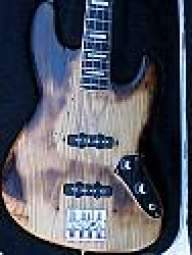

Fixed it for you...Besides the few special editions or artists series’ most “industry standard” Fenders come with: 20 frets – minimal tone & mixing capabilities – average pick-ups –average bridge – average tuners, and non-exotic woods. (I'm not say exotic woods necessarily make a great bass)
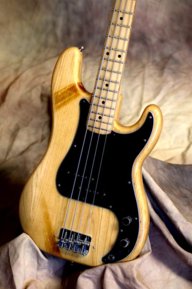
They feel and sound fantastic. Playing my Precision w/flatwounds is like being in heaven. it's BUTTER, not margarine, The Real Thing, not diet coke, it's eggs with the yoke and full of cholesterol.
Playing my Jazz bass w/roundwounds makes me feel like I'm cheating on my wife it feels so good. My dopamine levels rise, the endorphins kick in, and I leave this planet in a state of ecstasy and bliss.
These feelings only happen when you play Fender instruments, and if your Fender was made in the USA you're really in for the ride of your LIFE! And, if your Fender is vintage OMG!
I don't know why anyone would even consider playing anything other than a Fender with the possible exception of a Rickenbacker. However, the protocol for owning a Rickenbacker is that you must first have a Fender Precision bass AND a Fender Jazz bass. Some people do own Rickenbacker basses without owning Fenders. Unfortunately, they've bypassed the protocol to their own discontent and unhappiness. Those that bypass the protocol are miserable... They think they are happy but they are not, and if you ask them they will not admit it. Although you can look into their eyes and see their sadness.
All other basses simply suck.
Thanks for asking!
Playing my Jazz bass w/roundwounds makes me feel like I'm cheating on my wife it feels so good. My dopamine levels rise, the endorphins kick in, and I leave this planet in a state of ecstasy and bliss.
These feelings only happen when you play Fender instruments, and if your Fender was made in the USA you're really in for the ride of your LIFE! And, if your Fender is vintage OMG!
I don't know why anyone would even consider playing anything other than a Fender with the possible exception of a Rickenbacker. However, the protocol for owning a Rickenbacker is that you must first have a Fender Precision bass AND a Fender Jazz bass. Some people do own Rickenbacker basses without owning Fenders. Unfortunately, they've bypassed the protocol to their own discontent and unhappiness. Those that bypass the protocol are miserable... They think they are happy but they are not, and if you ask them they will not admit it. Although you can look into their eyes and see their sadness.
All other basses simply suck.
Thanks for asking!

Hopkins
Commercial User
Fender fits into every music genre, they sound good, they are a classic design, they are quality product, and they have an item for every budget. Seems pretty logical to me.
If you want exotic woods with a 20 band EQ built into the bass, that's cool, there are companies that make them. A lot of people, myself included, prefer a simpler instrument and a solid color finish. My only knock on Fender is that the preamps in their active basses tend to leave a lot to be desired, but they are still very useable.
The pickups and hardware on their higher end models is on par with any other manufacturer in the price range.
If you want exotic woods with a 20 band EQ built into the bass, that's cool, there are companies that make them. A lot of people, myself included, prefer a simpler instrument and a solid color finish. My only knock on Fender is that the preamps in their active basses tend to leave a lot to be desired, but they are still very useable.
The pickups and hardware on their higher end models is on par with any other manufacturer in the price range.

mark beem
Wait, how does this song start again??
My thoughts:So, there has been a question I have pondered for next to 30 years about the fascination/love/obsession…….with Fender bass Guitars.
There seems to be (with many) an assertion or assumption that only Fender makes the world’s best bass guitars and/or that you are only considered a pro if you play a Fender.
I realize that there is a “HUGE” Fender following, and that to even ask these questions is to commit heresy. (I think Fenders are great, but not extra-ordinarily special)
I can see all the replies now about how great Jacko, James Jamerson, Geddy Lee and countless others all were due to their Fender bass guitars, but……………the question still stands.
Why Fender?????
Besides the few special editions or artists series’ most “garden variety” Fenders come with: 20 frets – minimal tone & mixing capabilities – average pick-ups –average bridge – average tuners, and non-exotic woods. (I'm not say exotic woods necessarily make a great bass)
Maybe that’s why people love them so much, maybe that’s what makes them so appealing, I don’t know.
I respect Fender as a guitar manufacturer and of course I respect all bass players regardless of what they play.
I’d like to hear back from those of you that have a strong loyalty to Fender, and your reasoning for paying a fair amount of money on a bass line that offers less than what many other bass manufactures offer for the same or even less money.
Fender was the first company to produce and mass market a successful electric bass design. The introduction of the Precision bass in 1951 was a watershed moment in both instrument design/development as well as the music industry as a whole. These instruments went on to become the go-to instruments for top performers and session pros alike and the "Fender sound" became the standard for recording engineers. Even today, over 60 years since its introduction, I've done recording sessions where I was told to leave my basses in their case and use the old P bass the engineer had in the studio. Why? It's easy to get a great recorded tone and easier for the engineer in general because that's what he's familiar with.
Last edited:

I also ponder a question - if you don't like Fender, or don't 'get it' why don't you just move on?So, there has been a question I have pondered for next to 30 years about the fascination/love/obsession…….with Fender bass Guitars.
Do you really not know that there is a thread on this EXACT subject that ended about 2 days ago?????


I had no idea "Jacko" played bass. I thought he sang and danced while wearing one glove.
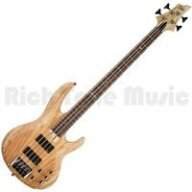
Respect all the replies so far, and I am learning more about Fender from some of the responses.
I’m getting good feedback, and people are pointing out things I hadn’t considered.
I didn’t write the post to be mean or malicious towards Fender, and I didn’t use the search button for this topic because (as surprising as this may seem) I wanted to ask my own question, my own way, I’m funny like that…….
Please keep the responses coming because most of them are opening my eyes to things I hadn’t considered, and I think they would be good for future reference of people looking to learn more about Fender bass guitars.
This in no way was a slam against Fender so please don’t take it as such.
I’m getting good feedback, and people are pointing out things I hadn’t considered.
I didn’t write the post to be mean or malicious towards Fender, and I didn’t use the search button for this topic because (as surprising as this may seem) I wanted to ask my own question, my own way, I’m funny like that…….
Please keep the responses coming because most of them are opening my eyes to things I hadn’t considered, and I think they would be good for future reference of people looking to learn more about Fender bass guitars.
This in no way was a slam against Fender so please don’t take it as such.


See... except... nobody uses these threads as a "future reference" if everyone insists on starting their own new thread every 2 days. That is, "future reference" kind of implies "search first" - asking your own question your own way could have been done in an existing thread.Respect all the replies so far, and I am learning more about Fender from some of the responses.
I’m getting good feedback, and people are pointing out things I hadn’t considered.
I didn’t write the post to be mean or malicious towards Fender, and I didn’t use the search button for this topic because (as surprising as this may seem) I wanted to ask my own question, my own way, I’m funny like that…….
Please keep the responses coming because most of them are opening my eyes to things I hadn’t considered, and I think they would be good for future reference of people looking to learn more about Fender bass guitars.
This in no way was a slam against Fender so please don’t take it as such.
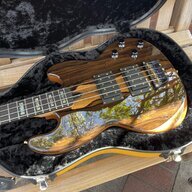
What's the best metal for fenders? \m/What's the best Fender for metal?

There are people who buy Fords because of Henry.
Except Fender's you don't have to take in for service after a couple days

Why are Levis, Converse or Harleys Popular? They are simple, stylish classics - and you pay for that.So, there has been a question I have pondered for next to 30 years about the fascination/love/obsession…….with Fender bass Guitars.
There seems to be (with many) an assertion or assumption that only Fender makes the world’s best bass guitars and/or that you are only considered a pro if you play a Fender.
Anyone who says that Fenders are the "best" as if there is an objective best in musical instruments is as far off as anyone who says they are trash.
Yes they are simple and unembellished - that is indeed a huge part of their charm - they have a sound that many people like and they don't want/need to mess with it beyond what their amps/cabs/pedal/mixing-board/technique/choice of string/choice of pick can do.
The short answer is they are the original and a classic. They are the sound in most people's head when they think "bass" BECAUSE they were essentially the only viable choice when many of these recording were made. That being said - they were the best choice because they were VERY GOOD - sounded good, played well and were reliable.
Many players nowadays want/need more frets or active electronics or multi-strings, etc. Fender (classics) don't do that and if you are one of those, other basses will suit you better. Having said that, being a full line brand Fender does have extended range basses and many active models, and as others have and will say - there's a Fender model out there in your price range - young kid starting out - Squier, getting a little more serious MIM, want something prestige - MIA/AVR/Custom Shop and everywhere in between. They also have models intended for the most purist of traditionalists to the some pretty "non-Fender" Heavy Metal and Jazz oriented models - so they can cover you that way.
I think part of the "why Fender" thing is this - people have a perception of Fender as one thing (the Classics) and they feel that is the only thing they do, but when they less conventional Fenders they discount them as "not really Fender" or "selling out". In this way Fender can't win - when they stick to their guns they're "out of touch" when they make more modern stuff,0they are not being "true to Fender." Not that I expect anyone to feel badly for FMI as it is a huge and profitable marketing machine.
Short answer - they sound good, they're reliable and they are the "standard", and yes you pay for that.
Again - the Converse analogy applies - I have Real Chuck Taylors for everyday wear and they cost me about 5 times as much as the Walmart copies I use for gardening and other dirty activities likely to wreck my shoes. Are the Converse OBJECTIVELY 5 times better? NOPE, but they are better and they are the originals - that carries some cache and you pay for that.
OMG I'm becoming a serial O-Fender.

DiabolusInMusic
Functionless Art is Merely Tolerated Vandalism
Monster players like "Jacko" made them a household name, why else? They are clearly totally garbage instruments, why people still purchase them in mass is totally confusing... they'll never be Jacko...
You think so?There are people who buy Fords because of Henry. All hail Leo!
PS: four of my six are Fenders.
I don't think antone actually cares about Leo BEFORE the start playing Fender/Music Man/G&Ls


OK I'll bite. Over the 24 years I've been playing, I've tried many basses (four or five strings, fretted, fretless, passive, active, bolt-on, neck-through, etc.) and I've finally realized that, to me, nothing sounds as good as a simple meat-and-potatoes P-bass. And I've chosen Fender over any other P-bass manufacturer simply because it's the original and the one I found really spoke to me.
This...
My thoughts:
Fender was the first company to produce and mass market a successful electric bass design. The introduction of the Precision bass in 1951 was a watershed moment in both instrument design/development as well as the music industry as a whole. These instruments went on to become the go-to instruments for top performers and session pros alike and the "Fender sound" became the standard for recording engineers. Even today, over 60 years since it's introduction, I've done recording sessions where I was told to leave my basses in their case and use the old P bass the engineer had in the studio. Why? It's easy to get a great recorded tone and easier for the engineer in general because that's what he's familiar with.
... and this.
- Status
- Not open for further replies.


