• TalkBass has been independent since 1998. Add your voice.
    Create a free account to reply to discussions, view embedded media, and browse with fewer display ads.
    Join freeLog in
    Want zero display ads or expanded classifieds tools? Compare plans.

Why is the Ampeg B15 so coveted?

"Familiarity"
People are familiar with the sound, and they like to hear it again.
Just like songs, listen to them a few times to really appreciate them through familiarity. The musicians you play would also be familiar with the sound and therefor want to hear it again.

Ampeg put a "B15" switch position on their new Venture heads. It is the familiar Ampeg Endorsed, Engineer created, and player approved, "B15" sound.
Line-6, has it too as they are in the same building as Line-6.
The sound is archived in analog and digital modeling.

There are plenty of familiar sounds of other brand heads and cabinets also. They tend to go along with the genre, and or cover songs being popular.
 
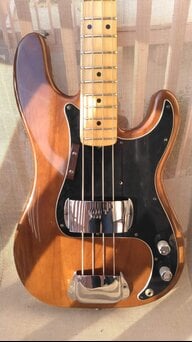
Simple. It's the defining sound of the Pbass in rock and jazz, just as the SVT/fridge and Marshall 100 Plexi are the defining sounds of hard rock/metal. Unless you're recording straight to the board, no other combination sounds as good as a Pbass into a double-baffle Jensen speaker B15 mic'd. It's not that the amp is underpowered to use at a gig, it's that we've all gone too damn deaf to appreciate music not cranked to further hearing-damaging levels. In the teenage years, my B15 was adequate to fill a regulation basketball court sized school gym, tucked into the corner of the room behind the drummer. Didn't understand 1/8 space yet, just knew it made the bass louder. Guitar amps were 18 and 20 watts respectively, kick drum was filled with torn up telephone books. PA was vocals only, a pair of Silvertone twin-12 amps on chairs, modded with a coupling jack so they worked together as a single 4 channel mixer. We were asked to turn down repeatedly.
 
I had both a tube and SS version. Don't really miss either and thought the B-15 sounded BEST with an SG guitar.
A very identifiable sound but somewhat limited in what it can do (like gigs or even a loud rehearsal plus it's heavy and really expensive these days).
I worked in a studio with a really good B-15 and very often times it was the wrong tone for the song.
I can get plenty close these days with much more versatile equipment that have multiple uses.
 
Comparing their volume capabilities now misses how they sound.

Plug into one. You’ll know.

Sure it’s not loud enough and too big for its performance.

It sounds so good.

Over in guitar world a Shure 57/58 on a Fender blackface Deluxe with a period Fender Tele with a coil cord adding capacitance makes a great iconic ‘60s multi genre radio sound. All of that is an instrument. :)

Also find the rare Matchless 100w B-15 clone.:)
 
  • Like
Reactions: Dynacord
I use a modern version of this amp and for me it's the tone I've been chasing for 30+yrs. I've owned/own many amps but this is the warm natural tone of my dreams and it's crazy loud/portable too.
Other players prefer a more modern and/or processed tone and that's cool too....but not for me.
rig.jpg
 
History. Same reason as the P-bass. It was an early model that had success in the market due to its size, power, reliability and portability. Given all of that it was used on countless iconic recordings. Recordings many other musicians and engineers wanted to capture the magic of.
 
Comparing their volume capabilities now misses how they sound.

Plug into one. You’ll know.

Sure it’s not loud enough and too big for its performance.

It sounds so good.

Over in guitar world a Shure 57/58 on a Fender blackface Deluxe with a period Fender Tele with a coil cord adding capacitance makes a great iconic ‘60s multi genre radio sound. All of that is an instrument. :)

Also find the rare Matchless 100w B-15 clone.:)
I was never talking about volume capabilities. I've tried an emulation (supposedly a faithful one). All right, an emulation is not the real thing, and even if the tone is there the actual presence in a real room isn't etc. but since these days it is coveted precisely for studio purposes and I feel that the tone is a bit too hairy even for lots of vintage styles (I know that distortion is often masked in the mix, but still), I'm a bit stumped.
 
I use a modern version of this amp and for me it's the tone I've been chasing for 30+yrs. I've owned/own many amps but this is the warm natural tone of my dreams and it's crazy loud/portable too.
Other players prefer a more modern and/or processed tone and that's cool too....but not for me.
View attachment 5297965
The PF-50 is a really good sounding amp, and at 50 watts it's enough to gig with the right cabinet setup. I've never owned a B-15 but did play one a few years ago and liked how they sounded in the vintage store I was trying them in. For those with the money and inclination to own one, I'm sure they find plenty of good use for it.
 
  • Like
Reactions: coy garcia
The PF-50 is a really good sounding amp, and at 50 watts it's enough to gig with the right cabinet setup. I've never owned a B-15 but did play one a few years ago and liked how they sounded in the vintage store I was trying them in. For those with the money and inclination to own one, I'm sure they find plenty of good use for it.
I have this BBC 112 tank downfiring cab at 4 ohm......I keep up with really loud rock drummers on DW kits and play large outdoor gigs with or without sound reinforcement but...people on TB often call me a liar when I state this fact :bassist:
 
I have used the big brother - B18 in a studio. It's interesting but I wouldn't say anyone has to use one. We are spoiled for choice now - you shouldn't be locked into using something just because of some sort of heritage. If anything, it's the slightly "parpy" sound of the box and speaker that seems to appeal to recording. It doesn't have a razor-sharp attack, and its plummy tone can be an interesting throwback sound.
 
......I feel that the tone is a bit too hairy even for lots of vintage styles (I know that distortion is often masked in the mix, but still), I'm a bit stumped.
I love how they sound but I'd have to agree--plenty of times it's too hairy or wooly, and I think that's why in many (most?) cases the DI track was still the meat of the bass in the final mix, while the amp track was just used for a smidge of color. I know that's how it worked out every time I've tracked w one.
 
  • Like
Reactions: Jim C
I had a friend who found she had to make a judgement on everything. Later she found she didn’t have to say, “l like this or I don’t like this.” She became able to view things as phenomena.

A B-15 just is. Whether you need it or it meets your needs is personal. Subtract those two and you have this amp that is what it is.
 
I was never talking about volume capabilities. I've tried an emulation (supposedly a faithful one). All right, an emulation is not the real thing, and even if the tone is there the actual presence in a real room isn't etc. but since these days it is coveted precisely for studio purposes and I feel that the tone is a bit too hairy even for lots of vintage styles (I know that distortion is often masked in the mix, but still), I'm a bit stumped.
I wasn’t speaking specifically to you. :)
 
The other way of looking at this is to ask yourself how many different types of courses you need to race your horse on.

In other words, Stax and Sun Studios in Memphis in 1960-whatever each kept one main horse specialized at just running on one race track over and over again. On the other hand, outside of Stax Studio whatever Duck happened to need for any other given race track was a different concern.

Also, for what it's worth, Carol Kaye mainly used a Fender Concert amp for studio session work.
 
  • Like
Reactions: Iristone