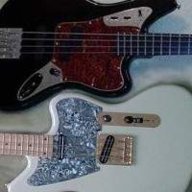
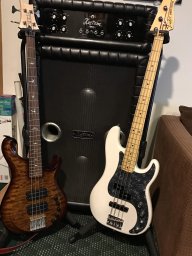
This point has maybe been made already in this thread, but for better or worse there is something to be said about the "prestige" of a brand, and that being muddied by a wide variety of cheaper versions that, at least at first glance, are barely distinguishable from the high-end versions.
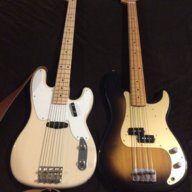
If you see someone on stage playing a Fender, or walk into a store and see one hanging on the wall, unless you read a tag or really know your stuff you have no idea if that instrument is worth $500 or over $2000. Now, you can of course go into "who cares just use it to make music" but that's not the point here. Strats/Teles/P's/J's are incredibly accessible, which for better or worse lowers those instruments' "brand value." Fender to their credit has largely embraced this and markets their instruments as "working-class-guitars" so good for them.
The sort of middle-ground is what Gibson has largely done with Epiphone. Do you really want a Les Paul or SG or Thunderbird but aren't willing to pay for a $1,000+ instrument? Sure no problem, but the catch is the headstock doesn't say Gibson, it says Epiphone. For a lot of people that matters a lot, and frankly one of the biggest reasons they'd get a Gibson over an Epiphone may not be for a distinct improvement in the feel/tone/quality of the instrument, but simply what the headstock says and how it makes them (and others around them) feel.
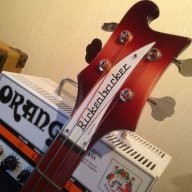
Rickenbackers have an incredibly distinct look and tone, and they have had the policy over the years that if you want that look and tone, you need to get the real deal. No version that looks the same but was made overseas with cheaper parts - no version that looks almost the same but with cheaper parts and a different brand name on the headstock - it's all or nothing. You don't have to agree with that approach, but it certainly has kept the "prestige" of the Rickenbacker brand high.




 .
.