Any. Vinyl is an ancient format that audio anoraks still cling to has some sort of holy grail.What kind of cruddy records are you listening to?

Enjoy the benefits of a premium membership!
Upgrade Account
-
TalkBass has been independent since 1998. Add your voice.
Create a free account to reply to discussions, view embedded media, and browse with fewer display ads.
Join free Log in
Want zero display ads or expanded classifieds tools? Compare plans.
You are using an out of date browser. It may not display this or other websites correctly.
You should upgrade or use an alternative browser.
You should upgrade or use an alternative browser.
Why spend money on an old tube amp when new class D amps are cheap?
- Thread starter MichelD
- Start date
More options
Who Replied?
Facts."snap, crackle and pop"
You have just given away that you've obviously never heard a good record so your opinion is based on what exactly?


- Feb 12, 2006
- 60,947
- 5
- 220,555
- Disclosures
- Development Engineer-Mesa Boogie, Development Engineer-Genzler (pedals), Product Support-Genz Benz
The noises, the limited dynamic range, the high frequency rolloff, the low frequency distortion from mistracking cutter and playback stylus, the cutter slew rate distortion from high frequency high level signal are all artifacts added to what is heard on an LP that are not present on the master source. These degredations or artifacts are what makes an LP a lossy medium.
Facts.
Have you ever heard a brand new record or one that's been taken care of, especially an audiophile record on a good system? I mean in person?
Last edited:
- Feb 12, 2006
- 60,947
- 5
- 220,555
- Disclosures
- Development Engineer-Mesa Boogie, Development Engineer-Genzler (pedals), Product Support-Genz Benz
Actually yes, and also the master used to cut the LP from. Compared with the master, a high quality LP can sound excellent but not as good as the master itself.Have you ever heard a brand new record or one that's been taken care of, especially an audiophile record on a good system? I mean in person?
Actually yes, and also the master used to cut the LP from. Compared with the master, a high quality LP can sound excellent but not as good as the master itself.
Oh I'm sure you have, I know you know what you're talking about, i wouldn't even question you but there does seem to be someone on here who has probably only heard one on Youtube.

Last edited:
I don't really listen to music unless there's a song I'm trying to learn or I'm on a long road trip and I play CDs in the truck. I have a rack of LPs in the basement in my music room and put them on once in a while if I want to listen to a King Crimson or Buck Owens record.
The discussion of LPs vs the other technologies you are discussing are beyond me. I don't even know what they mean.
codec?
VCM?
PBR?
The discussion of LPs vs the other technologies you are discussing are beyond me. I don't even know what they mean.
codec?
VCM?
PBR?
Well said. However, IMO, there’s a certain quality to the listening experience that I really like that only LP’s provide. Could be the RIAA eq. I don’t know. I also like digital for the lack of noise. So, while I like both, I guess I like them almost equally for what they offer.This!
------- Rambling ------
The LP/Tape process is at best 13bits - but that's only first generation.
People who love LP's actually know which pressing they have. The first few records off a press plate are the most valuable, the 1000th - no so much. When press degrades the die has to be replaced. Then they have to go back the the acetate master to make the new die. And maybe back to tape. This whole chain degrades over time. Next thing they do is "Digital Remaster" - happens all the time.
There's no degradation in the digital path. The digital in the above chain guarantees you don't wear out the original recordings. I'd wager all LPs in production today have Digital as part of the production process.
The LP leaves it up the consumer to add their own snap, crackle, pop, wow&flutter, warp back in.
Anybody with digital who wants the snap, crackle, pop, wow & flutter, and warp, eq difference between outside and inside tracks, ... Can degrade their digital tracks with plugins like Abbey Roads Vinyl or one of the other software makers.
A person can take an LP, and a processed track and compare them. Double Blind test then, and only golden ears could know after listening several times to each.
Tell you the truth for parts of songs or a track here and there, I kind of the like the dinosaur effects, then pull it back to crystal clear. It can be very musical to add and remove distortion at times. But when I want it out, I can easily turn off the plugin.
The plugins that add tape and vinyl artifacts are affordable plugins, but tools to remove the snap, crackle, pop, wow, flutter, .... are very very expensive. Thousands of dollars. Once the dirt's in it is very hard to get it out.
Sound Libraries use such cleaning software to archive old music as "The Music" is what's important, not the media.
The library of congress actually uses a photographic process to capture old records. No needle touches it. And then uses cleaning software to restore the original sound (to an extent that they can). They haven't degraded the original media any more than it was when they got it.
LPs are such a small niche of the market it hardly matters.
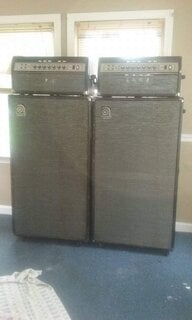
All in all, keep the VB4 so you can compare it to another head, even a modeling/cloning/simulator,emulator,profiling head when/if you want to try on. Don't expect these to totally sound like your VB4 as yours is not original. the models are based on original golden VB4s. The differences may be a small tweak of the EQ or drive in the model.

Why would anyone own a '72 Ford mustang when a 1998 Honda civic is so cheap? It ain't all about practicality. There's something about big iron that just gets me.
I do own a tone hammer 500 which is my main amp but damn I love my vintage v4b.
I do own a tone hammer 500 which is my main amp but damn I love my vintage v4b.

One reason I got the Carvin PB300 head was because it had onboard compression. Once a dialed a little bit in, I no longer missed the current sag/compression of the rectifier tubes and transformers at their limit. And it was a whole lot cleaner.There are great solid and class D of course but there is something I enjoy about driving a tube power section... that bit of compression/od/sag.
Now, there is something to be said for tube compression/slight overdrive, due to the voltage spike hitting before the current sag, causing the distortion to be ramp-shaped, producing even harmonics, what our ears perceive as warm tone. But I'm not going to spend all the tube money and carry all the weight to get it, especially with the current (pun intended) state of the art with toroidal transformers and MOS-FET power transistors.

Well said. However, IMO, there’s a certain quality to the listening experience that I really like that only LP’s provide. Could be the RIAA eq. I don’t know. I also like digital for the lack of noise. So, while I like both, I guess I like them almost equally for what they offer.
If you want that sound on your own recorded tracks then Abbey Road Studioes co-developed this vinyl plugin based off their own gear in house:
Waves Abbey Road Vinyl Plug-in
Note all the knobs for adding noise, crackle, clicks, wow&flutter and phase distortion are there.
There's usually a sale, and they also have bundles for many other gear from Abbey Road studios.
Many other software makers make vinyl plugins but this is the only one with Abbey Road on the name.
- Feb 12, 2006
- 60,947
- 5
- 220,555
- Disclosures
- Development Engineer-Mesa Boogie, Development Engineer-Genzler (pedals), Product Support-Genz Benz
Pabst Blue Ribbon
Goes great while listening to Buck Owens
I worked on Buck Owen's and the Buckaroos first tour coming out of retirement, with Dwight Yokum as a guest player. No PBR, it was "all you could drink" iced tea for me and the tech crew. That was a really cool few shows, holy smokes could you hear what was meant by the Bakersfield sound, great players. This had to have been in the late 1980's or possibly the very early 1990's.
I bet that was a treat ! I never saw Buck live, but I'm a fan.I worked on Buck Owen's and the Buckaroos first tour coming out of retirement, with Dwight Yokum as a guest player. No PBR, it was "all you could drink" iced tea for me and the tech crew. That was a really cool few shows, holy smokes could you hear what was meant by the Bakersfield sound, great players. This had to have been in the late 1980's or possibly the very early 1990's.
Ringo dug him too....

I've had the opportunity to compare the same recording against: the master tape, a "mastered" version of the tape, test lacquers, and a copy of the disc purchased from a record store, all to review at the studio where it was recorded and mixed.Actually yes, and also the master used to cut the LP from. Compared with the master, a high quality LP can sound excellent but not as good as the master itself.
This was back in the 80's, 2" 16 Track 3M machine, Scully 2-tracks, and a Neve console.
The differences were not what you might think.
It was impossible to fairly compare the lacquers as they aged and sounded different after a week or two.
But it was awesome when new (and smelled great).
Often times, the "mastered" version was nicer than the master tape; I used Sterling in NY and one of the other engineers favored Master Disc.
We often times used a Realistic phono pre and a standard home grade Techniques turn table to emulate what the average guy had at home.
Yes the store bought disc wasn't the best version, but it sounded great.
This thread raises a question for me. Has anyone compared the sound of a Super Bassman and a Rumble 800. Yes, I know the weight and cost differences, but what about the SOUND.

I s'pose it's a bit like the "art" of listening to an ALBUM.... from the first track, changing it after side 1 has ended, then listening to side 2... all the way through.
If it means that much to you, you'll do it.
Tube - class D
Some things are just worth the extra wait/ weight
If it means that much to you, you'll do it.
Tube - class D
Some things are just worth the extra wait/ weight
Reported.Oh I'm sure you have, I know you know what you're talking about, i wouldn't even question you but there does seem to be someone on here who has probably only heard one on Youtube.
No need for personal insults.

Then don't.
Also: Servers. It would obviously take a LOT more space to offer every album in raw audio, when the plus-value it offers over the 320 kbps standard only benefits the lucky few who have superpowers (imaginary or not).
Some artists will send you the .wav files when you buy their album directly from them (from crowdfunded projects), but for high-volume stuff from big box companies, I don't think it will happen until there is a technological breakthrough that makes storage even cheaper and smaller than it is now.
The entire FLAC encoded discography for Rings of Saturn which is 5 full-length albums including a bonus instrumental album is 2GB. The entire Nine Inch Nails collection which includes multiple promos, demos, vinyl dumps and other unreleased artifacts is 13GB. My 2 CD collection of Evan Brewer's solo work is 354MB.
I can personally host all of these and more for less than $20 per month. I have absolute no idea why this is not possible for other humans. I really must have super powers. Or maybe people pay too much for technology.
I work in the cloud/tech field and these excuses dried up around 2002.
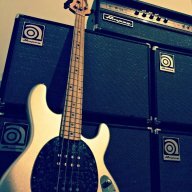
I had a V4 a few years back. It's the one in my profile picture. Those V4s have an openness and cleanliness to their grind you just cant find anywhere else. I sold mine to downsize to combos when I moved. Also didn't have the headroom I needed in some places I play... but it's also the only amp I regret selling in 20+ years. I'd fix it up just to play at home. If you can get a cheap 2nd amp (old gk or rumble like you said) to carry around.


