• TalkBass has been independent since 1998. Add your voice.
    Create a free account to reply to discussions, view embedded media, and browse with fewer display ads.
    Join freeLog in
    Want zero display ads or expanded classifieds tools? Compare plans.

Zero fret

Boa noite,

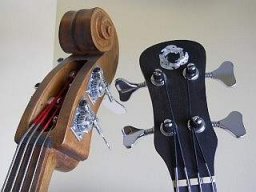
Eu estava olhando os baixos da Weir Guitars e uma pergunta me veio à mente... Esta placa ou bloco de metal onde as cordas e o headpiece são apoiados...
Seria um desperdício zero?
Bem, parece que está próximo da escalada...
Se fosse realmente para essa função, ela não teria que ser um pouco mais alta?

[ANEXAR=completo]5492790[/ANEXAR]
[ANEXAR=completo]5492789[/ANEXAR]
[ANEXAR=completo]5492791[/ANEXAR]


E sempre que você tem o traste zero, as cordas são acústicas nele?
O headpiece já possui “espaços” para guiar as cordas.

[ANEXAR=completo]5492792[/ANEXAR]

[ANEXAR=completo]5492793[/ANEXAR]

[ANEXAR=completo]5492794[/ANEXAR]
 

Attachments

  • Dhshw.jpg
    Dhshw.jpg
    154.3 KB · Views: 15
  • 195.4.jpg
    195.4.jpg
    81 KB · Views: 28
  • Screenshot_20240628_064103_Chrome.jpg
    Screenshot_20240628_064103_Chrome.jpg
    143.4 KB · Views: 13
  • 171.1.jpg
    171.1.jpg
    87.7 KB · Views: 15
  • 193.2.jpg
    193.2.jpg
    96.1 KB · Views: 16
  • Screenshot_20240628_064126_Chrome.jpg
    Screenshot_20240628_064126_Chrome.jpg
    151.9 KB · Views: 12
Last edited:
O bloco de latão usado no fretless serve como ponto de parada para as cordas. Nenhuma altura adicional é necessária para as cordas nesse ponto.

O traste zero é usado como ponto de parada das cordas na versão com traste e o bloco de régua é usado apenas para travar as cordas no lugar.

But the string near the fretless block doesn't stick to the fingerboard?
 
But the string near the fretless block doesn't stick to the fingerboard?
If you think about it, a string that is held to the fretboard isn't really any different than a string that is being noted by a finger at that point. Hypothetically that works fine, in the real world many who produce fretless bass guitars like to elevate the string slightly to ensure clean and defined notes in the open positions. If I'm using a nut I cut the slots so the string is about .010" to .015" above the fretboard surface, about the thickness of a business card.
 
  • Like
Reactions: Beej
If you think about it, a string that is held to the fretboard isn't really any different than a string that is being noted by a finger at that point. Hypothetically that works fine, in the real world many who produce fretless bass guitars like to elevate the string slightly to ensure clean and defined notes in the open positions. If I'm using a nut I cut the slots so the string is about .010" to .015" above the fretboard surface, about the thickness of a business card.


I understood.
 
  • Like
Reactions: Beej
I understood.

Yes, I'll back up what Rudy is saying. If you use a zero fret on a fretless bass, the fret needs to be filed down to around 0.010" above the fingerboard. If you leave it at full height, of around 0.040"-0.050", like you are showing in your last picture, fingering a note at the first position will be very stiff. Too much pressure, uncomfortable to play.

But if you use no zero fret, or file it down lower than 0.010", then you'll get buzzing on the open note.
 
O bloco de latão usado no fretless serve como ponto de parada para as cordas. Nenhuma altura adicional é necessária para as cordas nesse ponto.

O traste zero é usado como ponto de parada das cordas na versão com trastes e o bloco de latão é usado apenas para travar as cordas no lugar.

Hey Rudy;

Thanks for answering him. Is that Portuguese? Is Bruno writing from Brazil? It's interesting that we're starting to attract the interest of more Luthiers from South America. Seeking our technical advice. That's great.
 
Yes, I'll back up what Rudy is saying. If you use a zero fret on a fretless bass, the fret needs to be filed down to around 0.010" above the fingerboard. If you leave it at full height, of around 0.040"-0.050", like you are showing in your last picture, fingering a note at the first position will be very stiff. Too much pressure, uncomfortable to play.

But if you use no zero fret, or file it down lower than 0.010", then you'll get buzzing on the open note.


perfect
 
Hey Rudy;

Thanks for answering him. Is that Portuguese? Is Bruno writing from Brazil? It's interesting that we're starting to attract the interest of more Luthiers from South America. Seeking our technical advice. That's great.

It's always good to see folks from other countries participating here, although the language barrier does complicate things a bit. I copied Bruno's Portuguese text and pasted it into Google Translate to enable reading / answering his question. Google has all sorts of useful tools available beyond doing searches, I use Calculator fairly often, too.

The photo that Bruno showed with the zero fret is for one of Dave Weir's fretted bass guitars. That's why it is shown as a full height fret. Dave uses some unusual, if not innovative features on his guitars and basses, particularly his bridge design.
 
  • Like
Reactions: Bruce Johnson
I was thinking a similar thing a few days ago. Would a fretless with 0 nut height make the open strings sound closer to the (not)fretted notes? Would the open strings mwah?

I was imagining a fretless fingerboard that extends beyound the 0 fret line, with slanted grooves for the strings cut directly on the end of the board instead of a nut. Should I file my fretless' nut flush with the fingerboard and find out?
 
I was thinking a similar thing a few days ago. Would a fretless with 0 nut height make the open strings sound closer to the (not)fretted notes? Would the open strings mwah?

I was imagining a fretless fingerboard that extends beyound the 0 fret line, with slanted grooves for the strings cut directly on the end of the board instead of a nut. Should I file my fretless' nut flush with the fingerboard and find out?

Hey KidAmnesia;

Here's what I do on my fretless basses. I call it a Zero Block.

IMG_0493B.jpg


It's a block of ebony, up tight against the end of the fingerboard. The grain goes crosswise, and it's filed to a slight ramp with the high edge at the Zero line.

IMG_0494B.jpg


I trim that raised edge to 0.010" above the fingerboard surface.

IMG_4477B.jpg


IMG_2861B.jpg


Then the brass or aluminum nut screws down right in front of the Zero Block. Its slots are deep enough that the string rests on the edge of the Zero Block.

That's the solution I've come up with. The nut holds the string spacing and guides the strings to the tuners. The Zero Block sets the height of the string above the surface right where the open note doesn't buzz, but the first position fingering is light and matches the other positions. And the open string tone is nearly identical to the fingered note tone.

Will the open string notes Mwah? Yes, If you want them to. The Onset Of Mwah depends on the height of the Zero Block above the fingerboard vs how hard you pluck it. Just like on the rest of the fingerboard, where the Onset of Mwah is determined by the action height vs how hard you pluck. If you lower the Zero Block down to 0.005", then the Mwah (on the open note) will begin with lighter plucking.

And yes The Onset of Mwah could be a good solo album name for a bassist.
 
Last edited:
Hey KidAmnesia;

Here's what I do on my fretless basses. I call it a Zero Block.

View attachment 6971075

It's a block of ebony, up tight against the end of the fingerboard. The grain goes crosswise, and it's filed to a slight ramp with the high edge at the Zero line.

View attachment 6971076

I trim that raised edge to 0.010" above the fingerboard surface.

View attachment 6971077


View attachment 6971078

Then the brass or aluminum nut screws down right in front of the Zero Block. Its slots are deep enough that the string rests on the edge of the Zero Block.

That's the solution I've come up with. The nut holds the string spacing and guides the strings to the tuners. The Zero Block sets the height of the string above the surface right where the open note doesn't buzz, but the first position fingering is light and matches the other positions. And the open string tone is nearly identical to the fingered note tone.

Will the open string notes Mwah? Yes, If you want them to. The Onset Of Mwah depends on the height of the Zero Block above the fingerboard vs how hard you pluck it. Just like on the rest of the fingerboard, where the Onset of Mwah is determined by the action height vs how hard you pluck. If you lower the Zero Block down to 0.005", then the Mwah (on the open note) will begin with lighter plucking.

And yes The Onset of Mwah could be a good solo album name for a bassist.

That looks perfect as a zero fret for fretless, but I want to know how would it sound without any extra height. I guess the simplest solution is to file my fretless presicion's nut down flush with the fingerboard and see what happens. If it buzzes too much I can make a new one and forget about this crazier idea of cutting the nut slots directly into the fingerboard (sorry for the crude drawing).


WhatsApp Image 2024-07-04 at 14.54.28.jpeg
 
That looks perfect as a zero fret for fretless, but I want to know how would it sound without any extra height. I guess the simplest solution is to file my fretless presicion's nut down flush with the fingerboard and see what happens. If it buzzes too much I can make a new one and forget about this crazier idea of cutting the nut slots directly into the fingerboard (sorry for the crude drawing).


View attachment 6971728

A quick way to test this would be to remove the nut. Let the strings rest right on the edge of the fingerboard and pull them up to tune. They won't have any side-to-side control, but they'll be resting on an edge of ebony. How much buzz you get will depend on the break angle over that edge, because the string will be lifted up slightly as it goes over the edge. How much it lifts up will depend on the gauge of the string; the thicker strings won't bend as much over the edge. The E may be fine, while the G may buzz badly.

The bigger problem is that the edge of the ebony is going to be fragile. A little bit of playing and tuning, and the strings will start crushing or wearing a dent in the edge, lowering the string and increasing the buzzing. That's a lot of load on a small area of the ebony.

A key part of the design of my Zero Block is the angle of the top surface. It's a straight line back to the bottoms of the slots in the nut. So the string is fully resting on the top surface of the Zero Block, not just on the edge. That increases the area of contact, and greatly reduces the crushing or wear. But still, it's a weak fulcrum point. My fretless basses with the Zero Block are designed specifically for use with flatwounds. I warn my customers that if they use roundwounds and change their strings frequently, they'll quickly wear out the Zero Block and get open string buzz.

I think your idea with the notches can be made to work. But you'll need to be careful with the angle of the notches. They should match the break angle needed to go to the tuner post. The string should rest fully in the bottom of the notch. And you'll have to be cautious about the wear and crushing. You may need to touch up the notches with a round file regularly to keep the edge sharp. Which will gradually move the Zero Point forward.

That's why I have my Zero Block as a separate part with the edge raised up 0.010". And why the grain goes crosswise. It makes the edge tougher and longer lasting.
 
  • Like
Reactions: KidAmnesia
Bruce is spot on with his advice.

Do be aware that if there's any "erosion" of that front edge then your stopping point will be shifted forward, seriously effecting the intonation of your bass and the trueness of the note pitch. There's a reason why you need to not take any shortcuts for your design decisions.
Yes, the deformation of the wood over time altering the scale length is something I hadn't really considered. It could probably look cool, but it's not the most functional way to do it.
 
Yes, the deformation of the wood over time altering the scale length is something I hadn't really considered. It could probably look cool, but it's not the most functional way to do it.

Well, you could follow the design idea of my Zero Block, but with the grooves in it. Basically an ebony nut. A separate piece of ebony, grain crosswise. Make it long enough (along the axis of the neck) and file the grooves carefully so the strings are fully supported. Cut the grooves so the front edges are 0.010" above the fingerboard surface. That would work and get you the cool look. And it would be reasonably durable, The key thing would be to get the angle of the grooves right, so the strings are lightly resting in the grooves through their whole length.

When the grooves wear, the edge will move straight down, not changing the zero point or scale length. When they wear low enough, the string will start buzzing, played open. At that point, you can either make a new ebony nut, or raise it up on a 0.010" shim.
 
Last edited: