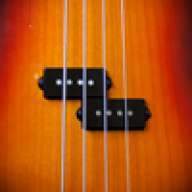
So this morning I decided to get to the bottom of what Jamerson used at Studio A to get that distinctive, fat, dirty tone. I've heard 2 different stories over the years: that he used his Ampeg B-15 in studio, or that he plugged directly into the mixing board. This is the most common story. But of course this got me thinking - exactly what brand board did he plug into?
Well I just came across this gem of a thread that explains it all in detail: Soulful Detroit Forum
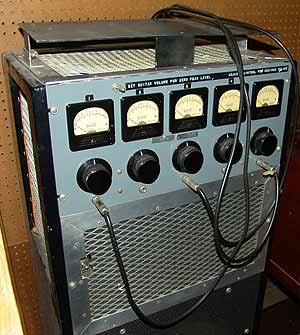
There are posts by Bob Babbitt and engineers that actually worked at Studio A, including Mike McLean who built the funky 5-channel tube amplifier/DI that the guitars and bass were plugged into. The speaker in the amp was not mic'd. It was only there to allow the musicians to hear what they played. Everything on tape was the direct signal from that device.
"We decided that five such preamp channels (five guitars) would be sufficient to meet all practical needs.
In addition, a monitor mixer was required to mix together the five preamp outputs so that the resulting modulation could be fed to a power amplifier and speaker so that the musicians could hear themselves.
The original monitor system that was in use at Motown when I arrived in 1961 consisted of two Altec Lansing type 605-A "Duplex" coaxial speakers which were a fifteen inch low frequency unit with a separate compression driver with a 4 by 2 multicell horn mounted in the center. These speakers were capable of very high sound levels without being damaged.
We had replaced these speakers with other units that were supposed to be an improvement, and we had the two of them sitting in the store room. The musician's guitar monitor seemed like an ideal application for one of these speakers. Further we had a lovely McIntosh type MC-30 mono 30 Watt power amplifier sitting in the store room.
The combination of this amplifier and speaker promised to provide very reliable and appropriate monitoring for the musician. This proved to be true in practice. We built an infinite baffle (sealed box) cabinet for the 605-A, which would take the place of all the old clunker, humming, Fender amplifiers that the musicians used to drag in. Space was at a premium in the old Hitsville studio, and elimination of all those Fender amps and the microphones, with stands, to pick up the sound, was a big advantage.
At first, the tendency was to think in terms of installing the five preamps in the control room, and possibly having them equipped with variable gain controls to that the recording engineer could adjust for correct line output level. I didn't like this because gain pots tend to get noisy, and most important of all, it is difficult to maintain the maximum dynamic range in a preamp which must accommodate a wide range of gain. I liked the idea of a fixed gain preamp that was designed for maximum performance at that gain.
The thought occurred to me that it would be hip to make the setting of the preamp output level the responsibility of the musician. If the preamp gain was sufficient to allow a moderate setting loss on the volume control on the musical instrument, then it would be ideal to simply have the musician set this instrument volume control to provide the correct line level at the preamp output. All that was needed was a VU meter in the studio so that the musician would know when the level was correct. The preamp was designed with fixed gain.
The second step was for the musician to adjust the mixer pot on the little five-channel monitor mixer so that his volume level was comfortable over the Altec 605-A speaker.
We mounted five beautiful 3.5 inch rectangular Triplett VU meters, five rotary monitor mixer pots, and five quarter inch input jacks for the guitar cables, on a seven inch high rack panel, and built the five vacuum-tube preamps on a Bud aluminum chassis mounted directly behind the panel.
The preamps were designed to provide first class professional performance specifications, in accordance with the discussion above. In practice, the recording engineer could forget all about the guitars (except, of course, for mixing them.) He automatically had a perfect line level to patch into his console, because the musician had adjusted the level right at his guitar, using his VU meter. The musicians loved the sound of that McIntosh/Altec combination, and could set the speaker volume to suit their requirements very easily. The entire system was as reliable as the tide, and worked beautifully. Everybody loved it.
I feel that it worked out very well to assign the responsibility for the level control to the musician. As far as I know, we never had any problems with improper levels. I got the feeling that it made the musician feel good to be responsible for this function.
Considering the horrors that could happen when a musician turned down his instrument volume control, while at the same time the recording engineer was fooling around jacking up the gain on a variable gain preamp: It seems to me that this design approach was a minor "stroke of genius." (If you don't mind me saying so.)
If only everything I did at Motown had made as much sense as this did!"
- Mike McLean
Well I just came across this gem of a thread that explains it all in detail: Soulful Detroit Forum
There are posts by Bob Babbitt and engineers that actually worked at Studio A, including Mike McLean who built the funky 5-channel tube amplifier/DI that the guitars and bass were plugged into. The speaker in the amp was not mic'd. It was only there to allow the musicians to hear what they played. Everything on tape was the direct signal from that device.
"We decided that five such preamp channels (five guitars) would be sufficient to meet all practical needs.
In addition, a monitor mixer was required to mix together the five preamp outputs so that the resulting modulation could be fed to a power amplifier and speaker so that the musicians could hear themselves.
The original monitor system that was in use at Motown when I arrived in 1961 consisted of two Altec Lansing type 605-A "Duplex" coaxial speakers which were a fifteen inch low frequency unit with a separate compression driver with a 4 by 2 multicell horn mounted in the center. These speakers were capable of very high sound levels without being damaged.
We had replaced these speakers with other units that were supposed to be an improvement, and we had the two of them sitting in the store room. The musician's guitar monitor seemed like an ideal application for one of these speakers. Further we had a lovely McIntosh type MC-30 mono 30 Watt power amplifier sitting in the store room.
The combination of this amplifier and speaker promised to provide very reliable and appropriate monitoring for the musician. This proved to be true in practice. We built an infinite baffle (sealed box) cabinet for the 605-A, which would take the place of all the old clunker, humming, Fender amplifiers that the musicians used to drag in. Space was at a premium in the old Hitsville studio, and elimination of all those Fender amps and the microphones, with stands, to pick up the sound, was a big advantage.
At first, the tendency was to think in terms of installing the five preamps in the control room, and possibly having them equipped with variable gain controls to that the recording engineer could adjust for correct line output level. I didn't like this because gain pots tend to get noisy, and most important of all, it is difficult to maintain the maximum dynamic range in a preamp which must accommodate a wide range of gain. I liked the idea of a fixed gain preamp that was designed for maximum performance at that gain.
The thought occurred to me that it would be hip to make the setting of the preamp output level the responsibility of the musician. If the preamp gain was sufficient to allow a moderate setting loss on the volume control on the musical instrument, then it would be ideal to simply have the musician set this instrument volume control to provide the correct line level at the preamp output. All that was needed was a VU meter in the studio so that the musician would know when the level was correct. The preamp was designed with fixed gain.
The second step was for the musician to adjust the mixer pot on the little five-channel monitor mixer so that his volume level was comfortable over the Altec 605-A speaker.
We mounted five beautiful 3.5 inch rectangular Triplett VU meters, five rotary monitor mixer pots, and five quarter inch input jacks for the guitar cables, on a seven inch high rack panel, and built the five vacuum-tube preamps on a Bud aluminum chassis mounted directly behind the panel.
The preamps were designed to provide first class professional performance specifications, in accordance with the discussion above. In practice, the recording engineer could forget all about the guitars (except, of course, for mixing them.) He automatically had a perfect line level to patch into his console, because the musician had adjusted the level right at his guitar, using his VU meter. The musicians loved the sound of that McIntosh/Altec combination, and could set the speaker volume to suit their requirements very easily. The entire system was as reliable as the tide, and worked beautifully. Everybody loved it.
I feel that it worked out very well to assign the responsibility for the level control to the musician. As far as I know, we never had any problems with improper levels. I got the feeling that it made the musician feel good to be responsible for this function.
Considering the horrors that could happen when a musician turned down his instrument volume control, while at the same time the recording engineer was fooling around jacking up the gain on a variable gain preamp: It seems to me that this design approach was a minor "stroke of genius." (If you don't mind me saying so.)
If only everything I did at Motown had made as much sense as this did!"
- Mike McLean