Enjoy the benefits of a premium membership!
Upgrade Account
-
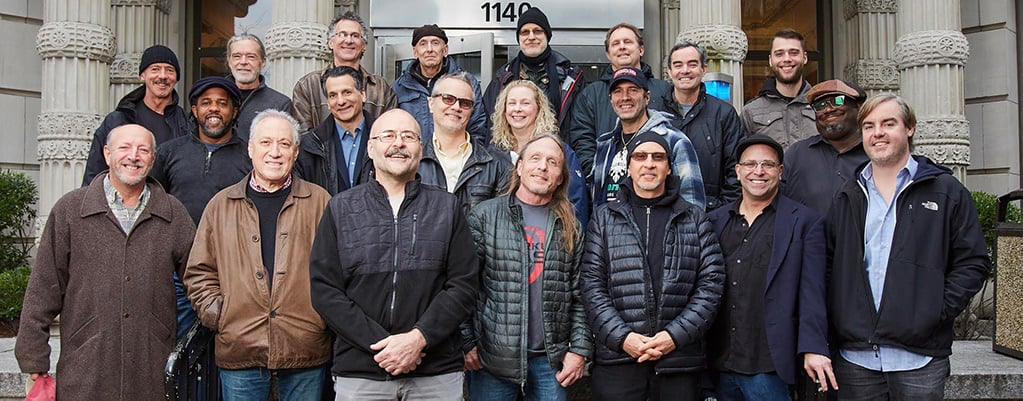 Berklee Pro Forum Lineup:
- Oscar Stagnaro
- Dave Clark
- Joe Santerre
- Danny Morris
- Ed Lucie
- Chris Loftlin
- Dave Marvuglio
- Bruce Gertz
- Victor Bailey
- Lincoln Goines
- John Funkhouser
- Bruno Raberg
- Tom Appleman
- Sandro Scoccia
-
TalkBass has been independent since 1998. Add your voice.
Create a free account to reply to discussions, view embedded media, and browse with fewer display ads.
Join free Log in
Want zero display ads or expanded classifieds tools? Compare plans.
You are using an out of date browser. It may not display this or other websites correctly.
You should upgrade or use an alternative browser.
You should upgrade or use an alternative browser.
Sight Reading
- Thread starter Joe Louvar
- Start date
-
- Tags
- music reading sheet music
More options
Who Replied?Hi gang.
Which sight reading book(s) do you recommend - beginner to advanced?
Thanks
For my reading I separate it into 3 categories. Reading rhythm, notation, and then the combination of both (for sight reading). For rhythm studies I usually use drum books or rhythmic complex finger funk lines. But I only focus on the RHYTHM. I also love working on reading rhythms because I don't need my bass to practice! Great for traveling!
For notation I use less rhythmically diverse material to work on reading the patterns of the notes more. Examples that are great for this are walking bass lines. I focus on reading the shapes and patterns. For example instead of E to B I read it as a perfect 5th
Then I combine the 2 together for full fledged sight reading!
Some books:
Reading in 4/4 by Louie Bellson (rhythm)
Walking in the Footsteps of Paul Chambers
Afro Cuban Grooves for Bass and Drums by Lincoln Goines
The Latin Bass Book by Oscar Stagnaro
Any transcription books!!! My library is filled with many transcription books from all styles from classical, to jazz, to metal.
Hope this helps!!

I quote the Reading in 4/4 too, great book for rhythm reading and than I will add the Sight Reading for the bass by Ron Velosky, if you do both of them page after page, you'll gain great results.
Than after you completed both of them you'll ready to switch directly to music charts.
Cheers. Enrico
www.enricogaletta.com
on youtube
on twitter
Than after you completed both of them you'll ready to switch directly to music charts.
Cheers. Enrico
www.enricogaletta.com
on youtube
on twitter


I remember reading a Jeff Berlin interview in Bass Player magazine where he talked about reading practice and mentioned trombone books. I think I read another interview with Rich Appleman where he mentioned the same thing. What a great recommendation!! I used to spend hours in my local music library hunting through hundreds of trombone studies and pieces.
Mark
Mark
Anthony Vitti
Fender Bass! - Professor Berklee College of Music
I remember reading a Jeff Berlin interview in Bass Player magazine where he talked about reading practice and mentioned trombone books. I think I read another interview with Rich Appleman where he mentioned the same thing. What a great recommendation!! I used to spend hours in my local music library hunting through hundreds of trombone studies and pieces.
Mark
Yes Mark, I also use to read a lot of trombone books. Others I liked were the Bugs Bower Duet books. Difficult reading. They were written for horns, but you can find a bass clef version.

Bugs Bower Duet books. Difficult reading. They were written for horns, but you can find a bass clef version.
Love those... I would suggest that you learn to read in treble clef as well. I has translated into $ and satisfaction throughout my career.
Cool that you didn't just plug your own books, Anthony! 
That said, "Sight Reading Funk Rhythms" and "The Finger Funk Workbook" are really great material - if you can read through those, I'd say you're are pretty good reader.
That said, "Sight Reading Funk Rhythms" and "The Finger Funk Workbook" are really great material - if you can read through those, I'd say you're are pretty good reader.
Anthony Vitti
Fender Bass! - Professor Berklee College of Music
Cool that you didn't just plug your own books, Anthony!
That said, "Sight Reading Funk Rhythms" and "The Finger Funk Workbook" are really great material - if you can read through those, I'd say you're are pretty good reader.
Ha ha.. Thank you Chris. No, I don't require any of mine in any of my classes either. They are out there and thankfully they have a loyal following from cool people like yourself. That's why I keep writing them! Finger Funk Vol. 3 is being written as we speak!
Hey BBD,
I've been studying as flutist for 5 years and had a really hard time learning to read the notes. Now I'm playing bass and really want to play sheet music...the problem is that I can't. I have no trouble reading music in treble clef, but yet again I'm facing the hard learning the bass clef. I'm not having progress at all, so I'm asking for a professional advice on how to learn bass clef and read it. It took me a while to learn treble clef, so I really want to know the appropriate method of learning. Anything will help for sure.
Thank you,
~BS
I've been studying as flutist for 5 years and had a really hard time learning to read the notes. Now I'm playing bass and really want to play sheet music...the problem is that I can't. I have no trouble reading music in treble clef, but yet again I'm facing the hard learning the bass clef. I'm not having progress at all, so I'm asking for a professional advice on how to learn bass clef and read it. It took me a while to learn treble clef, so I really want to know the appropriate method of learning. Anything will help for sure.
Thank you,
~BS
Solomon,
there is another thread on this page that gives you advise on reading. It is:
Sight Reading
It is the easiest thing to learn, but you have to put some time, EVERY DAY !
20 minutes, daily, will take you places. 2 hours, one day a week, will take you nowhere.
Best
Sandro
there is another thread on this page that gives you advise on reading. It is:
Sight Reading
It is the easiest thing to learn, but you have to put some time, EVERY DAY !
20 minutes, daily, will take you places. 2 hours, one day a week, will take you nowhere.
Best
Sandro
Solomon,
there is another thread on this page that gives you advise on reading. It is:
Sight Reading
It is the easiest thing to learn, but you have to put some time, EVERY DAY !
20 minutes, daily, will take you places. 2 hours, one day a week, will take you nowhere.
Best
Sandro
Great advice, Sandro, thank you! I'll give it some nice regular training, for sure.
Maybe there's more to that? Another tip or two won't hurt.
Hello, I'm new to this forum, and excited about hearing back from you pros! I am a drummer who has also played bass in a cover band. I read music but very slowly. I volunteered to play bass for a community theater production of "Milk and Honey," a 1961 musical by Jerry Herman. I have until late March to prepare. I took out the score from the library and I am admittedly a bit lost. The score has multiple instrument parts. I am looking for some guidance about how to read the score. Some of the instruments have notes lower than the bass goes (Cello, Bassoon). How do I go about picking the notes I should play? Naively I thought I would just pick the lowest note, but that's not always going to sound the best. Also, what it is an optimum way to decide where on the fretboard to play, should I just raise everything by an octave? Otherwise, I will have awkward intervals to play when I have to get around playing notes lower than the bass can play. Any advice you can give will be appreciated. I am confident I can play the parts technically, but I am arranging this all alone. Additionally, I would like some guidance about how to set up that day. Since I read slowly, I thought I would transcribe the score to bass tab, with words above so I can follow along. Since this is a volunteer effort, with amateurs like myself, no one is going to judge me for it! Thanks.
Usually there is a bass part to read from. I've never played a Broadway show reading from the conductor's score.

As John said above, there should be a bass part to read from. If not, keep in mind that the bass is a transposing instrument, and the notes are written one octave higher than they actually sound. I'd say to jump up an octave to keep your lines coherent, rather than jumping up for a random note here or there that's too low for you.
I'd recommend working on your reading in general. Even in a community production, there are going to be lots of changes to the score that require you to think on your toes. Certain on-stage things won't take exactly the same amount of time as the original production did, so sometimes you'll vamp a section until cued, sometimes you cut measures 124-136, 138, 141, and 145-154, I've even had the music director hand-write a whole new section for something.
Finally, practice counting a ridiculous amount of measures of rest. You'll probably have huge chunks of rest (i.e. 50 or more measures). It's easy to get distracted, and there's not always an obvious musical cue for when you're supposed to start playing again.
I'd recommend working on your reading in general. Even in a community production, there are going to be lots of changes to the score that require you to think on your toes. Certain on-stage things won't take exactly the same amount of time as the original production did, so sometimes you'll vamp a section until cued, sometimes you cut measures 124-136, 138, 141, and 145-154, I've even had the music director hand-write a whole new section for something.
Finally, practice counting a ridiculous amount of measures of rest. You'll probably have huge chunks of rest (i.e. 50 or more measures). It's easy to get distracted, and there's not always an obvious musical cue for when you're supposed to start playing again.
So it sounds like what I've got is a conductor's score? How can I find the bass score? My online searches yielded only the piano and vocal sheet music. Are there publishers I can contact directly?
Thanks blixild, going to have to hunker down and read bass cleff with more ease!
Thanks blixild, going to have to hunker down and read bass cleff with more ease!
Your best bet is to contact the music director of the production you're working on. I'm not sure where to get one, and these scores are pretty pricey even if you can find them. Every community theatre production I've played in has rented the scores because they're usually outside the budget to purchase to only use for a one-time thing.
I was able to get in touch with the musical director. They're getting me a bass book now even though the musicians arent assembling until February. Maybe you pros can take a month to prepare but us newbies need more time! Thanks.