• TalkBass has been independent since 1998. Add your voice.
    Create a free account to reply to discussions, view embedded media, and browse with fewer display ads.
    Join freeLog in
    Want zero display ads or expanded classifieds tools? Compare plans.

Diving into the world of Lutherie.

Here it is. My first build just made the jump into tangibility. I decided I needed to balls up and make a bass out of wood. Any criticism or advice is appreciated. I'm fairly proud of the body shape, but I had lots of trouble trying to come up with a headstock. I'm going to walk away and see how I feel about this one tomorrow.

Its going to have passive MEC jazz pickups, because that's what I'll have lying around.

Black Korina two piece body, flatsawn maple neck, Pau Ferro fingerboard, Ebony headstock overlay (I may or may not bind the headstock with maple). Hipshot A bridge, Gotoh tuners.

I'll finish with Tru-Oil.

This is what I have so far.

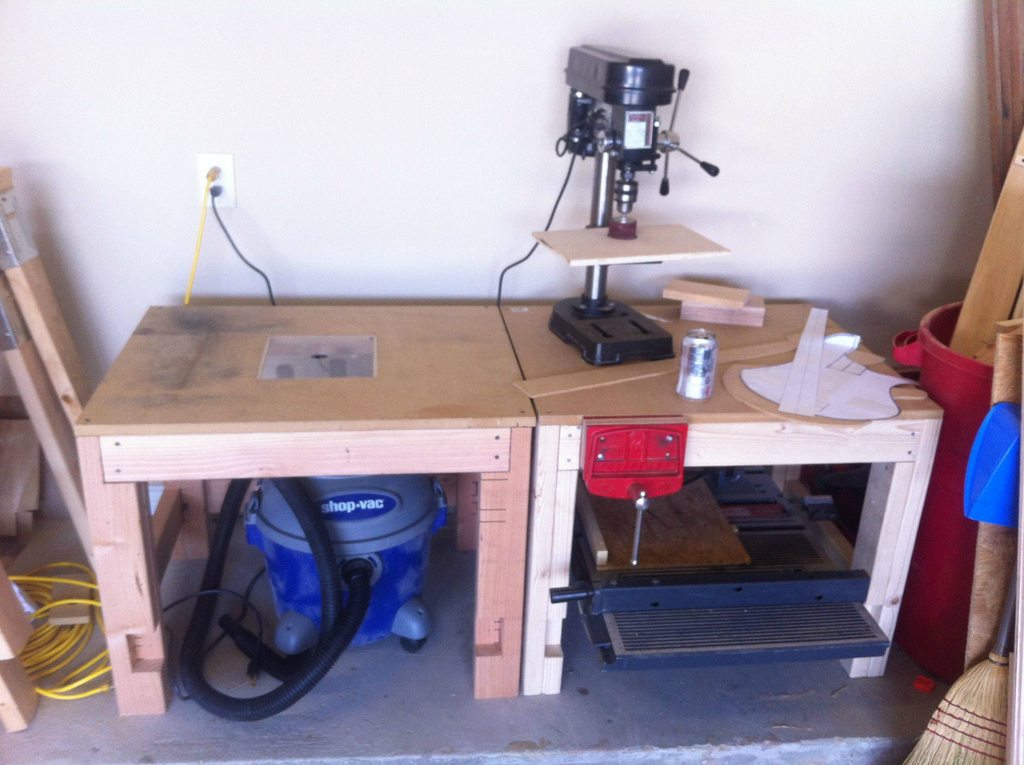
The workshop:
5znmxh.jpg


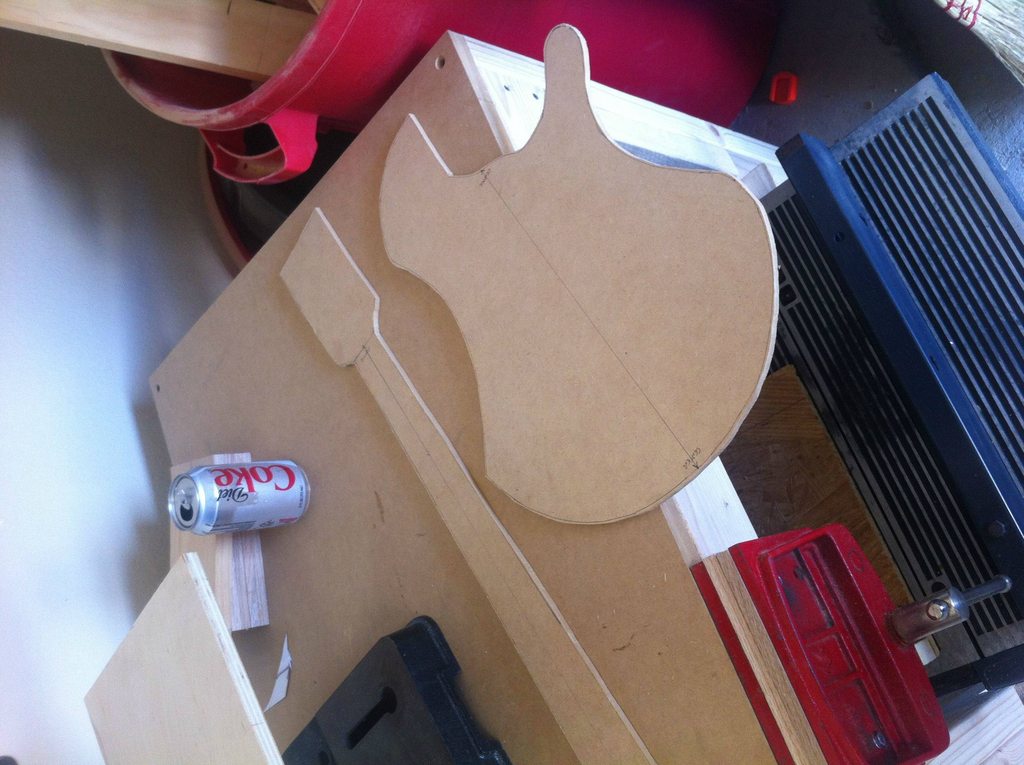
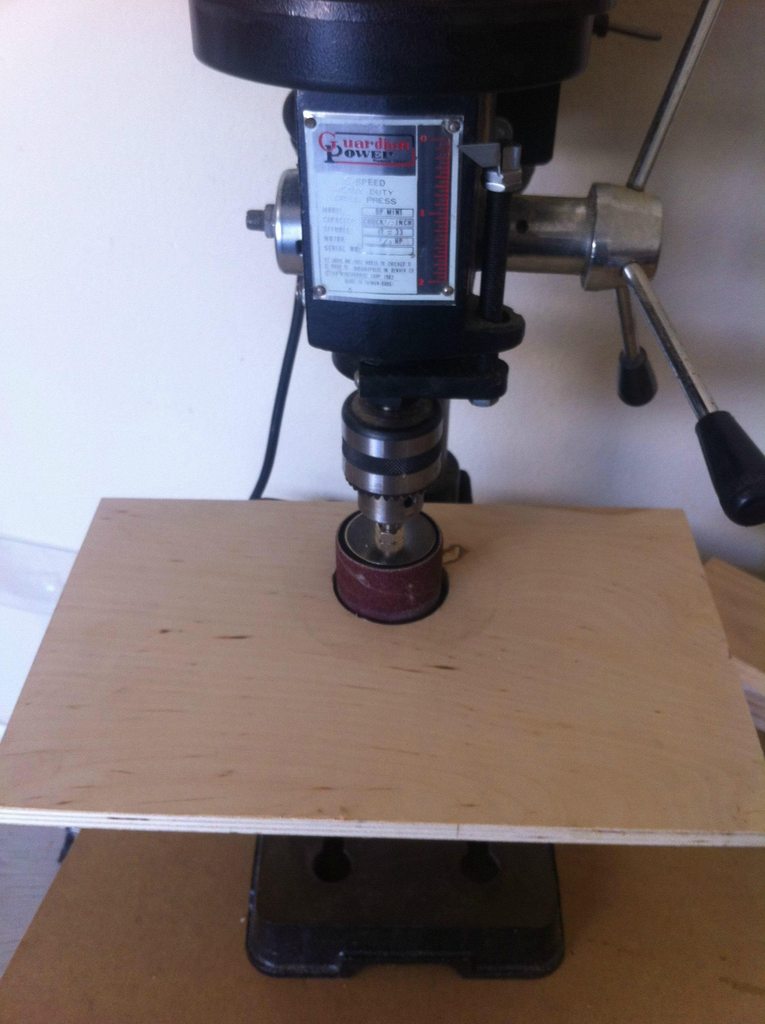
My homemade drum sander (best I can do to fine-tune my patterns):
QsTU3h.jpg


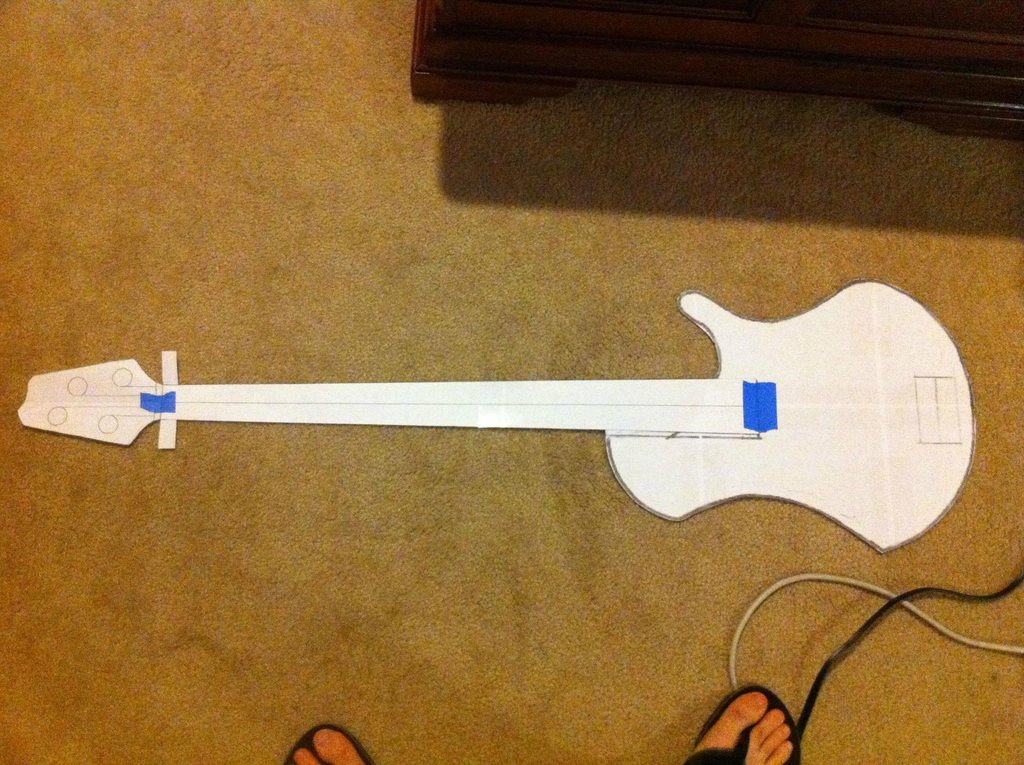
The paper mock-up:
uVJoeh.jpg


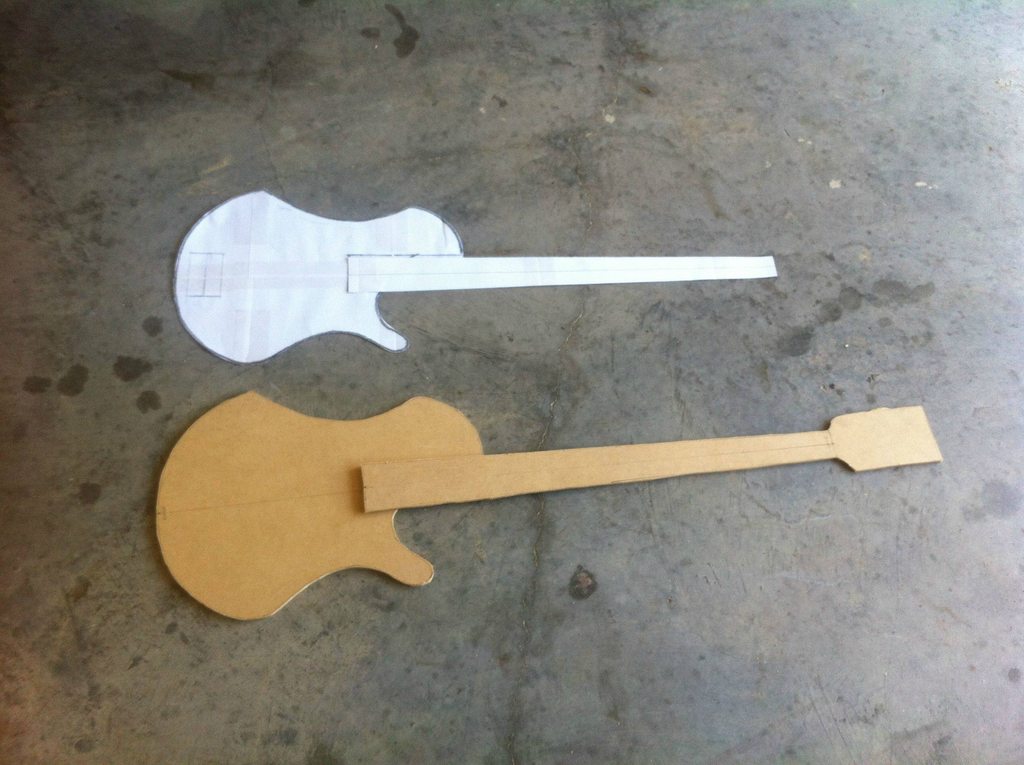
The rough-cut patterns:
KmOMDh.jpg


Pattern Mock-up:
ZRIlyh.jpg


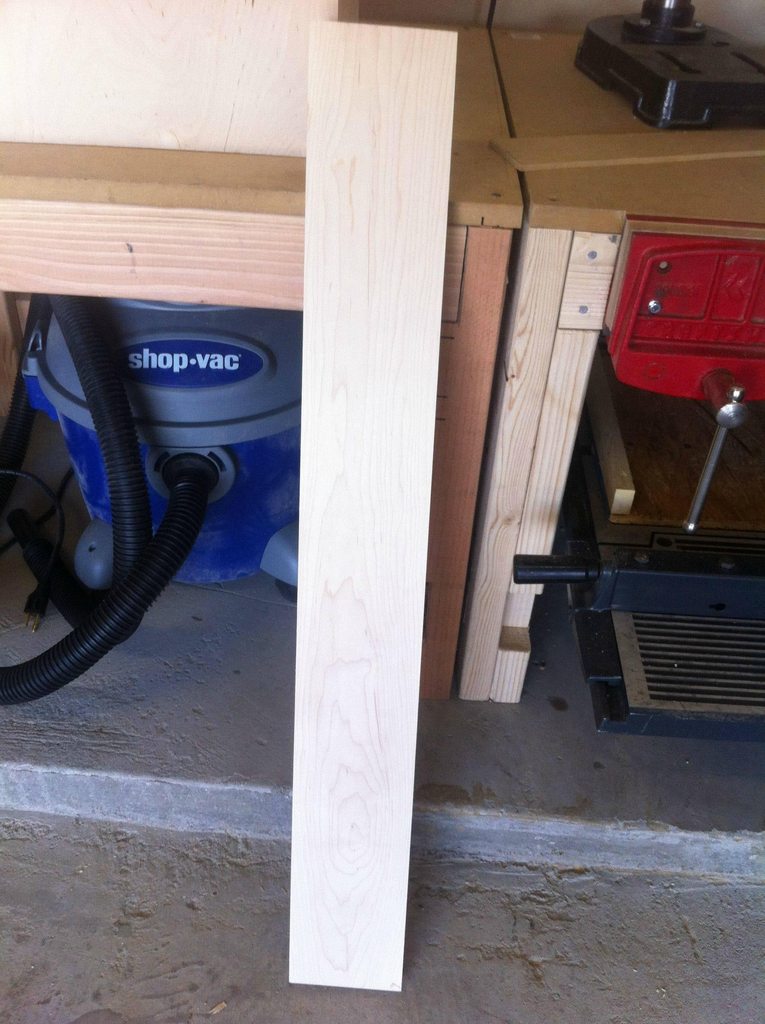
And the neck blank:
3Fbvoh.jpg


next: Make a scarf joint jig and start truing up the templates.

Thanks for checking it out!
Jason
 
I'm worried I designed the body too small. It's about the same proportions as my Thumb, but with the shorter upper bout I think it's going to nosedive in a strap. I may do some tweaking in sketchup and cut a new pattern, or I may just finish it and test my hypothesis.
 
Don't be afraid to make mockups and testbeds! You can draw your ideas out on the computer, sketch them out on paper, make up templates, and still not get a good feel for how it's going to work. Glue up some scrap wood, saw it out to shape, rough shape a neck out of a 2 x 4, and fasten it together with drywall screws. You'll learn a lot from hanging that on your shoulder and holding it in your hands. Put in a little time up front building a mockup to refine your design, before you invest a lot of time in building the real thing.

If you're not familiar with the terms mockup and testbed, they are from the world of R & D and product development. A mockup is non-functional. It's used to demonstrate what the product will look like, and some of the ergonomics. But it doesn't operate. A testbed demonstrates how the product works, or some of its functions, but doesn't represent how the product will look. A prototype both looks and functions as the final product will, but is hand built, rather than made with the production tooling.

When I develop a new model bass, I often do all three; mockups, testbeds, and a prototype. I don't want to end up with a beautifully made, poor design!
 
I'm worried I designed the body too small. It's about the same proportions as my Thumb, but with the shorter upper bout I think it's going to nosedive in a strap. I may do some tweaking in sketchup and cut a new pattern, or I may just finish it and test my hypothesis.
Well, since you're a Warwick fan, you could use two of their basses for examples of more balanced ergonomics: Fortress and Corvette.

The Fortress upper horn/bout extends to about the 12th fret.

The Corvette upper horn/bout extends to about the 13th fret.

Obviously, headstock mass, neck mass, and body mass all come into play in determining balance/pivot point.

Best!
 
Don't be afraid to make mockups and testbeds! You can draw your ideas out on the computer, sketch them out on paper, make up templates, and still not get a good feel for how it's going to work. Glue up some scrap wood, saw it out to shape, rough shape a neck out of a 2 x 4, and fasten it together with drywall screws. You'll learn a lot from hanging that on your shoulder and holding it in your hands. Put in a little time up front building a mockup to refine your design, before you invest a lot of time in building the real thing.

If you're not familiar with the terms mockup and testbed, they are from the world of R & D and product development. A mockup is non-functional. It's used to demonstrate what the product will look like, and some of the ergonomics. But it doesn't operate. A testbed demonstrates how the product works, or some of its functions, but doesn't represent how the product will look. A prototype both looks and functions as the final product will, but is hand built, rather than made with the production tooling.

When I develop a new model bass, I often do all three; mockups, testbeds, and a prototype. I don't want to end up with a beautifully made, poor design!

Great advice. I definitely don't plan on sawing on the expensive wood until I test everything out first. Pine is cheap. Ill have to glue a bunch of 2x's together into a body blank. I've been worried about how I was going to carve the neck, and fit it to the body. A single-cut bolt-on probably wasn't the easiest design to start with. Some practice definitely won't hurt.

As for the body design, I think I need to redesign it in sketchup, I was trying to avoid that, but the center line kind of got lost when I scaled it up and I don't think the upper bout is far enough forward anyway.

So: Paper - pine - repeat.
 
Well, since you're a Warwick fan, you could use two of their basses for examples of more balanced ergonomics: Fortress and Corvette.

The Fortress upper horn/bout extends to about the 12th fret.

The Corvette upper horn/bout extends to about the 11th fret.

Obviously, headstock mass, neck mass, and body mass all come into play in determining balance/pivot point.

Best!

True. I based the proportions for this guy on my Thumb. It's bout goes to the 16th fret. My single cut hits the 15th so I might just be ok. I'm not sure how Korina and Maple compare to Ovangkol density-wise, though.

Off to Google and Wolfram Alpha...

So hard Maple and Korina are both lighter than Ovangkol and Wenge. Hopefully that will even out and the balance will be close to that of the Thumb. I'll do some experimenting. I'm probably going to redesign the body anyway - maybe I can cheat the bout forward a bit to be on the safe side.