
Enjoy the benefits of a premium membership!
Upgrade Account
-
TalkBass has been independent since 1998. Add your voice.
Create a free account to reply to discussions, view embedded media, and browse with fewer display ads.
Join free Log in
Want zero display ads or expanded classifieds tools? Compare plans.
You are using an out of date browser. It may not display this or other websites correctly.
You should upgrade or use an alternative browser.
You should upgrade or use an alternative browser.
Maple vs. Rosewood
- Thread starter allexcosta
- Start date
More options
Who Replied?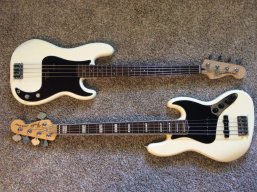
Hmm great video. Rosewood is more plush sounding, and the maple more tight. I wouldn't say maple is brighter though. But the maple just sounds tighter and more articulate, especially on the high end, and the rosewood is just more woody and natural sounding.

I notice a difference but there's one teensy-weensy problem. It wasn't just the fingerboard that was changed, it was the entire neck so it can't be said with certainty that any differences in tone can be definitively attributed to the type of fingerboard wood. it could just as easily be due to the different pieces of maple used for the neck or both so there's actually 3 possibilities contributing to the ambiguity.
it'd be impossible to just change the fingerboard without extensive work.
Exactly, which is why these types of comparasions are always comparisons of necks, not just fingerboards, and really don't prove anything about fingerboards per se.

Given that rosewood and maple fretboards are usually not constructed the same way, I think it's completely relevant to compare necks with each.
Given that rosewood and maple fretboards are usually not constructed the same way, I think it's completely relevant to compare necks with each.
Perhaps that's another variable that adds to the ambiguity.
Besides. many maple necks use glued on maple fingerboards just like with rosewood fingerboards. Even Fender has used a glued on maple fingerboard for a while now.
C'mon now... This guy did a fair comparison of basses with identical specs besides fretboard wood... It doesn't get any better than this...
One can always come up with something like "the AC was stronger when he recorded the second one" or "he pee'd between sets and that affects tone". The difference is there, it's not huge, but it's there. Now let's put this to a rest...
One can always come up with something like "the AC was stronger when he recorded the second one" or "he pee'd between sets and that affects tone". The difference is there, it's not huge, but it's there. Now let's put this to a rest...


it'd be impossible to just change the fingerboard without extensive work.
Not if you're using this one that has swap-out fretboards
(sigh) I spend waaaay too much time on the CT website
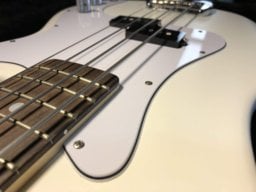
If I close my eyes and listen I wouldn't know he was switching basses. How does he switch so fast? I think I can tell a slight difference...more attack with the maple but it is VERY slight. More evidence that wood doesn't have that much of an impact IMO.
C'mon now... This guy did a fair comparison of basses with identical specs besides fretboard wood... It doesn't get any better than this...
It still only means that the bass sounds different with those two different necks.
If I close my eyes and listen I wouldn't know he was switching basses. How does he switch so fast? I think I can tell a slight difference...more attack with the maple but it is VERY slight. More evidence that wood doesn't have that much of an impact IMO.
To each their own. For once in this video,especially towards the end when he repeats each section between the two, I can hear quite a noticeable difference. Usually I can't. Once again, in a mix, no one would know, but I guess all that matters is that YOU know..

- Aug 25, 2004
- 939
- 1,337
- Disclosures
- Builder: Martin Keith Guitars
Exactly, which is why these types of comparasions are always comparisons of necks, not just fingerboards, and really don't prove anything about fingerboards per se.
With a sample size of one per variety, I agree.
The big issue with most of these "tonewood debates" is that most people are operating on small sample sizes.
When you get a chance to hear 100 or more of the same instrument, it gets pretty easy to isolate the differences a fingerboard will make based on your understanding of the average maple neck. Of course, that is something that usually only builders get to do, or possibly store owners.
However, for that reason, I would hope that the general consensus opinion of most builders (namely, that wood DOES matter, and that no combination of bridge, pickup, preamp, string, and amp can truly compensate for poor materials) should be given some weight in the debate.
By contrast, and I really don't mean to annoy anyone by saying this - an opinion based on the 2, 4, or even 10 basses one has owned and played in one's career is not statistically comparable, next to a sample set of one person listening to dozens or hundreds of very similar instruments, in the same room, through the same amp, etc. etc. Those of us that do that for a while tend to agree that wood matters.
Cheers!
Martin
Not if you're using this one that has swap-out fretboards
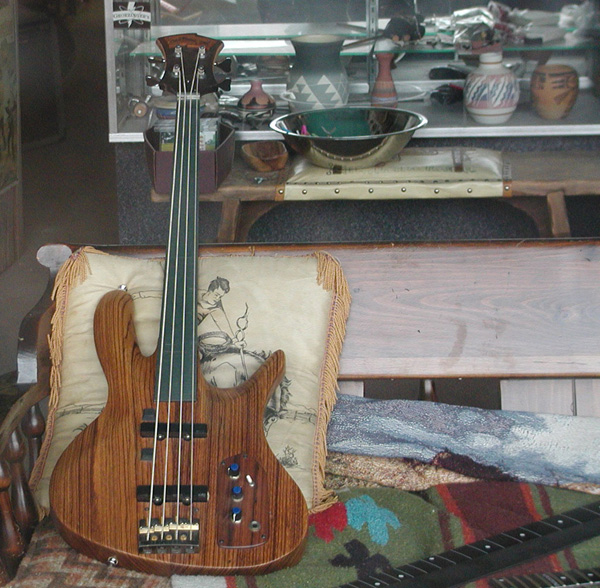
(sigh) I spend waaaay too much time on the CT website
That's an idea but it'd take many tests with many fingerboards to see a trend since each fingerboard, even if the same species, is unique. I'd like to try that myself.

I cant believe this is still a point of debate.
I can't tell an ebony from maple from rosewood listening blindfolded. I probably could from playing.
I also couldn't tell a 4x10 from a 2x12 blindfolded. Doesn't mean they don't sound different.
I remember about 4 or 5 years ago when Roger Sadowsky dropped in on one of these topics and said, simply, "it does". That was good enough for me.
I can't tell an ebony from maple from rosewood listening blindfolded. I probably could from playing.
I also couldn't tell a 4x10 from a 2x12 blindfolded. Doesn't mean they don't sound different.
I remember about 4 or 5 years ago when Roger Sadowsky dropped in on one of these topics and said, simply, "it does". That was good enough for me.
great video... i can hear the difference... its just what i expected from my experience and here it is wonderfully shown...

I've HEARD all the evidence I need, playing in a loud hard rock band: maple fretboarded bass' higher register cuts through (at a perceived higher volume even) than the same bass with a RW board.
This particular clip??? I can't hear enough difference to say that it's definitely there, maybe a little more bite in the higher register w/ the maple board.
This particular clip??? I can't hear enough difference to say that it's definitely there, maybe a little more bite in the higher register w/ the maple board.
Keith Guitars said:With a sample size of one per variety, I agree.
The big issue with most of these "tonewood debates" is that most people are operating on small sample sizes.
When you get a chance to hear 100 or more of the same instrument, it gets pretty easy to isolate the differences a fingerboard will make based on your understanding of the average maple neck. Of course, that is something that usually only builders get to do, or possibly store owners.
However, for that reason, I would hope that the general consensus opinion of most builders (namely, that wood DOES matter, and that no combination of bridge, pickup, preamp, string, and amp can truly compensate for poor materials) should be given some weight in the debate.
By contrast, and I really don't mean to annoy anyone by saying this - an opinion based on the 2, 4, or even 10 basses one has owned and played in one's career is not statistically comparable, next to a sample set of one person listening to dozens or hundreds of very similar instruments, in the same room, through the same amp, etc. etc. Those of us that do that for a while tend to agree that wood matters.
Cheers!
Martin
Exactly!


