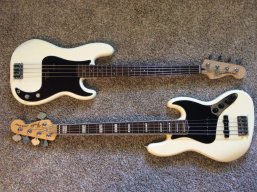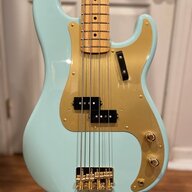
Ive been wanting to take a shot at refinishing a bass for some time. I even have a few basses in the cue for just such an adventure, but a Mike Dirnt MIM popped up on CL that was the perfect candidate. This bass needed some love. A bent tuner, a couple stripped-out screws, a missing strap button, and some fret buzz just to name a few of the problems.
I spent a few days working through the issues to make sure the bass would be worth the effort. Then I took it out and played it on a regular gig. The pups have a touch more bite than a MIM P bass, and the neck is very thick. I really like the body lines and that tele head stock is so cool.
The factory Poly finish was missing on several edges all the way down to the wood, but the wood was intact. The clincher was this bass was black. I have two other black Fenders, so I really dont need a third.
Next: Stripping the poly finish....
(for the "no pictures, no bass" crowd)
I spent a few days working through the issues to make sure the bass would be worth the effort. Then I took it out and played it on a regular gig. The pups have a touch more bite than a MIM P bass, and the neck is very thick. I really like the body lines and that tele head stock is so cool.
The factory Poly finish was missing on several edges all the way down to the wood, but the wood was intact. The clincher was this bass was black. I have two other black Fenders, so I really dont need a third.
Next: Stripping the poly finish....
(for the "no pictures, no bass" crowd)