
- Jan 21, 2006
- 16,223
- 7,613
- 76
- Disclosures
- fEARful Kool-Aid dispensing liberal academic card-carrying union member Musicians Local 72-147
Combine one single-coil lipstick tube pickup, a 30 short scale neck, a thick Brazilian rosewood 24 fret fingerboard, a set of round wounds strings, a semi-hollow Masonite body, and wood saddle equipped bridge---Presto Dano, what do you get? Retro heaven!
Here's the review of the '65 Silvertone bass I just received, with pics at the end, as promised.
Do we need a Danelectro Bass Club???
I'd love to hear from other Dano/Silvertone bassists or anyone interested in (or skeptical of) Danelectro basses, new or old. This one is essentially identical to the bass I first learned on at age 13 in 1963, and except for a couple of parts, is pretty much original. I am very happy to have found it. I got the chance to play it with one of my bands for about 5 hours last night, so here is a review of sorts.
Instrument Description:
1965 Danelectro-built Silvertone single cutaway dolphin nose single pickup bass. Color: black. Weight: 6 lbs. 9 oz. Condition: Very Good
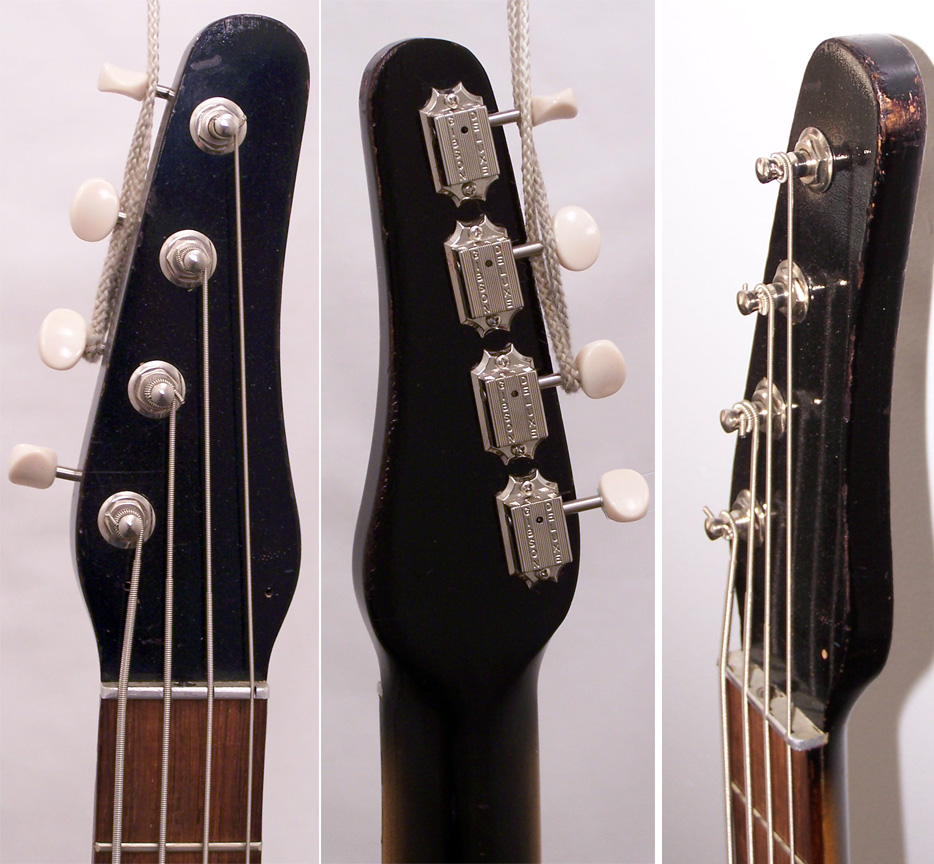
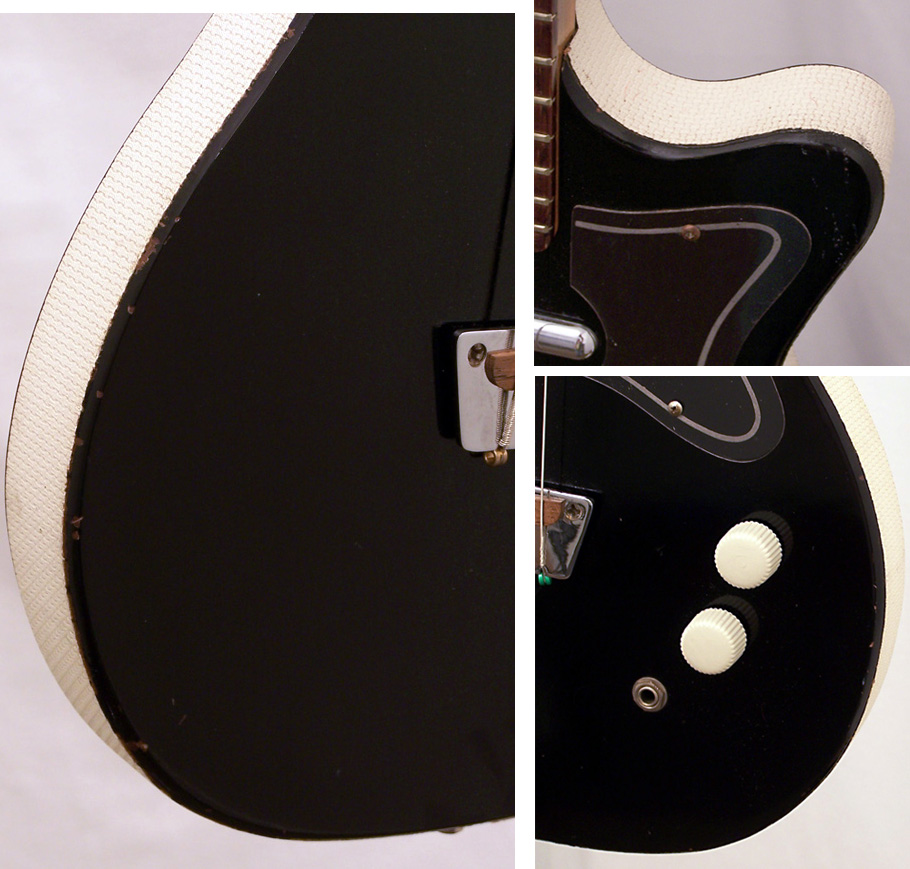
The dolphin nose takes its name from the shape of the small headstock. Its fingerboard is a thick slab of Brazilian rosewood. The "semi-hollow" body is built of a poplar wood frame with Masonite top and back. The original white vinyl side covering is intact and well attached. The 24 frets are in good shape, as is the entire bass, right down to the cupcake control knobs, nail position markers ala wishbass, and Micro-tilt neck adjustment.
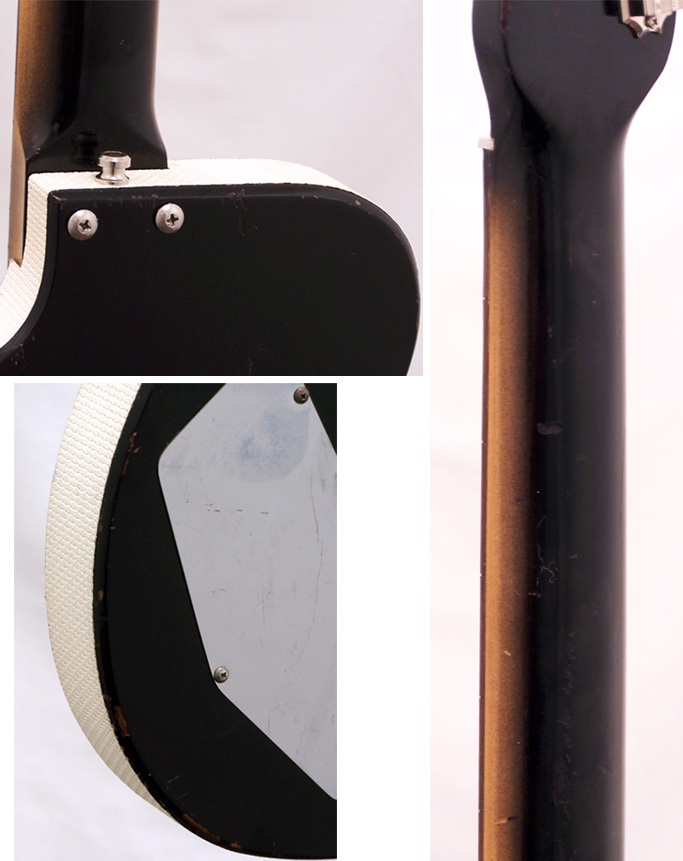
This bass might have been partially parted out. The original round brass strap buttons are gone with Schaller strap locks installed in their place. The plastic Silvertone headstock logo is missing, and the old strip tuners have been replaced with new Gibson guitar tuners. However, the transparent pickguard, control knobs, bridge, input jack, pickup, frets, aluminum nut, screws, and glossy black finish appear original. I would put this bass in the "well-loved" category, due to numerous old dingsbut it is attractive, very playable, and really in terrifically good shape considering its over 43 years-old!
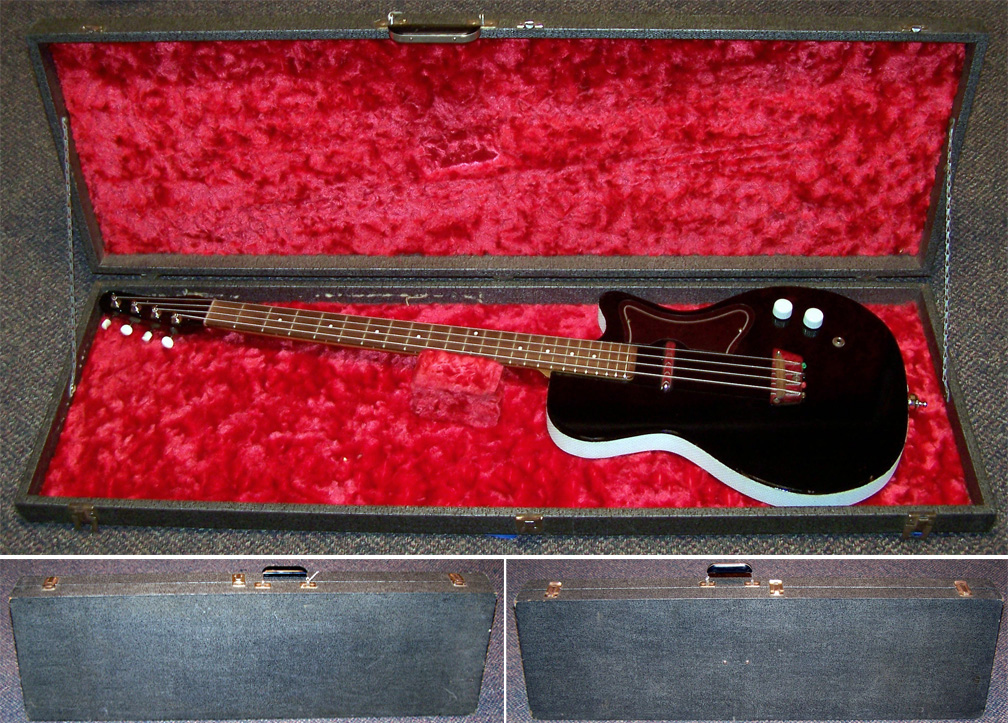
The bass arrived well-setup in its original hardshell case, and strung with what I believe are new D'addario XL220S light gauge Nickel-plated steel short-scale hexcore round wounds.
Sound:
No boomy mud bucket, this is a unique and fun to play instrument with a sassy, even honky retro tone. It is almost pure growl. The D and G are noticeably brighter than the lower strings, as is common in short scales, but there is a woody note to the all the tones from the resonance (or lack there of) of the semi-hollow body, and the strong upper mid frequency response of the single coil pickup. The bass likes thumb-style and even to be slapped, but really just plain loves a pick. I get some cool honky twang near the bridge, and the punchy palm mute pick tones are totally to die for. You can get a less growly and more even sound from finger-style playing nearer the fingerboard.
Being used to the dark chocolate rich punch of my Sadowsky P/J, I found myself on more than one occasion reaching for my amps EQ knobs to boost the lows. This is not a fundamental rich instrument, and the fretted notes do not sustain anywhere near as much as on my more modern basses.
This may explain why some people think the tone of the dolphin nose is like a plywood upright. Cheap plywood uprights dont sustain it is true, but I didnt find myself reminded of an upright playing the Silvertone. This is rawer sound, and definitely with a punk attitude!
On the other hand, with my tube preamp pushed hard, this bass could be played on the verge of feedback, providing a thrilling sustain. The strings have a nice slack quality, inviting guitar vibrato, bends, and chords. Creating a consistent note-to-note tone and dynamic level is a little challenging, which may be the only real flaw in this type instrument, besides the less than ideal intonation available from the fixed bridge.
Yet, the really great things about this bass besides its cool retro vibe are its lightweight playability and range of usable distinctive tone colors available by varying touch, technique, and playing position.
This bass is very cool, fun to play, and useful for songs that call for pungent twangy or muted tones with a unique growly personality.
Pics:


Here's the review of the '65 Silvertone bass I just received, with pics at the end, as promised.
Do we need a Danelectro Bass Club???
I'd love to hear from other Dano/Silvertone bassists or anyone interested in (or skeptical of) Danelectro basses, new or old. This one is essentially identical to the bass I first learned on at age 13 in 1963, and except for a couple of parts, is pretty much original. I am very happy to have found it. I got the chance to play it with one of my bands for about 5 hours last night, so here is a review of sorts.
Instrument Description:
1965 Danelectro-built Silvertone single cutaway dolphin nose single pickup bass. Color: black. Weight: 6 lbs. 9 oz. Condition: Very Good
The dolphin nose takes its name from the shape of the small headstock. Its fingerboard is a thick slab of Brazilian rosewood. The "semi-hollow" body is built of a poplar wood frame with Masonite top and back. The original white vinyl side covering is intact and well attached. The 24 frets are in good shape, as is the entire bass, right down to the cupcake control knobs, nail position markers ala wishbass, and Micro-tilt neck adjustment.
This bass might have been partially parted out. The original round brass strap buttons are gone with Schaller strap locks installed in their place. The plastic Silvertone headstock logo is missing, and the old strip tuners have been replaced with new Gibson guitar tuners. However, the transparent pickguard, control knobs, bridge, input jack, pickup, frets, aluminum nut, screws, and glossy black finish appear original. I would put this bass in the "well-loved" category, due to numerous old dingsbut it is attractive, very playable, and really in terrifically good shape considering its over 43 years-old!
The bass arrived well-setup in its original hardshell case, and strung with what I believe are new D'addario XL220S light gauge Nickel-plated steel short-scale hexcore round wounds.
Sound:
No boomy mud bucket, this is a unique and fun to play instrument with a sassy, even honky retro tone. It is almost pure growl. The D and G are noticeably brighter than the lower strings, as is common in short scales, but there is a woody note to the all the tones from the resonance (or lack there of) of the semi-hollow body, and the strong upper mid frequency response of the single coil pickup. The bass likes thumb-style and even to be slapped, but really just plain loves a pick. I get some cool honky twang near the bridge, and the punchy palm mute pick tones are totally to die for. You can get a less growly and more even sound from finger-style playing nearer the fingerboard.
Being used to the dark chocolate rich punch of my Sadowsky P/J, I found myself on more than one occasion reaching for my amps EQ knobs to boost the lows. This is not a fundamental rich instrument, and the fretted notes do not sustain anywhere near as much as on my more modern basses.
This may explain why some people think the tone of the dolphin nose is like a plywood upright. Cheap plywood uprights dont sustain it is true, but I didnt find myself reminded of an upright playing the Silvertone. This is rawer sound, and definitely with a punk attitude!
On the other hand, with my tube preamp pushed hard, this bass could be played on the verge of feedback, providing a thrilling sustain. The strings have a nice slack quality, inviting guitar vibrato, bends, and chords. Creating a consistent note-to-note tone and dynamic level is a little challenging, which may be the only real flaw in this type instrument, besides the less than ideal intonation available from the fixed bridge.
Yet, the really great things about this bass besides its cool retro vibe are its lightweight playability and range of usable distinctive tone colors available by varying touch, technique, and playing position.
This bass is very cool, fun to play, and useful for songs that call for pungent twangy or muted tones with a unique growly personality.
Pics: